Skip to content

Suggestions

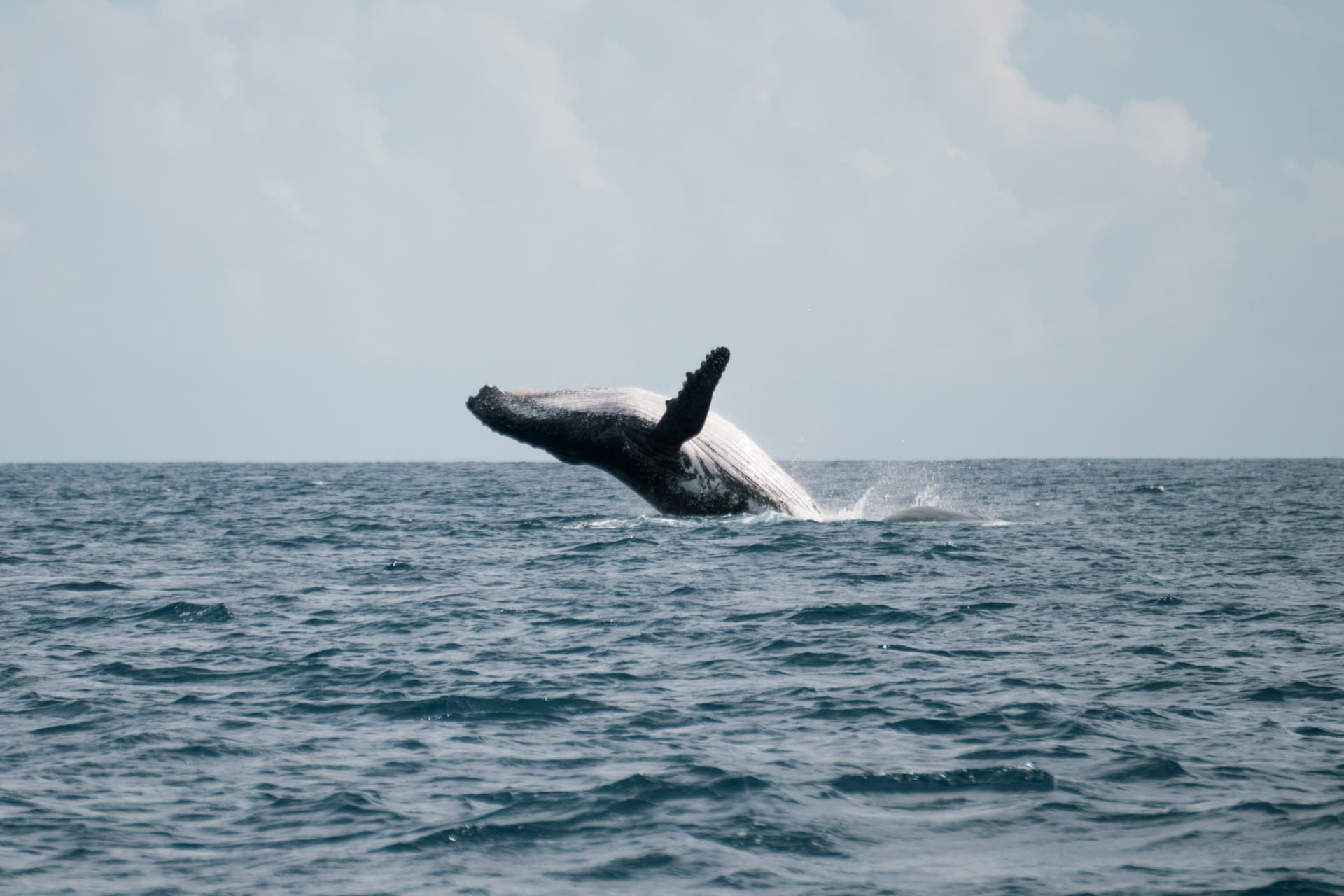
    A humpback whale breaching

    Explore

    Nature

    Bois de couleurs forests (native mixed hardwoods), lagoons, whales, petrels and tree ferns: a wealth of biodiversity, much of it found nowhere else on Earth.

    The natural island

    Nature & Biodiversity

    One island, one natural sanctuary

    Nature & Biodiversity

    UNESCO-listed, criss-crossed by dozens of microclimates and fringed by a protected lagoon, Réunion packs exceptional biodiversity into a tiny territory: from whales out at sea to geckos that fit on a fingernail, by way of some of the best-preserved primary forests in the Indian Ocean.

    • A third of the island UNESCO-listed

      The “Pitons, cirques and remparts” property covers more than 100,000 hectares, around 40% of the island, and has been listed since 2010.

    • A high rate of endemism

      Many animal and plant species are found nowhere else in the world but Réunion.

    • From reef to summit

      In just a few dozen kilometres, the island goes from coral lagoon to high-altitude cloud forest.

    Did you know? This density of biodiversity on such a small territory is one of the main reasons for the 2010 UNESCO listing.

    Photo: B.navez · Wikimedia Commons · CC BY-SA 3.0

    Ecosystems

    Forêt de Bélouve

    Forêt de Bélouve

    A forested plateau overlooking the southern rampart (cliff wall) of the Cirque de Salazie, famous for its tamarind forest and its ghostly atmosphere when the mists roll in.

    • Accessible by car

      It is reached from Plaine-des-Palmistes via the Bébour-Bélouve forest road, as far as the Bélouve gîte.

    • Gateway to the Trou de Fer

      Many trails start from the Bélouve gîte, notably to the spectacular viewpoint over the Trou de Fer.

    Photo: Fabimaru · Wikimedia Commons · CC BY-SA 3.0

    Forêt de Bébour

    Forêt de Bébour

    Next to Bélouve, this lush mountain forest surrounds one of the wettest areas on the island, where mosses, ferns and orchids grow in profusion.

    • A natural sponge

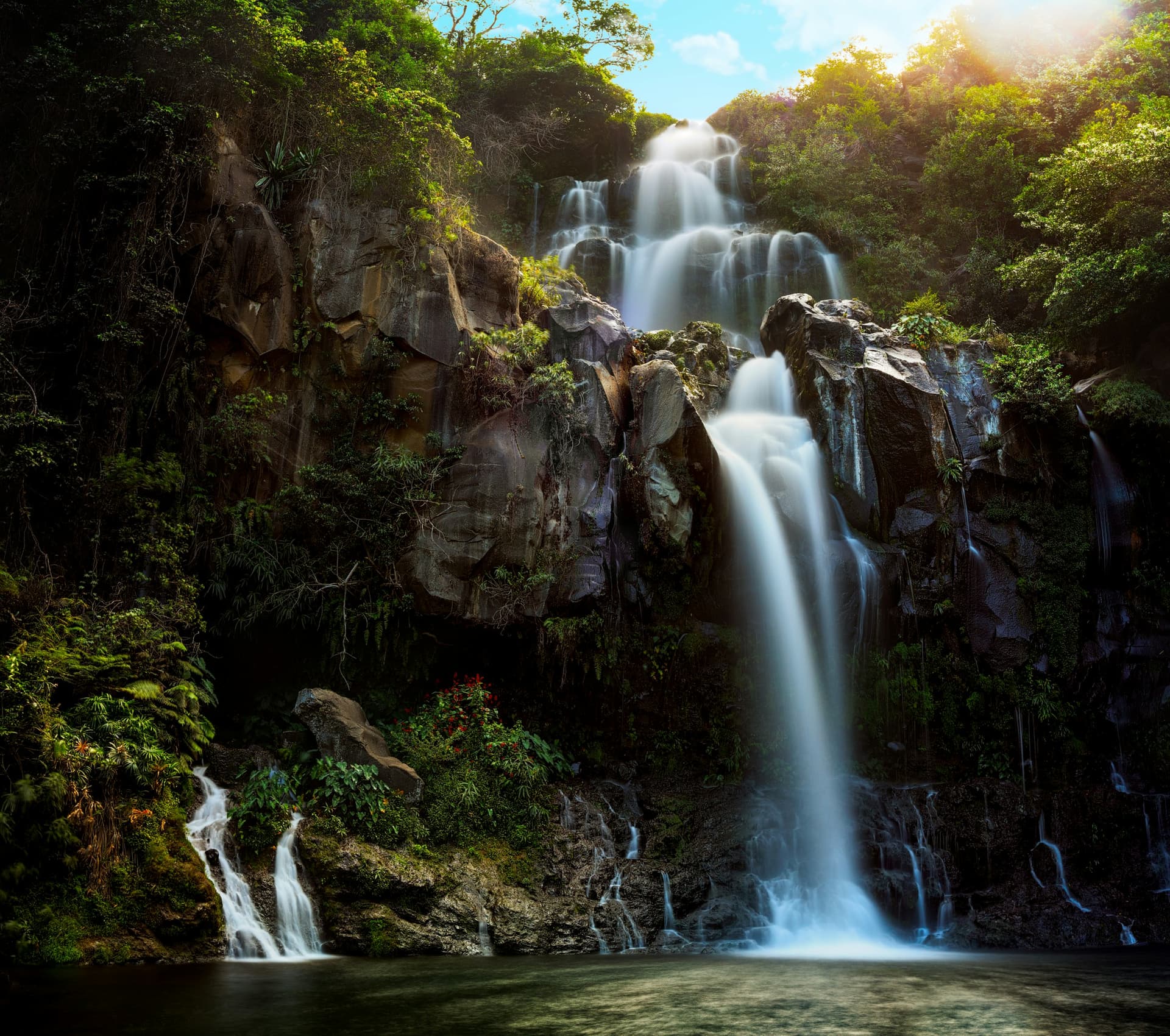
      The abundant water of the Bébour pass feeds, further down, numerous waterfalls that supply the Takamaka valley.

    • Remarkable endemic wildlife

      Tec-tec (Réunion stonechat), paradise flycatcher (oiseau la Vierge), papangue (Réunion harrier): Bébour forest is home to a wide range of endemic birds.

    Photo: © Geolina · Wikimedia Commons · CC BY-SA 4.0

    Tamarind forest

    Tamarind forest

    The great stands of highland tamarinds (Tamarins des Hauts), notably at Bélouve, Bébour, in the leeward uplands (Hauts sous le Vent) and on the Plaine des Tamarins (Mafate), form a unique landscape of twisted trunks bent over by the wind.

    • A cabinetmaking wood

      Along with the cryptomeria, the highland tamarind remains one of the only species supplying the island's industrial sawmill.

    Photo: Fabimaru · Wikimedia Commons · CC BY-SA 3.0

    Tropical rainforest

    Bois de Couleurs forest

    Tropical rainforest

    The island's lushest forests, known locally as “Bois de Couleurs des Hauts” (upland coloured woods), mix mahots, bois de tambour and fanjans (tree ferns) beneath a canopy often shrouded in mist.

    • The cloud forest

      The almost constant humidity of these forests has earned them the nickname “cloud forest”, with mosses and epiphytic orchids carpeting every nook.

    Photo: Unsplash · Licence Unsplash

    Volcanic vegetation

    Volcanic vegetation

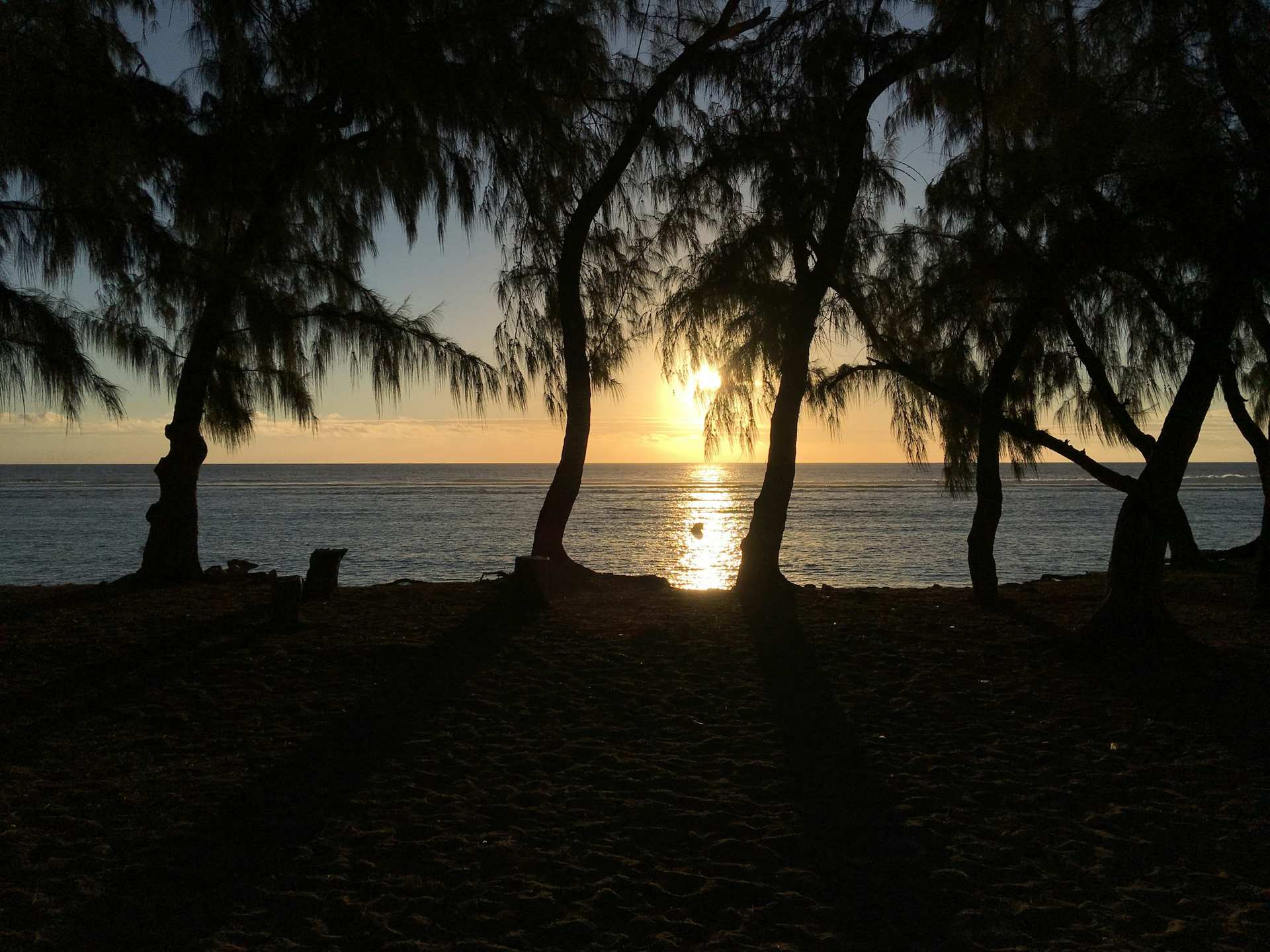
    On the most recent lava flows of the Grand Brûlé, pioneer vegetation reclaims the ground in just a few years, in contrast with the entirely mineral expanses of the Plaine des Sables.

    • A rapid comeback

      Ferns, shrubs and filaos (casuarina trees) grow back within just a few years on the most recent lava flows of the Grand Brûlé.

    • The Plaine des Sables desert

      By contrast, this plateau of volcanic ash remains almost bare of vegetation.

    Photo: Wikimedia Commons · CC BY 2.5

    Endemic flora

    Endemic flora

    Thanks to its geographical isolation, Réunion has developed a remarkably rich flora, with a high number of plant species found nowhere else in the world.

    • Isolation that fosters endemism

      As in Madagascar, the island's isolation encouraged the emergence of unique plant species, many of which are now protected.

    • Ongoing threats

      “Pestes végétales” (invasive plants), introduced species such as strawberry guava (goyavier) and wild blackberry (vigne marronne), now threaten this original flora.

    Photo: B.navez · Wikimedia Commons · CC BY-SA 4.0

    Protected areas

    Marine nature reserve

    Marine nature reserve

    This reserve covers part of the lagoon and coral reef on the west coast, between Saint-Paul and Saint-Leu, regulating swimming, diving and fishing to protect the reef.

    • Regulated activities

      Some zones are fully protected, while others allow swimming and diving under certain conditions.

    Photo: © Geolina · Wikimedia Commons · CC BY-SA 4.0

    Étang de Saint-Paul

    Étang de Saint-Paul

    This natural body of water in the west of the island, a designated national nature reserve, is one of Réunion's last large wetlands and a major birdwatching site.

    • A refuge for waterbirds

      Local and migratory species find here one of the island's last large wetland habitats.

    Photo: Thierry Caro · Wikimedia Commons · CC BY-SA 4.0

    Réunion National Park

    2007

    Réunion National Park

    Created in 2007, Réunion National Park covers most of the island's mountainous central area, the same area that was added to the UNESCO World Heritage List in 2010.

    • Conservation and awareness

      The Park takes action against invasive alien species and raises visitors' awareness of how fragile natural habitats are.

    Photo: B.navez · Wikimedia Commons · CC BY-SA 3.0

    Pitons, cirques and remparts

    UNESCO-listed since 2010

    Pitons, cirques and remparts

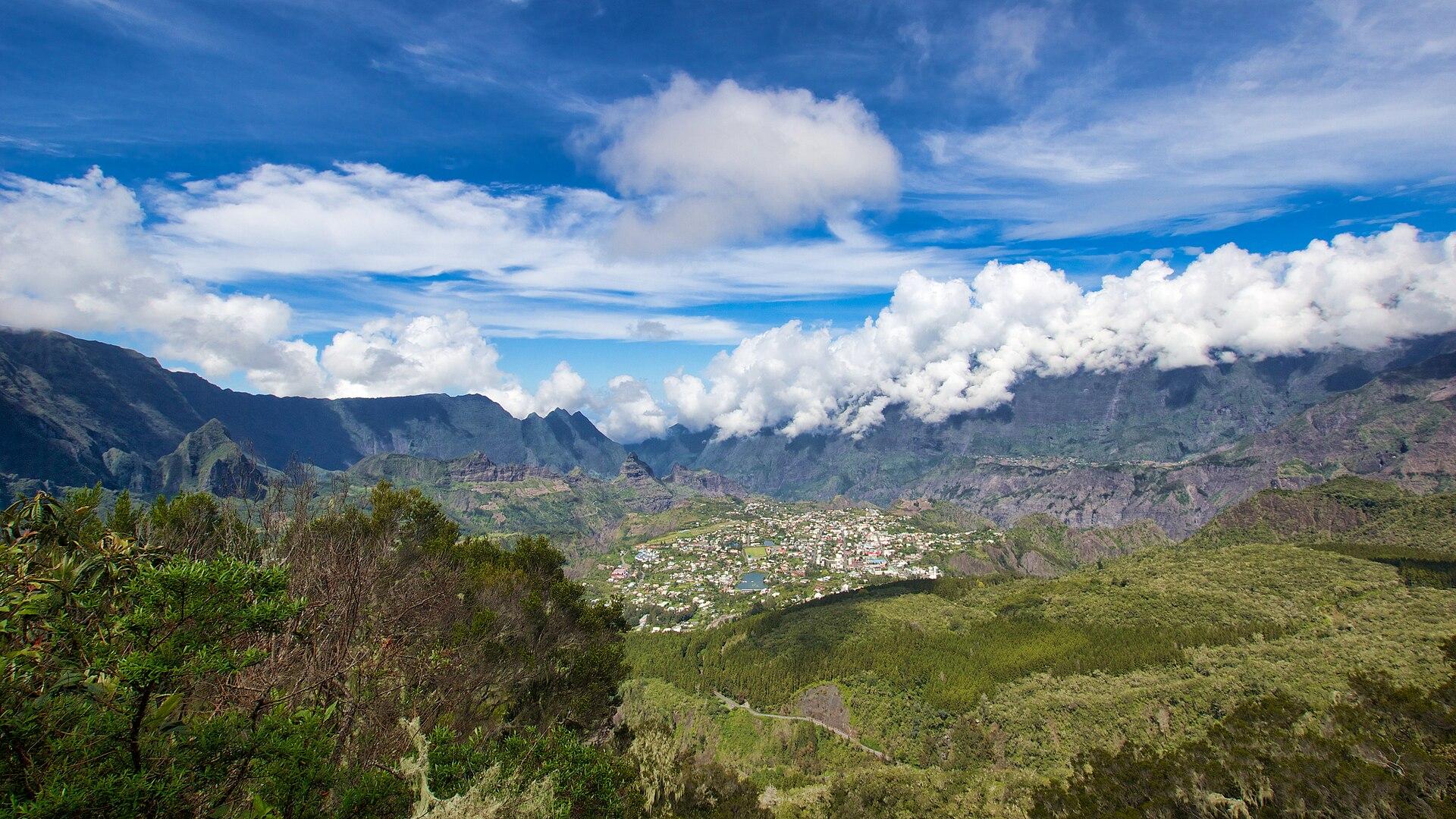
    Added to the UNESCO World Heritage List on 1 August 2010, this property covers more than 100,000 hectares, around 40% of the island, around the peaks (pitons), cirques (natural amphitheatres) and ramparts (cliff walls) of its mountainous heart.

    • 40% of the island listed

      The property covers most of the mountainous central area, from the Piton des Neiges to the Piton de la Fournaise.

    • Exceptional biodiversity

      It was the wealth of microclimates and endemic species, orchids in particular, that justified this listing.

    Photo: Patrick Portes · Wikimedia Commons · CC BY-SA 4.0

    Marine life

    Humpback whale

    July – September

    Humpback whale

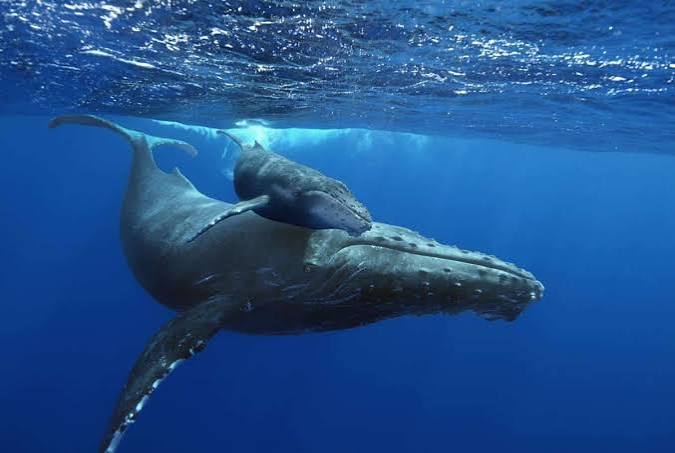
    Every year, roughly between July and September, humpback whales leave Antarctica to breed in the warmer waters around Réunion.

    • A southern migration

      The whales travel thousands of kilometres from Antarctica to give birth in Réunion's waters.

    • GLOBICE, the leading association

      It has been recording cetacean sightings since 2001 and runs an approach charter for professionals and private boaters alike.

    Did you know? To date, GLOBICE has recorded around 25 different cetacean species in Réunion's waters.

    Photo: Philippe Bourjon · Wikimedia Commons · CC BY-SA 3.0

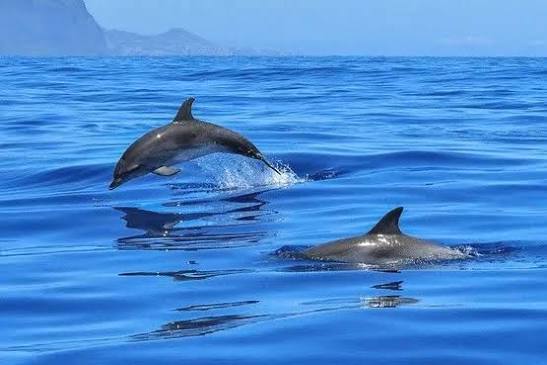
    Bottlenose dolphin

    Bottlenose dolphin

    A regular in Réunion's lagoon, and one of the cetaceans most frequently seen off the west coast.

    • A regular presence

      The bottlenose dolphin and the spinner dolphin are among the most frequently observed species, especially off Saint-Gilles.

    • A protected species

      Like all cetaceans in Réunion's waters, watching it is governed by an approach charter.

    Photo: Bernard DUPONT · Wikimedia Commons · CC BY-SA 2.0

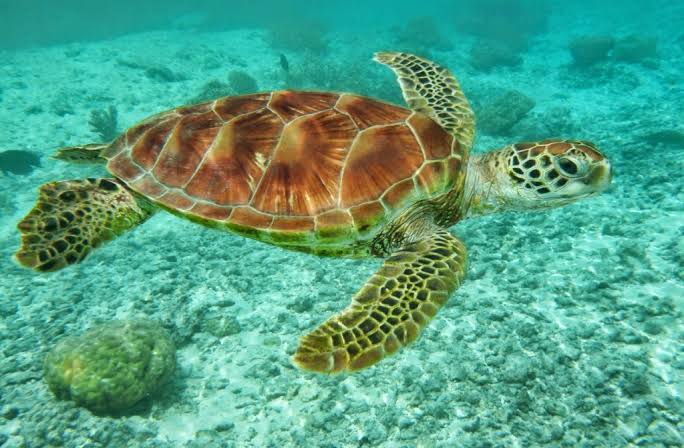
    Green turtle

    Green turtle

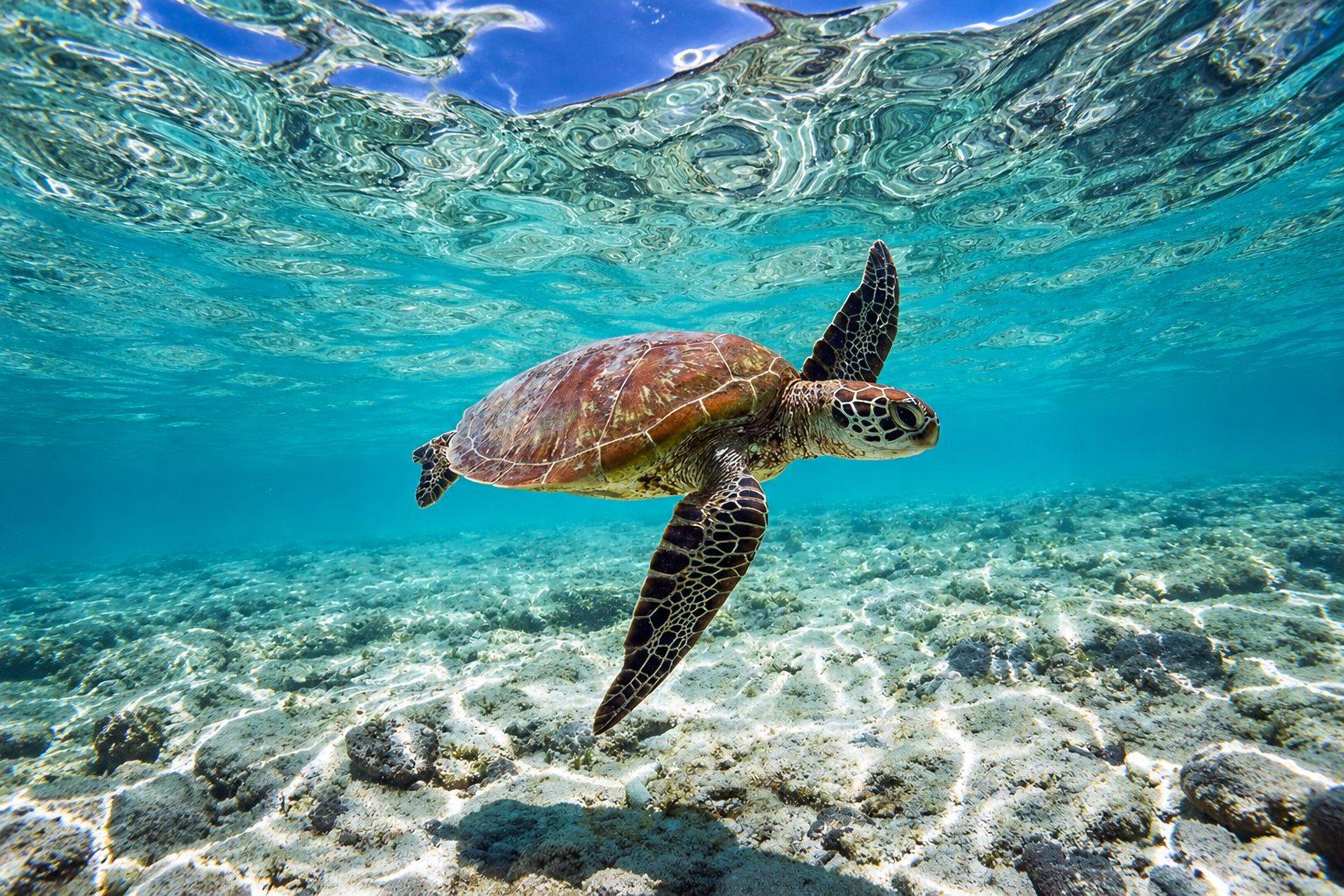
    The most common sea turtle seen in Réunion's lagoon, mainly herbivorous, feeding on algae and seagrass.

    • Kélonia, the leading observatory

      Based in Saint-Leu, this centre cares for injured turtles before releasing them back into the sea, and runs research programmes across the Indian Ocean.

    • An endangered species

      Like the other sea turtles of the Indian Ocean, the green turtle is a protected species facing multiple threats.

    Photo: Philippe Bourjon · Wikimedia Commons · CC BY-SA 3.0

    Coral reef

    Coral reef

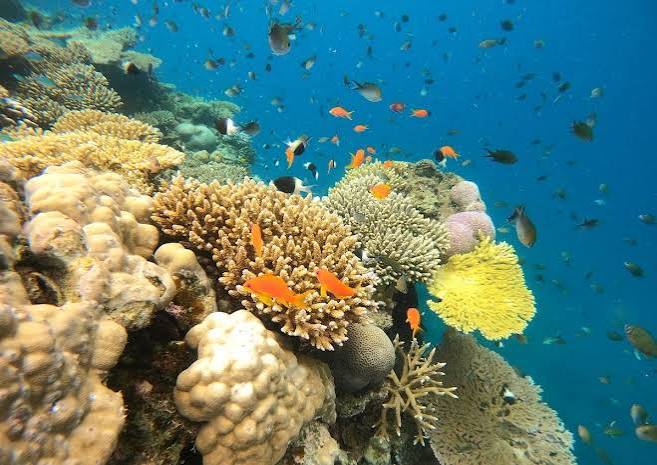
    The coral reef that shelters part of the west coast is home to very rich marine life (tropical fish, crustaceans, molluscs) but remains vulnerable to warming waters and human pressure.

    • A fragile ecosystem

      Coral is particularly sensitive to changes in water temperature and to coastal pollution.

    • A marine nature reserve

      Part of the west coast's lagoon and reef is a national nature reserve, with rules on swimming, diving and fishing.

    Photo: Unsplash · Licence Unsplash

    Réunion's lagoon

    22 km of protected lagoon

    Réunion's lagoon

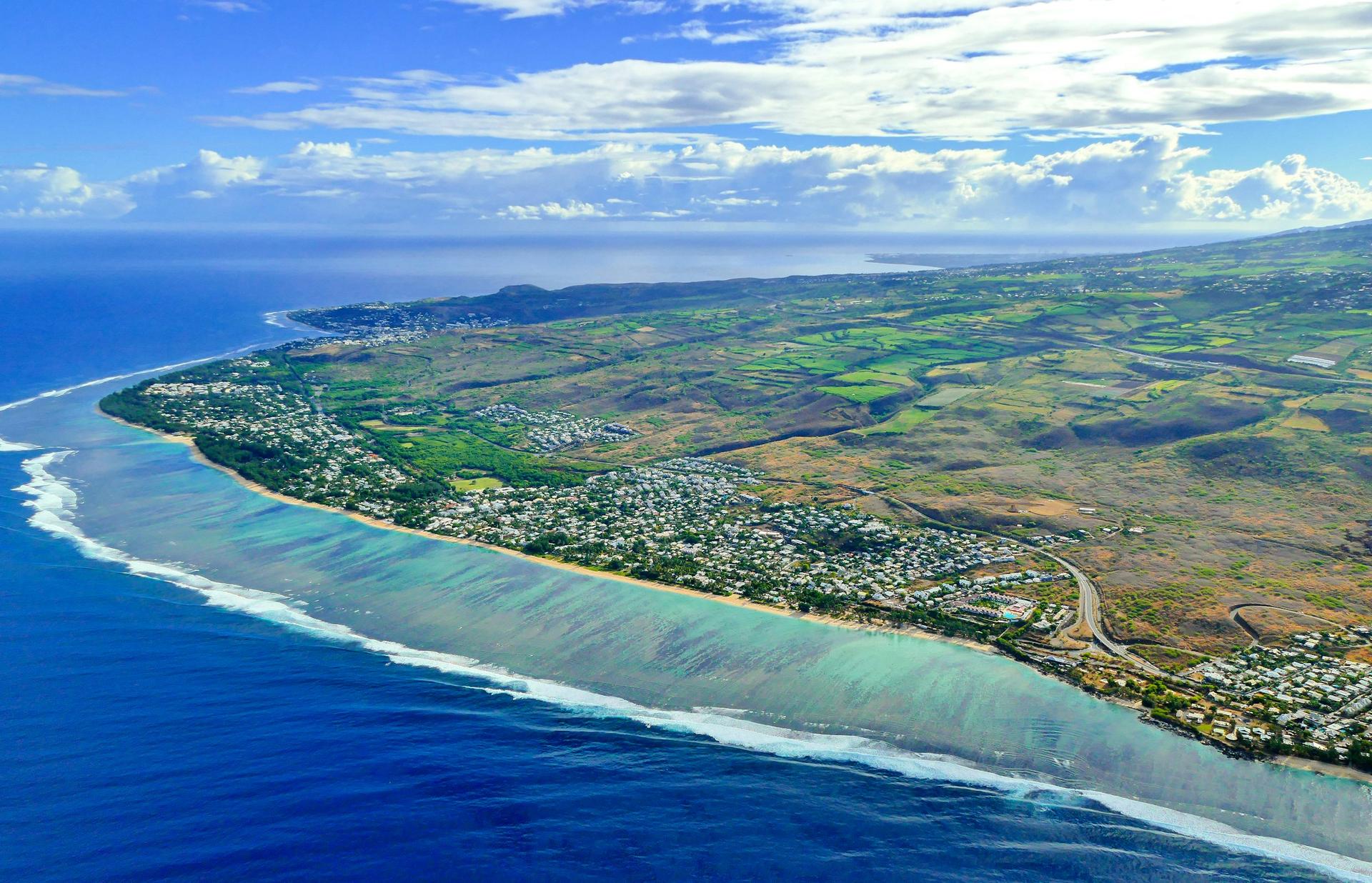
    Réunion has 207 km of coastline, but only around 22 kilometres, mainly on the west coast, are fringed by a lagoon sheltered by a coral reef, with water at 27°C all year round, ideal for swimming and snorkelling.

    • 22 km out of 207

      The protected lagoon makes up only a small portion of the island's total coastline, concentrated on the west coast.

    • A natural aquarium

      Colourful fish, corals and sometimes turtles are easy to spot with a mask and snorkel, in complete safety.

    Did you know? Outside this protected lagoon, most of the island's coastline drops straight into the ocean with no reef, and the sea is often rougher.

    Photo: Unsplash · Licence Unsplash

    Land wildlife

    Paille-en-queue

    Paille-en-queue

    The emblematic bird of Réunion (the white-tailed tropicbird), recognisable by its long white tail feathers, which nests in the cliffs and ramparts of the cirques.

    • A symbol of the island

      It can often be seen gliding in pairs above the ravines, and it features on many Réunionese emblems and logos.

    Photo: Wikimedia Commons · Public domain (self-published)

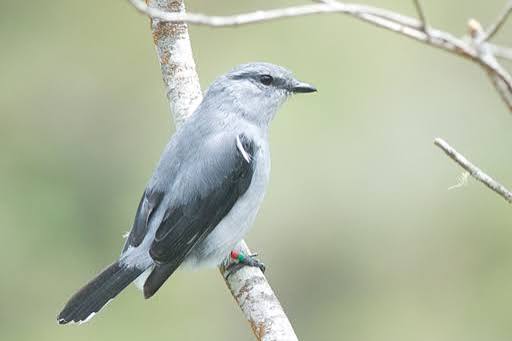
    Tuit-tuit

    Tuit-tuit

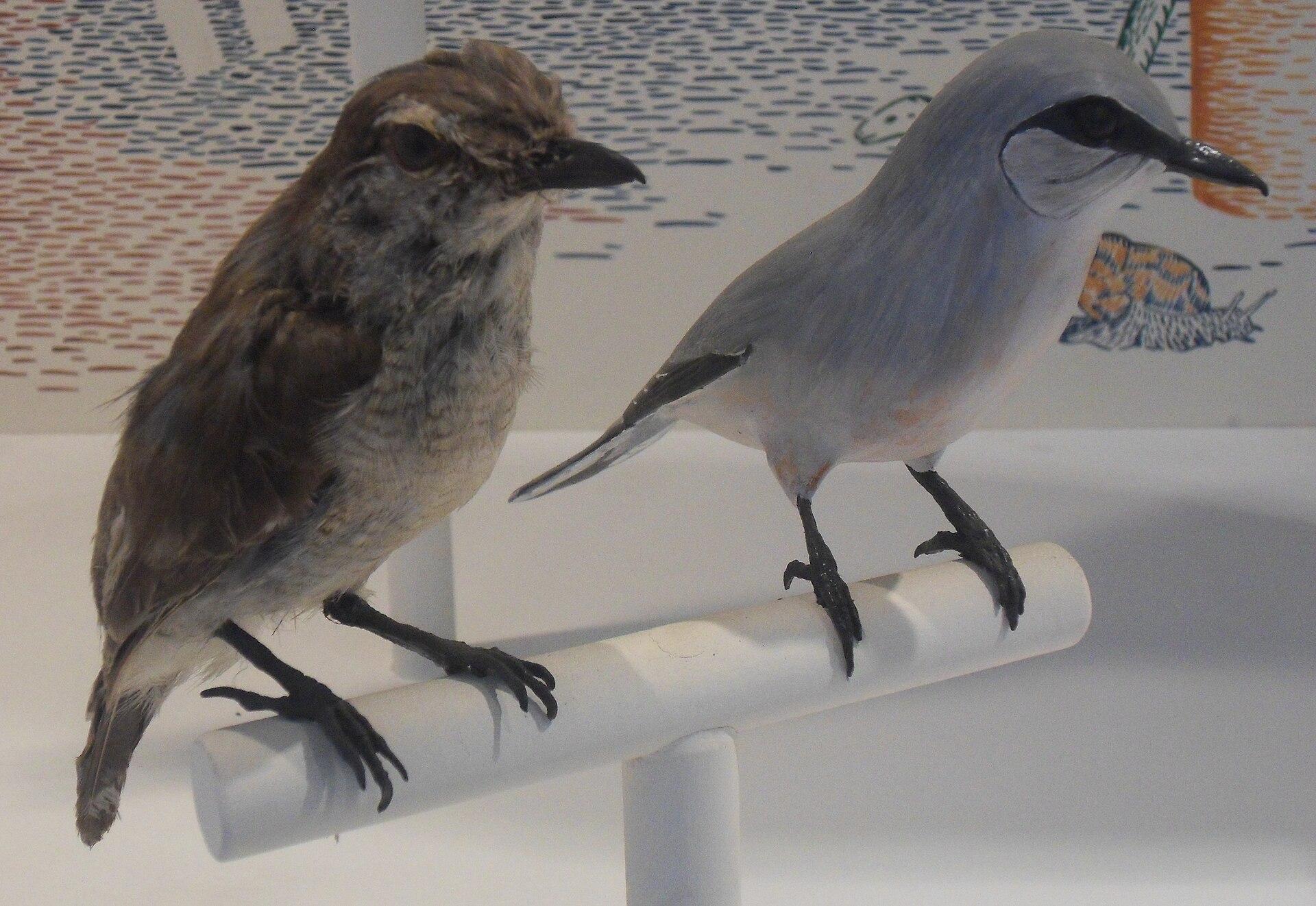
    One of the most endangered birds in the world, also known as the Réunion cuckooshrike, which now survives only in the forests of the Roche Écrite.

    • A single forest massif

      Its entire population is closely monitored by the SEOR (Réunion's bird conservation society) and the National Park; predation by introduced cats and rats remains one of the main threats.

    Photo: Chaoborus · Wikimedia Commons · CC BY-SA 4.0

    Papangue

    Réunion harrier

    Papangue

    The Réunion harrier, the island's last endemic breeding bird of prey active by day since the disappearance of Dubois's kestrel in 1670: a bird long persecuted and now protected.

    • The island's last raptor

      It soars from the coast to the summit ridges, especially in the east and south of the island.

    • A reputation to put right

      Long hunted as a “bird of ill omen” accused of attacking poultry, it was only removed from the “vermin” category in 1966; hunting it has been banned since 1974.

    Did you know? An endemic climbing plant, the “liane papangue”, gets its name from the resemblance between its hooks and the raptor's talons.

    Photo: Flavien Saboureau · Wikimedia Commons · CC BY 4.0

    Oiseau la Vierge

    Mascarene paradise flycatcher

    Oiseau la Vierge

    Also known as the Chakouat or Tchitrec des Mascareignes, this small endemic forest songbird is recognisable by its orange plumage and delicate silhouette.

    • A forest bird

      It lives in native forests at mid and high altitude, where its song is one of the familiar sounds for hikers.

    Photo: Charles J. Sharp · Wikimedia Commons · CC BY-SA 4.0

    Tec-tec

    Réunion stonechat

    Tec-tec

    A small endemic bird with a dark head and orange belly, whose name imitates its distinctive call: one of the most common songbirds in the island's Hauts (uplands).

    • A trail regular

      Far from shy, it often comes close to hikers in the forests and uplands of the island.

    Photo: Charles J. Sharp · Wikimedia Commons · CC BY-SA 4.0

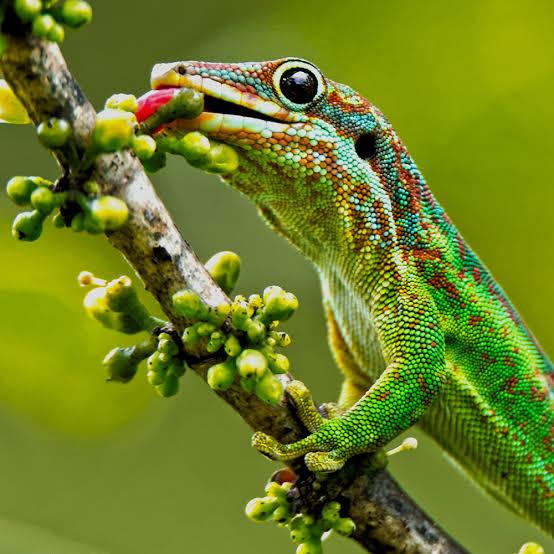
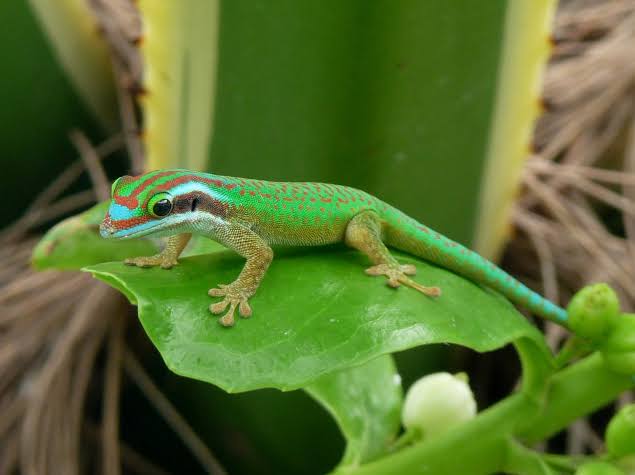
    Réunion day gecko

    Réunion day gecko

    The green margouillat (local word for lizard), more widespread than its Manapany cousin, seen in gardens and fruit trees across much of the island.

    • A widespread endemic species

      Unlike the Manapany day gecko, it is still found over much of Réunion.

    Photo: Tikouet · Wikimedia Commons · CC BY-SA 3.0

    Manapany day gecko

    Manapany day gecko

    A small, bright green gecko, endemic to just a handful of kilometres of coastline around Manapany-les-Bains, in Saint-Joseph: one of the most endangered reptiles in France.

    • A tiny territory

      Its entire population lives on a very narrow coastal strip, where it lives on vacoas (screw pines) and filaos (casuarina trees).

    Photo: B.navez · Wikimedia Commons · CC BY-SA 3.0

    Endormi

    Panther chameleon

    Endormi

    Nicknamed “endormi” (“sleepy”) in Réunion for its characteristic slowness, the panther chameleon originally comes from Madagascar; introduced and then naturalised on the island, it is now a protected species.

    • A colour-changing lizard

      Its ability to change colour according to its mood and the temperature makes it one of the most photographed animals on the island.

    Did you know? Despite its nickname, the endormi is not actually especially slow: the name is thought to come from its jerky, hesitant gait.

    Photo: Charles J. Sharp · Wikimedia Commons · CC BY-SA 4.0

    Flora

    Tamarin des Hauts

    Tamarin des Hauts

    The emblematic endemic tree of the upland forests, especially around Bélouve and Bébour, whose pale, fragrant wood was long used for cabinetmaking.

    • Between 1,200 and 1,900 m altitude

      This endemic acacia with a gnarled, twisted trunk, reaching up to 20 metres, forms remarkable forests in the island's Hauts (uplands).

    Photo: B.navez · Wikimedia Commons · CC BY-SA 3.0

    Fanjan (tree fern)

    Fanjan (tree fern)

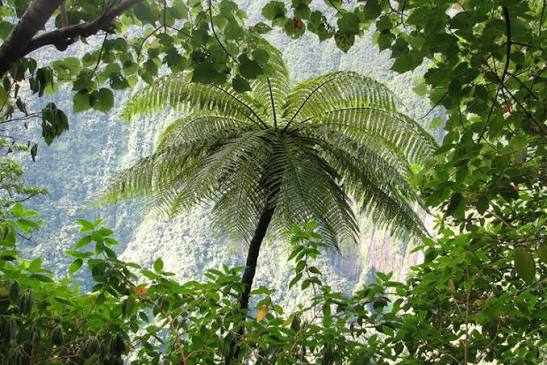
    A giant fern with a trunk, typical of humid upland forests, whose parasol of fronds rises above the low canopy of the Bois de Couleurs forests.

    • A home for orchids

      The fanjan's hollow trunk, which holds moisture without becoming waterlogged, is an ideal support for epiphytic orchids.

    Photo: Jean Michel Laurent · Wikimedia Commons · CC BY-SA 4.0

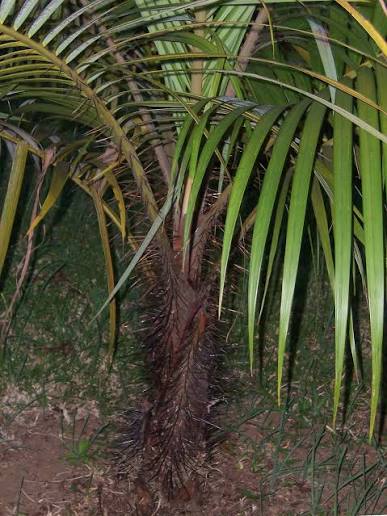
    Red palmiste

    Red palmiste

    An endemic palm whose edible heart (chou palmiste, palm heart) is a traditional delicacy, now strictly regulated because of over-harvesting.

    • Controlled harvesting

      Once abundant, this palm was heavily harvested for its edible heart, to the point that harvesting is now strictly controlled.

    Photo: B.navez · Wikimedia Commons · CC BY-SA 3.0

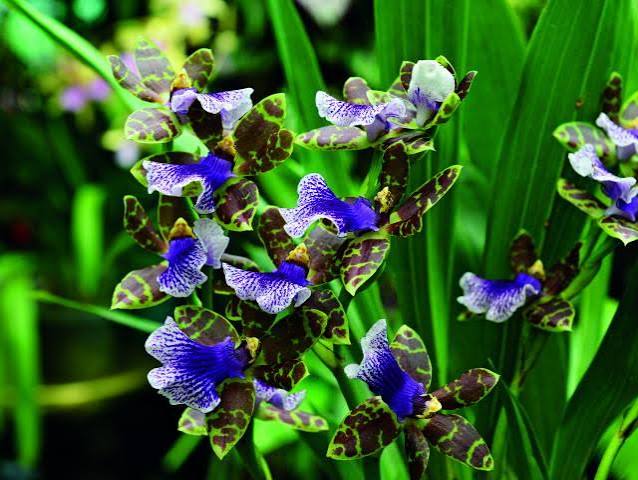
    Orchids of Réunion

    Orchids of Réunion

    The island is home to a remarkable number of endemic orchid species, many growing as epiphytes on the trunks of fanjans (tree ferns) and highland tamarinds.

    • One of the reasons for the UNESCO listing

      This wealth of endemic orchids relative to the island's size is regularly cited as one of the reasons for the “Pitons, cirques and remparts” listing.

    Photo: B.navez · Wikimedia Commons · CC BY-SA 4.0

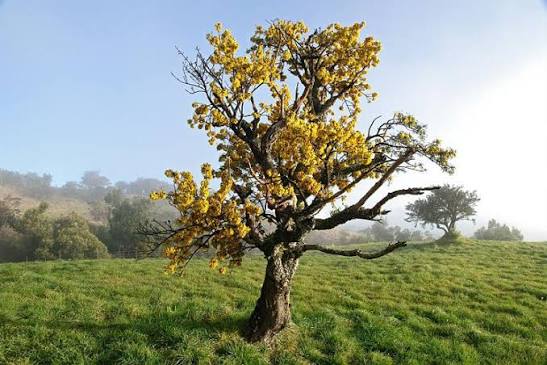
    Fleur jaune

    Fleur jaune

    A native plant (literally “yellow flower”) that grows mainly at altitude, above 2,000 metres, in the island's least accessible habitats.
    • An extreme habitat

      Its presence in high-altitude areas, exposed to wind and cold, makes it a witness to how Réunion's flora has adapted to the harshest conditions.

    Photo: B.navez · Wikimedia Commons · CC BY-SA 3.0

    Key themes

    Whale watching

    Watch without disturbing

    Whale watching

    Since 2003, GLOBICE has run a cetacean approach charter for professionals and private boaters alike, to reconcile watching with conservation.

    • Keep your distance

      Never encircle an animal, switch off the engine if it approaches of its own accord, and choose trips run by approved professionals.

    • Scientific monitoring

      GLOBICE has been recording cetacean sightings in Réunion's waters since 2001.

    Photo: Cynomana · Wikimedia Commons · CC BY-SA 4.0

    Turtle protection

    Kélonia

    Turtle protection

    Kélonia, the sea turtle observatory in Saint-Leu, cares for injured turtles before releasing them back into the sea and runs research programmes across the Indian Ocean.

    • A care centre

      Injured or sick turtles are taken in, treated, then released as soon as their condition allows.

    • Don't step in yourself

      An injured or stranded turtle should be reported to Kélonia rather than handled directly.

    Photo: B.navez · Wikimedia Commons · CC BY-SA 3.0

    Underwater biodiversity

    Underwater biodiversity

    Beneath the surface of the lagoon and beyond the reef, Réunion's seabed is home to highly diverse marine life: tropical fish, crustaceans, molluscs and corals.

    • A world within reach of mask and snorkel

      Much of this biodiversity is easy to observe in the protected lagoon on the west coast, without any special diving equipment.

    Photo: Alexandre Haffner, La Réunion vue du ciel · Wikimedia Commons · CC BY-SA 3.0

    Endemic wildlife

    Endemic wildlife

    Birds, geckos, insects: Réunion is home to a remarkable number of animal species that exist nowhere else, many of them now threatened by habitat loss.

    • Species found nowhere else

      The tuit-tuit, the papangue, and the Manapany and Réunion day geckos are among the island's most emblematic endemic species.

    Photo: Charles J. Sharp · Wikimedia Commons · CC BY-SA 4.0

    Protected species

    Protected species

    Since an order issued in 1989, many of Réunion's animal species have enjoyed legal protection banning their destruction, capture or trade.

    • A long-standing legal framework

      The order of 17 February 1989 sets out the list of protected animal species in the department, from birds to reptiles.

    Photo: Charles J. Sharp · Wikimedia Commons · CC BY-SA 4.0

    Réunion's ecosystems

    Réunion's ecosystems

    From coral lagoon to high-altitude cloud forest, by way of lava flows and cirques, Réunion packs a variety of ecosystems that is rare for such a small territory.

    • Dozens of microclimates

      The island's very rugged relief creates a multitude of microclimates, each with its own flora and fauna.

    Photo: Fabimaru · Wikimedia Commons · CC BY-SA 3.0

    Biodiversity

    Iconic species

    • Humpback whale (Megaptera novaeangliae)LC — Least Concern (globally); South Indian Ocean population increasing

      Marine life

      Humpback whale

      Megaptera novaeangliae

      The great migrant of the southern winter, which comes to give birth in Réunion's waters.

      Not endemic — seasonal visitor to Réunion's waters

    • CoralProtected ecosystem (marine nature reserve)

      Marine life

      Coral

      The builder of Réunion's lagoon, now closely monitored within the marine nature reserve.

    • Flamboyant (flame tree) (Delonix regia)Introduced, naturalised

      Flora

      Flamboyant (flame tree)

      Delonix regia

      The tree with bright red flowers that sets the island's streets ablaze as the southern summer arrives.

      Not endemic to Réunion — an introduced species native to Madagascar

    • Tree fern (fanjan) (Cyathea spp.)Found in protected forests

      Flora

      Tree fern (fanjan)

      Cyathea spp.

      A giant fern with a trunk, typical of the humid upland forests.

    • Réunion day gecko (Phelsuma borbonica)VU — Vulnerable

      Land wildlife

      Réunion day gecko

      Phelsuma borbonica

      The green margouillat (gecko), more widespread than its Manapany cousin, often seen in gardens and fruit trees.

      Endemic to Réunion

    • Manapany day gecko (Phelsuma inexpectata)EN — Endangered

      Land wildlife

      Manapany day gecko

      Phelsuma inexpectata

      A small, bright green gecko found only along a handful of kilometres of coastline in the south of the island.

      Endemic to Réunion

    • Bottlenose dolphin (Tursiops truncatus / aduncus)Protected species

      Marine life

      Bottlenose dolphin

      Tursiops truncatus / aduncus

      A regular in Réunion's lagoon and one of the most frequently seen cetaceans.

    • Endemic orchidsMany endemic species

      Flora

      Endemic orchids

      Réunion is home to a remarkable number of orchid species, many of which grow nowhere else.

      Many species endemic to Réunion

    • White-tailed tropicbird (paille-en-queue) (Phaethon lepturus)Protected species

      Land wildlife

      White-tailed tropicbird (paille-en-queue)

      Phaethon lepturus

      Réunion's emblematic bird, recognisable by its long white tail feathers.

    • Palmiste rouge (red palm) (Acanthophoenix rubra)Endemic, declining

      Flora

      Palmiste rouge (red palm)

      Acanthophoenix rubra

      An endemic palm whose edible heart (“chou palmiste”, heart of palm) is a traditional delicacy.

      Endemic to Réunion

    • Tamarin des Hauts (Acacia heterophylla)NT — Near Threatened

      Flora

      Tamarin des Hauts

      Acacia heterophylla

      The island's emblematic endemic tree of the upland forests, especially around the Plaine des Chicots and Bélouve.

      Endemic to Réunion (exact status to be confirmed against TAXREF)

    • Green turtle (Chelonia mydas)EN — Endangered

      Marine life

      Green turtle

      Chelonia mydas

      The most common of the sea turtles seen in Réunion's lagoon.

      Not endemic — a pantropical marine species

    • Tuit-tuit (Réunion cuckooshrike) (Coracina newtoni)CR — Critically Endangered

      Land wildlife

      Tuit-tuit (Réunion cuckooshrike)

      Coracina newtoni

      One of the world's most threatened birds, found only in a single forest massif on the island.

      Endemic to Réunion

    The official app

    All of Nout Péi, in your pocket

    The website opens the doors. The app comes with you out in the field: map, guides, routes, and Quiz Péi, available only in the app.

    • Quiz PéiDaily challenge, duels and leaderboard
    • Scan PéiIdentify what you discover
    • Interactive mapEvery place in your pocket
    • In-depth guidesHistory, trails, local favourites

    Open this page in your browser

    This app’s built-in browser blocks the App Store. Tap ··· in the top right corner, then “Open in browser”, and tap the download button again.