Southern winter
May
- Air, coastal
- ≈ 27 °C
- Sea
- ≈ 26 °C
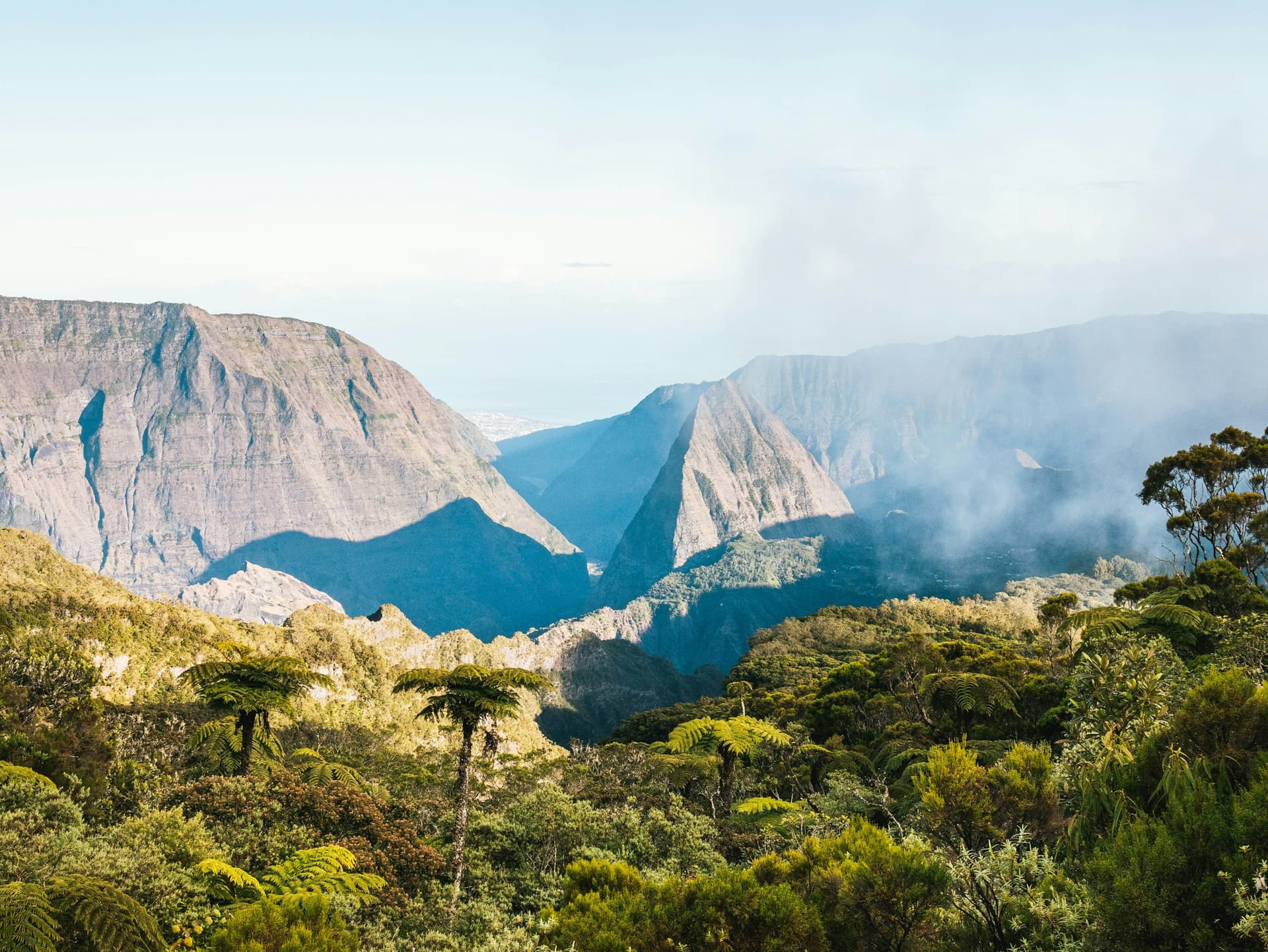
The southern winter begins: drier weather and often clear skies in the morning. An excellent time for the cirques and the volcano.
- Best for hiking
Stay
When to come, how to get around, what to pack and how to enjoy the island safely: the essentials before you leave.
When to go
The southern winter (May to October) is dry and cool, perfect for walking. The southern summer (November to April) is hot and humid, with a risk of cyclones. Pick a month.
Southern winter
The southern winter begins: drier weather and often clear skies in the morning. An excellent time for the cirques and the volcano.
Indicative average temperatures on the coast. In the uplands (the Hauts), allow roughly 6 °C less per 1,000 m of altitude. See today’s weather, area by area
Getting there
Roland-Garros, in the north near Saint-Denis, handles most flights. Pierrefonds, in Saint-Pierre, serves the south. Allow about 11 hours for a direct flight from Paris.
A French département: European Union citizens need a valid identity card or passport. The island is outside the Schengen Area: other travellers should check visa requirements with the French consulate.
To protect local wildlife and plants, plants, seeds, fruit and animals are subject to checks. Find out the rules before travelling with fresh produce.
Getting around
Distances are short, but mountain roads are winding and traffic jams are common at rush hour around Saint-Denis and on the west coast.
The most practical way to go everywhere at your own pace. Book early in high season. Allow plenty of time on the cirque roads: the road to Cilaos has hundreds of bends.
The Car Jaune regional network links the main coastal towns and some upland areas; each urban area also has its own local network. Handy for a car-free stay, more limited for natural sites.
The Cirque de Mafate has no road: you can only get in on foot (or by helicopter). Gîtes in Mafate must be booked in advance.
Helicopter, microlight or paragliding over Saint-Leu: the best way to grasp the terrain of the cirques and the volcano.
Health
Dengue and chikungunya circulate regularly. Protect yourself: repellent, long clothing in the evening, a mosquito net if needed. See a doctor if you develop a fever.
In the tropics, UV levels are very high, even when it is overcast and at altitude. Sun cream, a hat and plenty of water.
It is generally safe to drink, but after heavy rain some towns may temporarily advise against it: follow local notices.
Safety
Because of the shark risk and currents, swimming is only allowed in the lagoon and in equipped, supervised areas. Respect the flags and the orders posted on site.
Set off early: clouds often build in late morning. Check trail conditions (some close after rain), take water, warm layers and a head torch, and tell someone your route.
Access to the Enclos Fouqué (the volcano’s main caldera) may be restricted or closed by prefectural order, especially during an eruption. Check before you go and never leave the marked trails.
From December to April, follow Météo-France bulletins and the prefecture’s instructions. Under a red alert, all travel is forbidden: stay indoors.
Packing
Emergencies
Frequently asked questions
From May to November, during the southern winter: the weather is drier and cooler, ideal for hiking. From July to October, humpback whales can be seen from the west coast. The southern summer (December to April) is hotter and more humid, with a risk of cyclones, but the sea is warmer and the landscapes greener.
Réunion is a French département. European Union citizens can enter with a valid identity card or passport. The island is not part of the Schengen Area: other travellers should check with the French consulate whether they need a specific visa.
It is the easiest way to explore the island at your own pace. The Car Jaune bus network links the main towns, but natural sites and the uplands (the Hauts) are poorly served. The Cirque de Mafate can only be reached on foot or by helicopter.
No. Because of the shark risk and currents, sea swimming is only allowed in designated areas: the lagoon and supervised, equipped bathing areas. Always follow the flags and signs on site.
Allow at least ten days to discover the coast, a cirque and the volcano without rushing. With two or three weeks, you can stay overnight in the cirques, do a long hike and take your time at the lagoon.
The official app
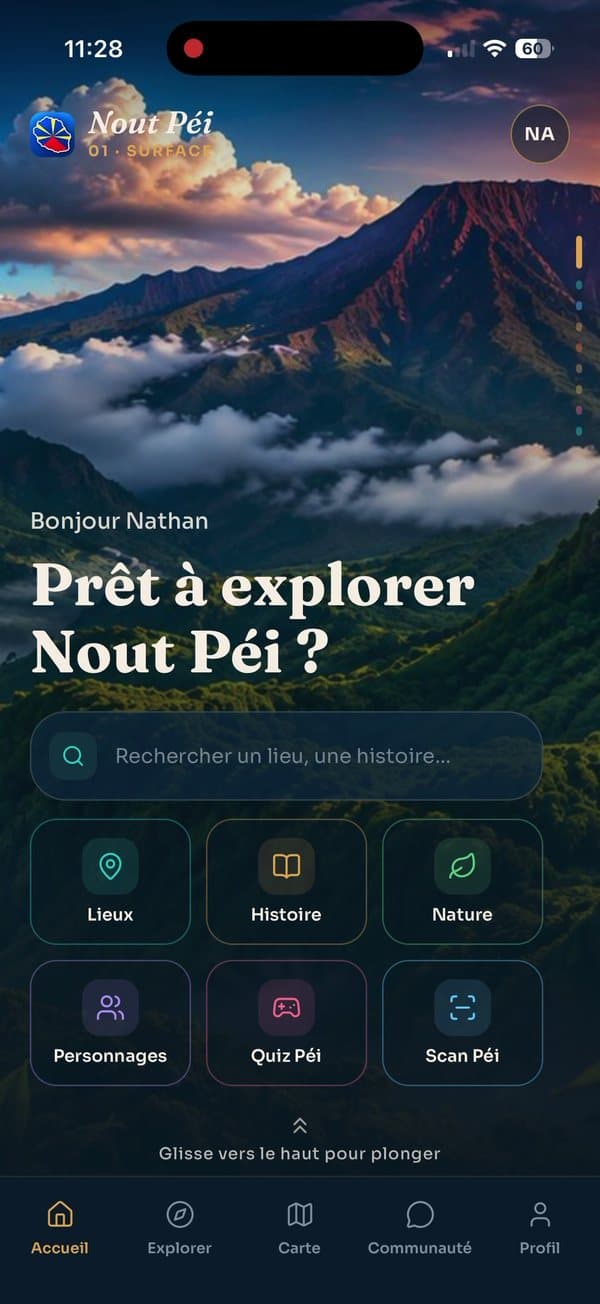
The website opens the doors. The app comes with you out in the field: map, guides, routes, and Quiz Péi, available only in the app.