Skip to content

Suggestions

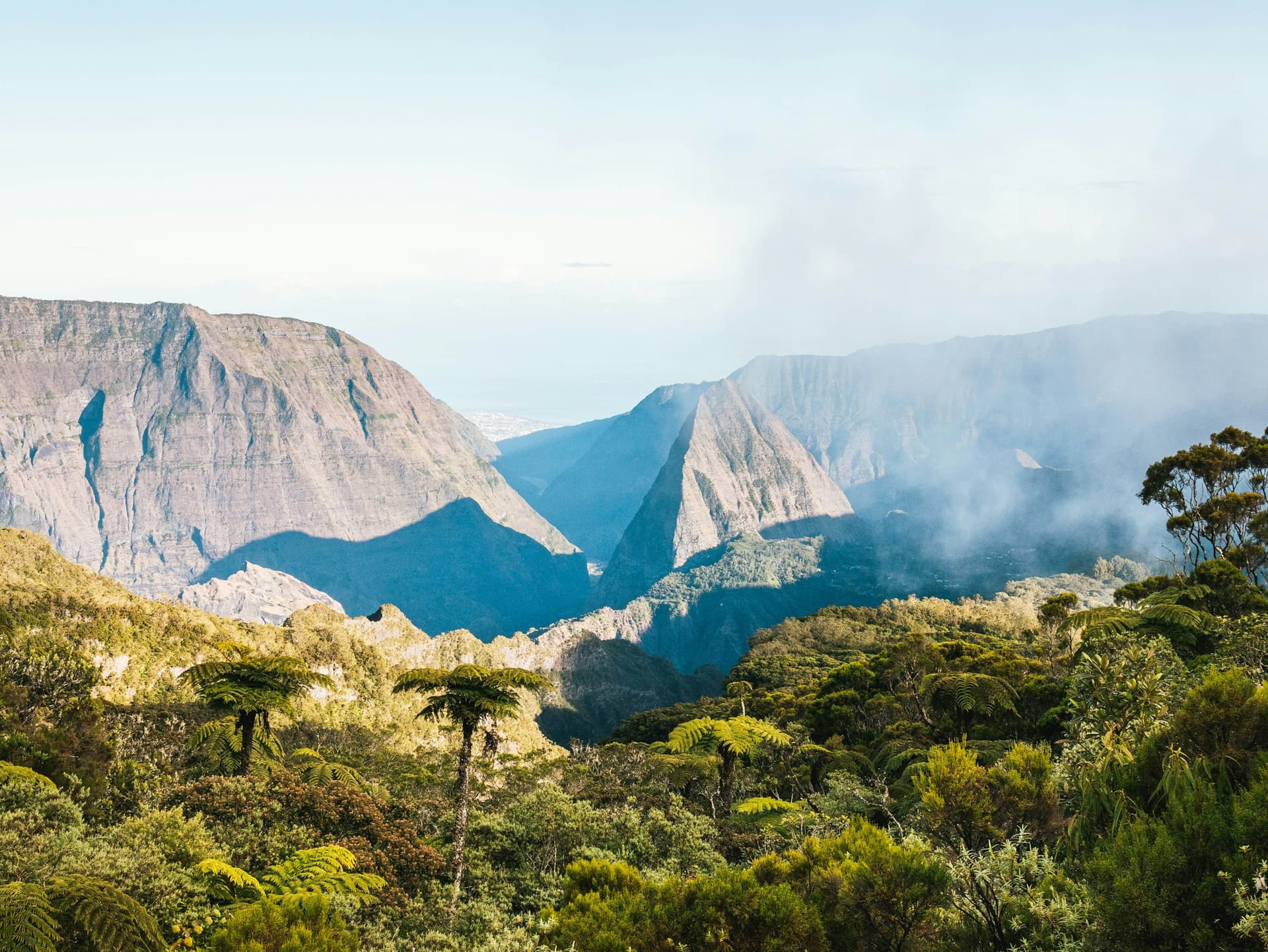
    The ramparts of a cirque in the clouds

    Understand

    Ou té koné?

    “Did you know?” in Creole. Verified facts and local sayings from the péi (the island), with a new card every day, just as in the app.

    Today’s “Did you know?” · Saturday 14 November

    In 2024, the Diagonale des Fous covered 175 km with 10,107 m of elevation gain. 2,937 runners started this trail race, considered one of the toughest in the world.

    Source: Grand Raid Réunion 2024 / UTMB IndexFind out more

    35 things to know

    Volcano

    • Since 1998, the Piton de la Fournaise has erupted on average every eight months. The volcano observatory (OVPF-IPGP) monitors it around the clock from its stations across the island.

      Source: OVPF-IPGP

    • In April 2007, an exceptional eruption of the Piton de la Fournaise caused the Dolomieu crater to collapse, dropping by several hundred metres in a matter of hours.

      Source: OVPF-IPGP / Staudacher et al. 2009

    • The first documented eruption of the Piton de la Fournaise dates back to 1640. Over 381 years the volcano has had more than 187 documented eruptions, making it one of the most active volcanoes in the world.

      Source: OVPF-IPGP — Eruption history

    Nature

    • At 3,070 m, the Piton des Neiges is the highest point in the entire Indian Ocean. A shield volcano that has been dormant for about 27,000 years (Famin et al. 2022), it gave rise to the island’s three cirques (natural amphitheatres).

      Source: Famin et al. 2022 — Geochemistry, Geophysics, Geosystems / Université de La Réunion

    • Réunion was born from a hotspot beneath the Indo-Australian plate. Its first underwater eruptions date back about 3 million years — the beginnings of the island we know today.

      Source: BRGM / Geology of Réunion

    • Réunion has 246 strictly endemic plant species — plants that grow nowhere else in the world. Its rate of endemism is three times that of Hawaii.

      Source: DEAL Réunion 2017 / CBNM-IUCN — Endemic vascular flora

    • The papangue (Circus maillardi), or Réunion harrier, is the island’s only endemic bird of prey. Listed as vulnerable, it lives in the uplands and is found nowhere else in the world.

      Source: SEOR / Réunion National Park

    • The tamarin des hauts (Acacia heterophylla) is an endemic tree that grows nowhere else in the world. Found between 1,000 and 2,000 m above sea level, it dominates the forests of the interior.

      Source: Réunion National Park

    • The tec-tec (Saxicola tectes), or Réunion stonechat, is a bird endemic to Réunion. This small, discreet and curious chat of the uplands is one of the symbols of the island’s native wildlife.

      Source: SEOR / Réunion National Park

    • Réunion National Park was created on 5 March 2007. It covers more than 40% of the island and protects its high-altitude ecosystems along with much of its endemic biodiversity.

      Source: Réunion National Park

    • Réunion’s three cirques — Mafate, Cilaos and Salazie — are former calderas of the Piton des Neiges massif, deeply carved by millions of years of erosion.

      Source: BRGM / Réunion National Park

    Heritage

    • In 2010, the Pitons, cirques and ramparts of Réunion Island were inscribed on the UNESCO World Heritage List. The listed area covers 105,838 hectares, or 42% of the island.

      Source: UNESCO — World Heritage List, no. 1317

    Culture

    • Maloya was inscribed by UNESCO on the List of the Intangible Cultural Heritage of Humanity on 1 October 2009. Born on the slave plantations, this music is today the symbol of Réunionese identity.

      Source: UNESCO / linfo.re

    • Maloya, a music of resistance born on the plantations, was banned in Réunion in the 1950s. Rehabilitated in 1982, it has become the musical symbol of Réunionese identity.

      Source: linfo.re / sionsia.re

    • Réunion séga is a festive music born on the 18th-century plantations from a blend of Afro-Malagasy rhythms and European dances. Its ternary rhythm gives it a characteristic sway.

      Source: sionsia.re / Wikipedia (Séga)

    Places

    • The Cirque de Mafate is the only one of Réunion’s three cirques with no road access at all. Its roughly 700 residents can only leave on foot or by helicopter.

      Source: Réunion National Park / cartedelareunion.fr

    • Réunion covers 2,512 km² and lies 800 km east of Madagascar. Despite its modest size, it rises to 3,070 m, making it one of the most mountainous islands in the Indian Ocean.

      Source: INSEE / Geography of Réunion

    History

    • In the 18th century, the steep Cirque de Mafate was a refuge for runaway slaves, the “maroons” (marrons). Its name is linked to that of a maroon leader, Maffack, mentioned in a 1751 report by maroon hunters.

      Source: Portail esclavage Réunion (Réunion slavery portal) — G. Pignon, M.-A. Payet

    • Before the first French settlers arrived around 1663–1665, Réunion was completely uninhabited. It is one of the few islands in the world never to have had an indigenous population.

      Source: Historical archives / colonial sources

    • On 20 December 1848, Sarda Garriga proclaimed the abolition of slavery in Réunion, freeing around 62,000 people. The date is celebrated today as the Fèt Kaf.

      Source: Portail esclavage Réunion (Réunion slavery portal)

    • The Fèt Kaf has been an official public holiday in Réunion since 1983. Held every 20 December, it commemorates the abolition of slavery in 1848 with maloya concerts and community gatherings.

      Source: Portail esclavage Réunion (Réunion slavery portal)

    • From 1828, and on a massive scale after abolition in 1848, Réunion brought in indentured labourers (engagés), mainly from India but also from Africa, Madagascar, China and Vietnam. Between 160,000 and 200,000 engagés arrived up to the 1930s.

      Source: Portail esclavage Réunion (Réunion slavery portal) — M. Marimoutou-Oberlé

    • In 1841, Edmond Albius, a 12-year-old enslaved boy in Réunion, discovered how to hand-pollinate vanilla. His method, still used all over the world, made commercial vanilla growing possible.

      Source: Mémoire esclavage (slavery memory) / memoire-esclavage.org

    • The arabica coffee variety known as “Bourbon” takes its name from the former Île Bourbon (Réunion). Developed in the 18th century, it later spread to Latin America and Africa.

      Source: CIRAD / World Coffee Research — Bourbon variety from Réunion

    Ocean

    • In 2024, Globice counted 416 humpback whales off Réunion — the third-best season since monitoring began. The tail of each whale is unique, like a fingerprint.

      Source: Globice 2024 / la1ere.franceinfo.fr

    • Since 2001, Globice has kept a photo-identification catalogue of humpback whales in Réunion, listing more than 3,600 known individuals (3,616 identified between 2001 and 2024). Every tail photo adds to the catalogue.

      Source: Globice — photo-identification catalogue 2001–2024

    • Globice has identified 25 species of cetaceans in Réunion’s waters. Four species of dolphin live there all year round, including the Indo-Pacific bottlenose dolphin, listed as vulnerable.

      Source: Globice — species inventory

    • Two species of sea turtle frequent Réunion’s waters: the green turtle (Chelonia mydas) and the hawksbill turtle (Eretmochelys imbricata). Both are strictly protected.

      Source: CEDTM / Réunion Marine Nature Reserve

    • Réunion’s Marine Nature Reserve, created on 21 February 2007, protects 35 km² of marine environment, including 20 km of coral reef and more than 190 recorded species of coral.

      Source: Réunion Marine Nature Reserve / IFRECOR

    • Réunion’s lagoons stretch over about 12 km² along the west coast and make up 12% of the coastline. More than 1,000 species of fish and more than 190 species of coral have been recorded there.

      Source: Marine Nature Reserve / IFRECOR

    Sport

    • In 2024, the Diagonale des Fous covered 175 km with 10,107 m of elevation gain. 2,937 runners started this trail race, considered one of the toughest in the world.

      Source: Grand Raid Réunion 2024 / UTMB Index

    • The Grand Raid de La Réunion was born in 1989. Held every October, it brings together several races, including the Diagonale des Fous, the Route du Volcan and the Trail de Bourbon.

      Source: guide-reunion.fr / Grand Raid organisers

    Food

    • Sugar cane has been grown in Réunion since the 17th century. The island’s first industrial crop, it is still the raw material for Réunion’s sugar and rum.

      Source: Réunion Chamber of Agriculture / Tereos

    • Réunion vanilla is called “Bourbon” in tribute to the island’s former name. Grown by hand using Edmond Albius’s technique (1841), it is renowned as one of the finest in the world.

      Source: davidvanille.com / francetvpro.fr

    • Cari (Creole curry) is Réunion’s signature dish. Inherited from the Indian engagés, this spicy stew comes in many versions depending on the family: cari poulet (chicken), cari boeuf (beef), cari zourite (octopus) and many more.

      Source: Creole culinary sources / food heritage

    Kozman péi

    Creole sayings and proverbs (kozman), with their translation.

    • « Goni vide y tien pa debout »

      An empty sack can’t stand up.

      Without food or resources, you can’t get anywhere. A Creole reminder to look after yourself and your loved ones.

    • « Sé dann vié marmit i fé bon kari »

      It’s in the old pot that you make a good cari.

      Experience counts: the elders know how it’s done. Wisdom comes with time.

    • « Ti ash i koup gro bwa »

      The little axe cuts the big tree.

      Perseverance overcomes everything, even the most daunting obstacles.

    • « Pakapab lé mor san esèye »

      The one who can’t has died without trying.

      Nothing ventured, nothing gained. Failing after trying is better than regretting never having dared.

    • « Gro poisson i bèk si le tar »

      The big fish bites late.

      Good things come to those who wait. The best things take time.

    • « Fé pa la bou avan la pli »

      Don’t make the mud before the rain.

      Don’t put the cart before the horse. There’s no point creating problems before they arrive.

    • « An atendan, kabri i manz salad »

      Meanwhile, the goat is eating the lettuce.

      Without a decision or action, the problem gets worse on its own. Doing nothing always has a cost.

    • « Na in zour i apèl demin »

      There’s a day called tomorrow.

      The wheel turns. Nothing lasts forever: hard times pass and situations change.

    • « La lang na pwin le zo »

      The tongue has no bones.

      Words cost nothing to say but can wound deeply. An invitation to weigh what you say.

    • « Toute zoli fruit lé pa bon manzé »

      Not every pretty fruit is good to eat.

      Appearances can be deceptive. All that glitters is not gold.

    • « Tan kou bat, le fer i reste rouge »

      As long as you strike the iron, it stays red.

      You have to act while the opportunity is there. Seize the moment and don’t let your chance slip by.

    • « Le temps y part, zamé li revient »

      Time flies away and never comes back.

      An invitation to make the most of the present moment. Lost time can never be made up.

    • « Ti sapot i fé gran pied »

      A little sapodilla seed makes a big tree.

      Small things have great potential. Modest beginnings can lead to great success.

    • « Zépol y bat, mé lo kèr i pleur »

      The shoulders move, but the heart is crying.

      You can put on a brave face while suffering inside. Outward strength sometimes hides fragility.

    • « Bèf i krwa son marmay zoli »

      The ox thinks its little one is beautiful.

      Love is blind. Everyone finds their own children (or achievements) extraordinary.
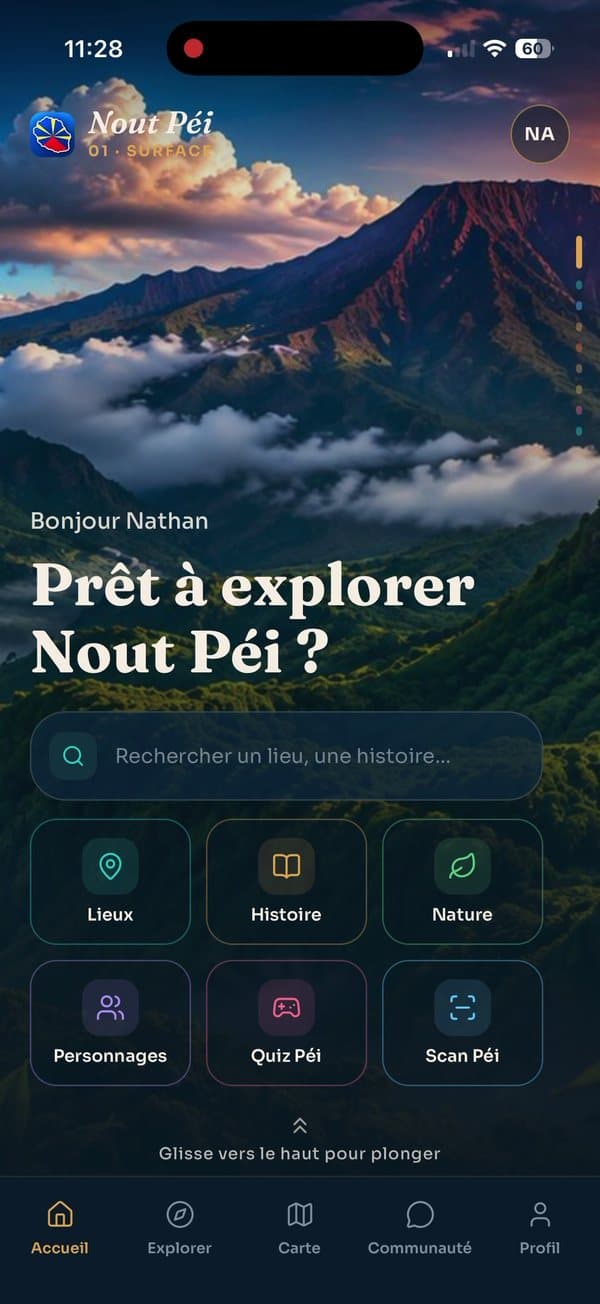
    The official app

    All of Nout Péi, in your pocket

    The website opens the doors. The app comes with you out in the field: map, guides, routes, and Quiz Péi, available only in the app.

    • Quiz PéiDaily challenge, duels and leaderboard
    • Scan PéiIdentify what you discover
    • Interactive mapEvery place in your pocket
    • In-depth guidesHistory, trails, local favourites

    Open this page in your browser

    This app’s built-in browser blocks the App Store. Tap ··· in the top right corner, then “Open in browser”, and tap the download button again.