Understand
One history, a thousand memories
From the first sailors’ accounts to the island of today: each period is told, dated and sourced, just as in the app.

01 · ≈ 3 million years
The birth of the island
Réunion was born around 3 million years ago, in the heart of the Indian Ocean, through volcanic activity. Today's landscape is the result of millions of years of successive tectonic movements,…
Read the chapter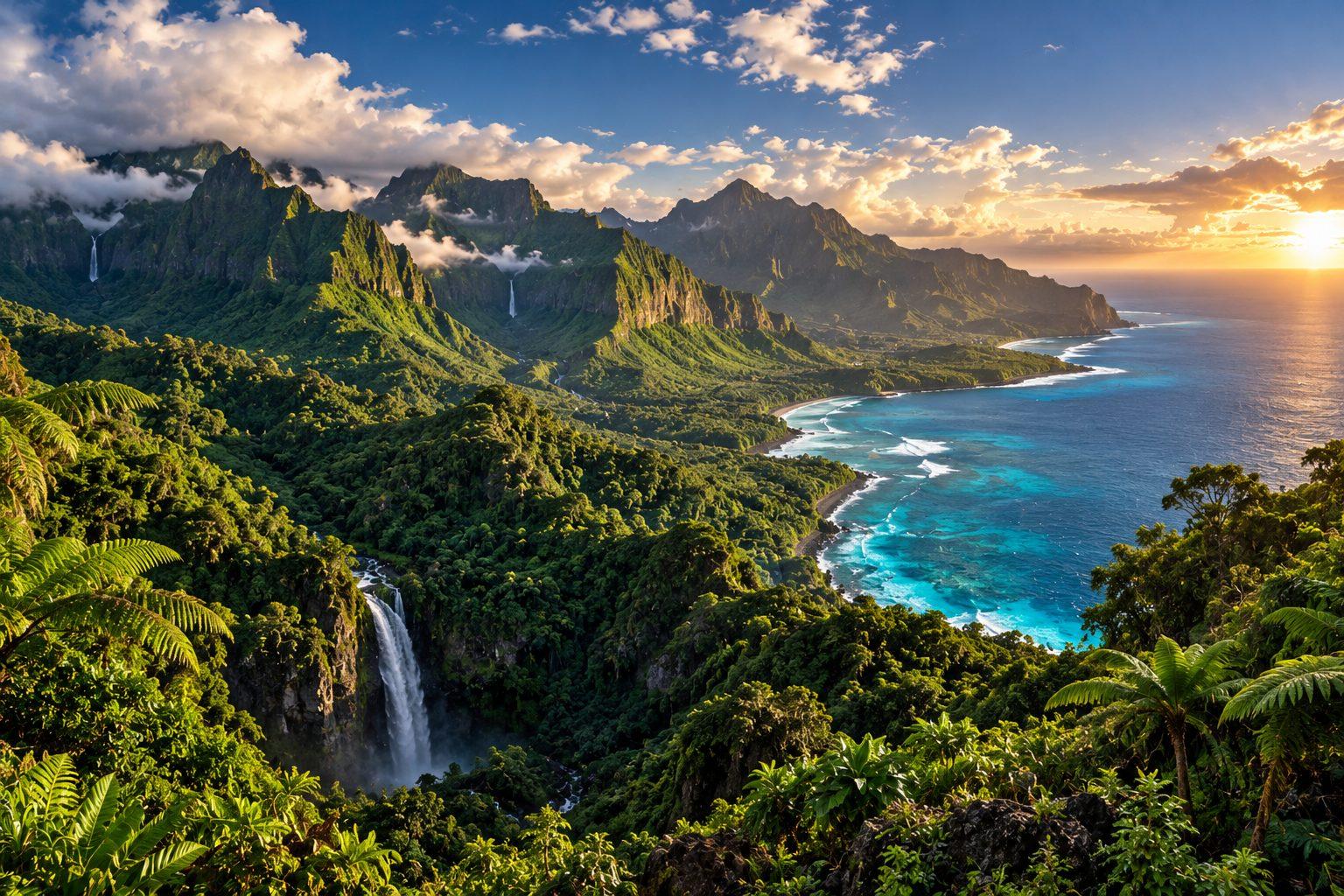
02 · Before the 17th century
An uninhabited island
For millennia after its volcanic formation, the island remained entirely free of any human presence: neither the great Austronesian migrations that settled Madagascar nor Arab or African navigators…
Read the chapter
03 · 15th – 16th century
The first discoveries
For centuries, the island remained completely uninhabited. It first appeared on the charts of Arab navigators, long before any European set foot on it.
Read the chapter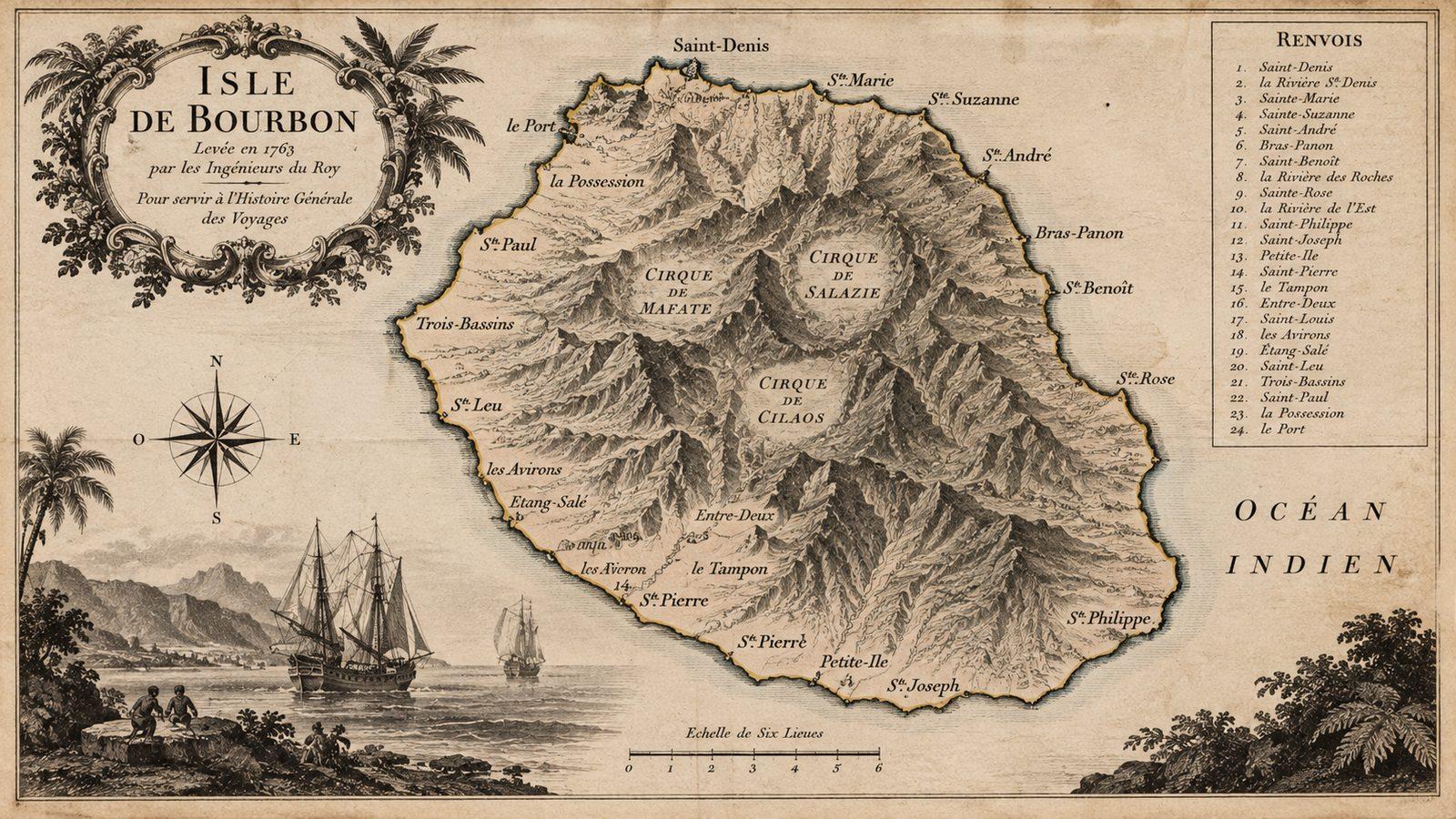
04 · 1153 – 1848
The island's names
Before it was called Réunion, the island bore at least six different names, given by the powers that approached or claimed it, each telling a distinct chapter of its history.
Read the chapter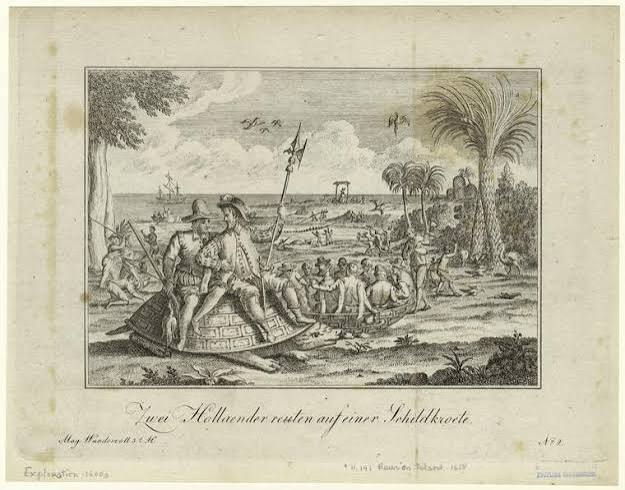
05 · 1663
The first inhabitants
The island's first occupants were not settlers who came of their own free will, but exiles and adventurers.
Read the chapter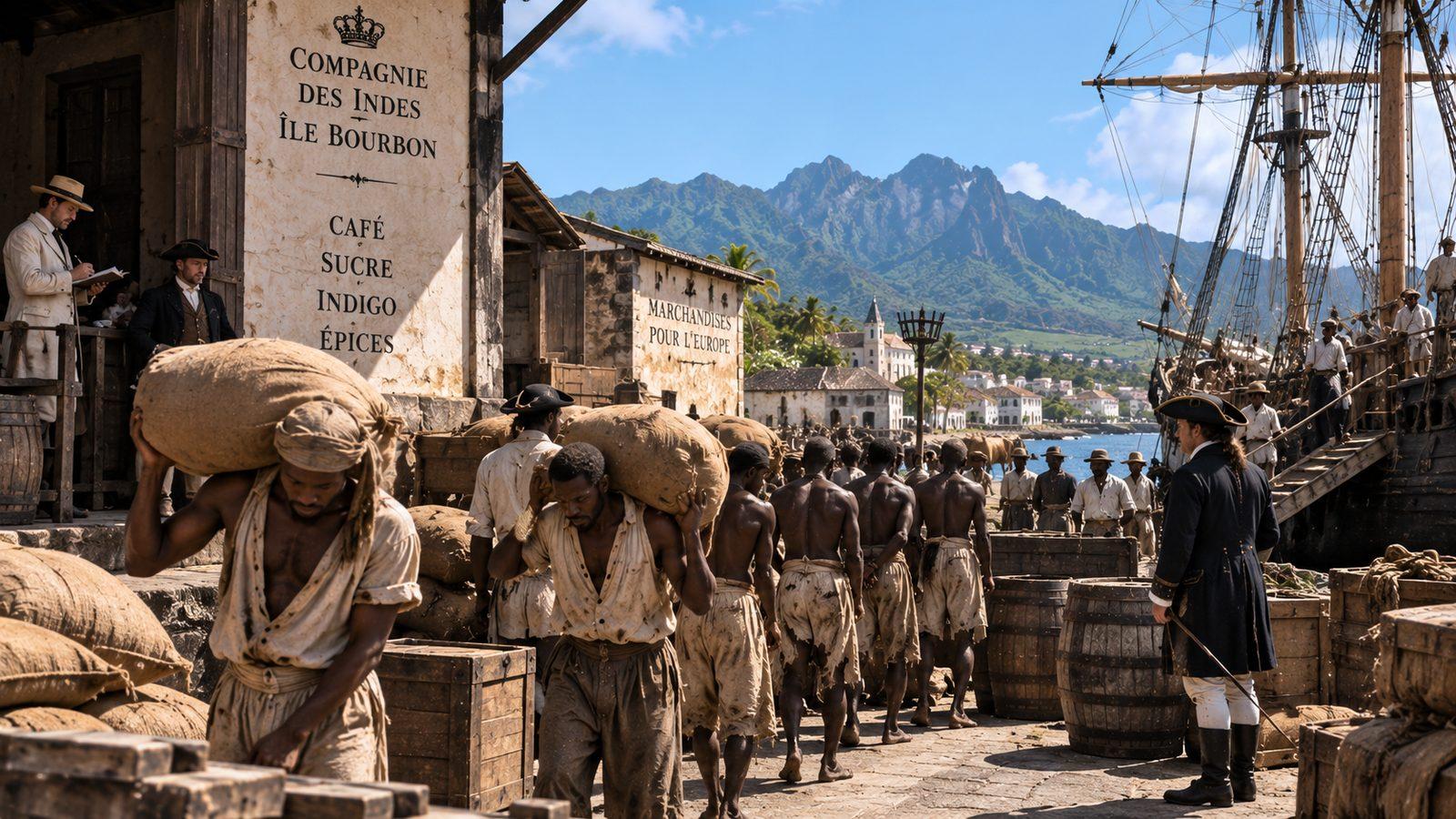
06 · 1649 – 1715
Île Bourbon
From 1665, colonisation was organised around the French East India Company (Compagnie des Indes orientales), created on the initiative of Louis XIV and Colbert to develop French trade in the Indian…
Read the chapter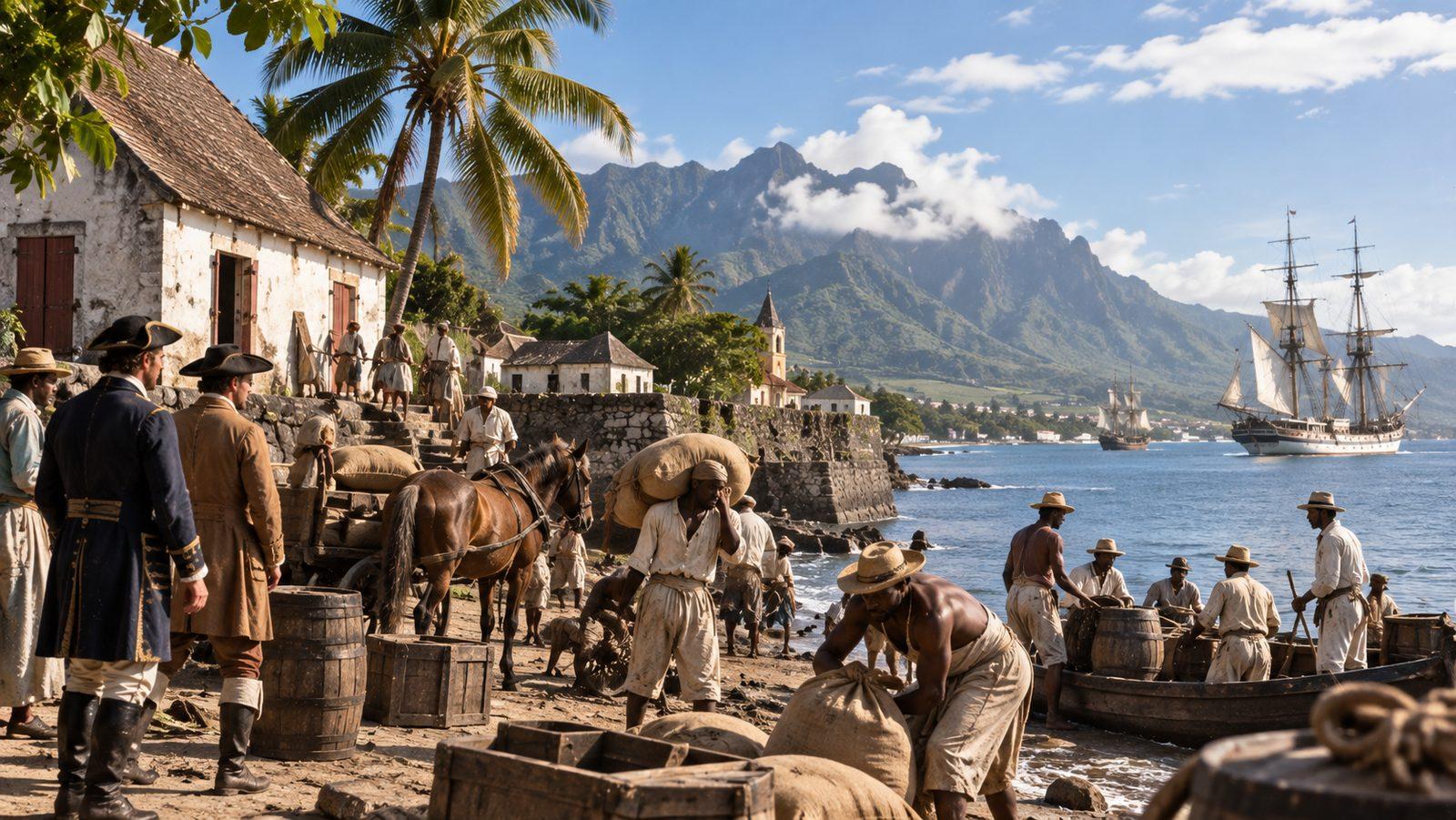
07 · 1715 – 1810
Coffee, spices and plantations
From 1715, the French East India Company imposed coffee growing on Île Bourbon, turning a subsistence economy into a plantation society and laying the foundations of the slave system that would…
Read the chapter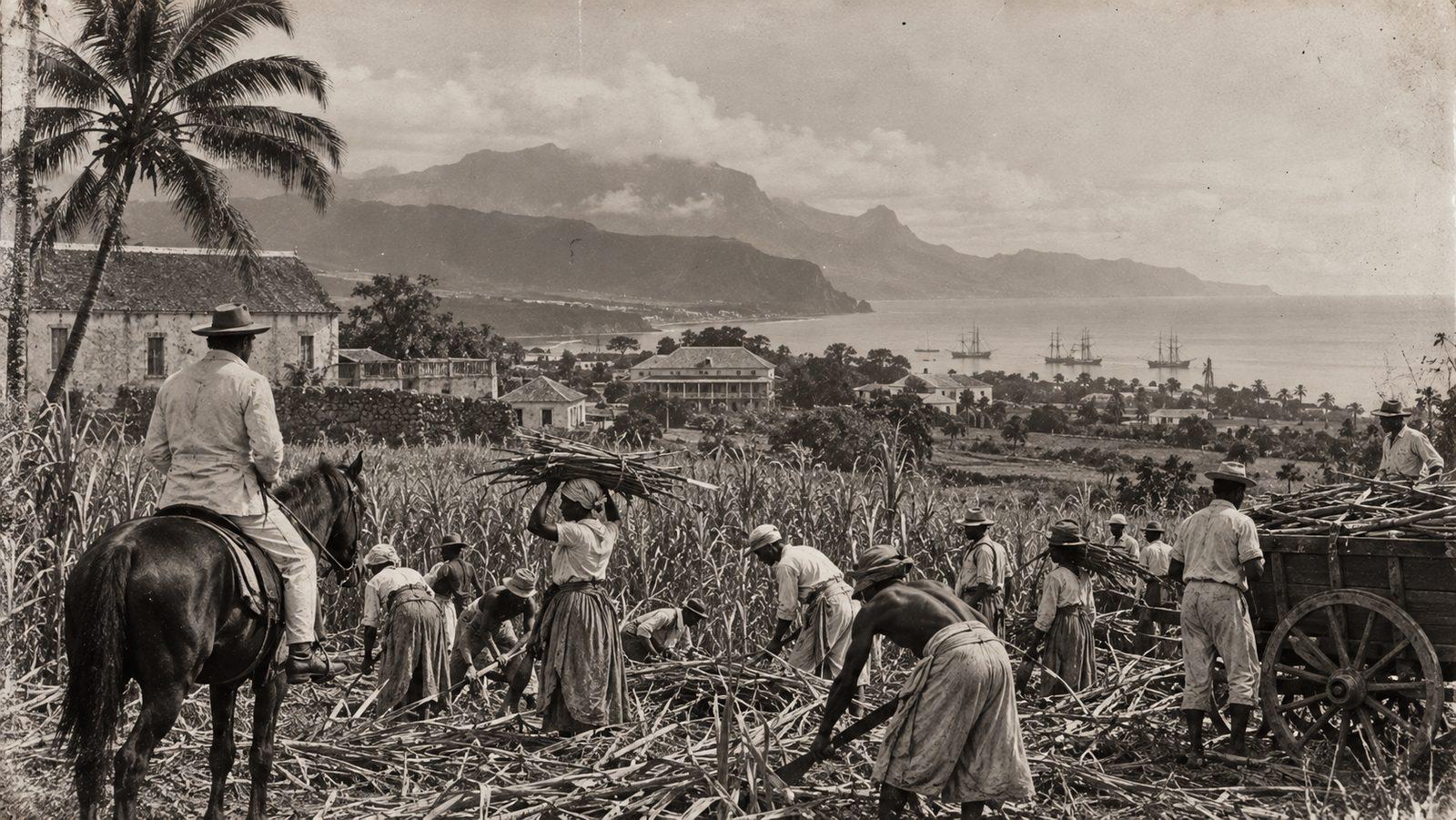
08 · 1663 – 1848
Slavery on Bourbon
The development of coffee and then sugar cane growing relied on the mass importation of enslaved people, first from Madagascar and then from East Africa.
Read the chapter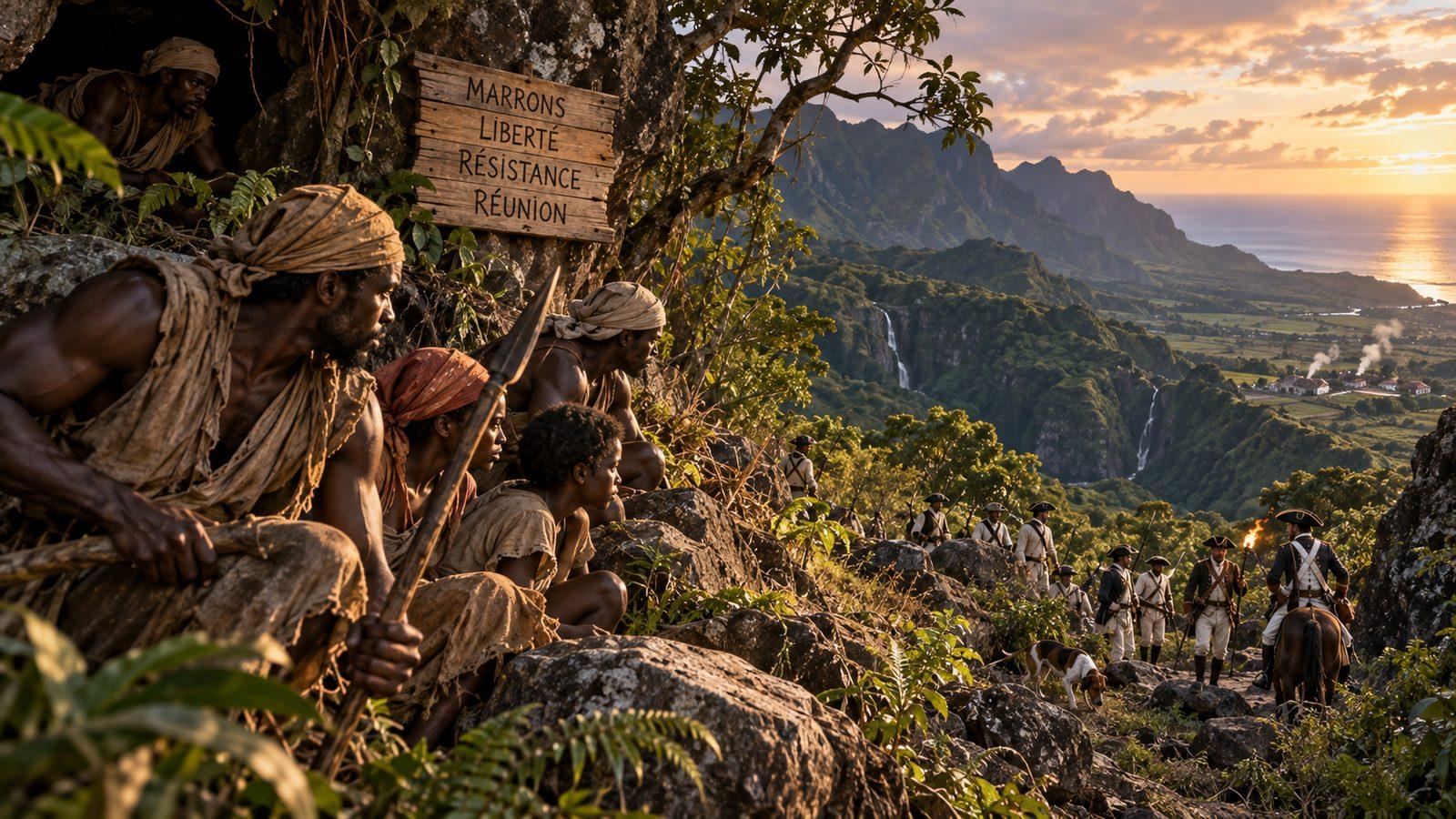
09 · 1663 – 1848
Marronage
From the very beginning of slavery on Bourbon, enslaved men and women fled the plantations to take refuge in the Hauts (uplands), then almost untouched. The expeditions of militiamen tasked with…
Read the chapter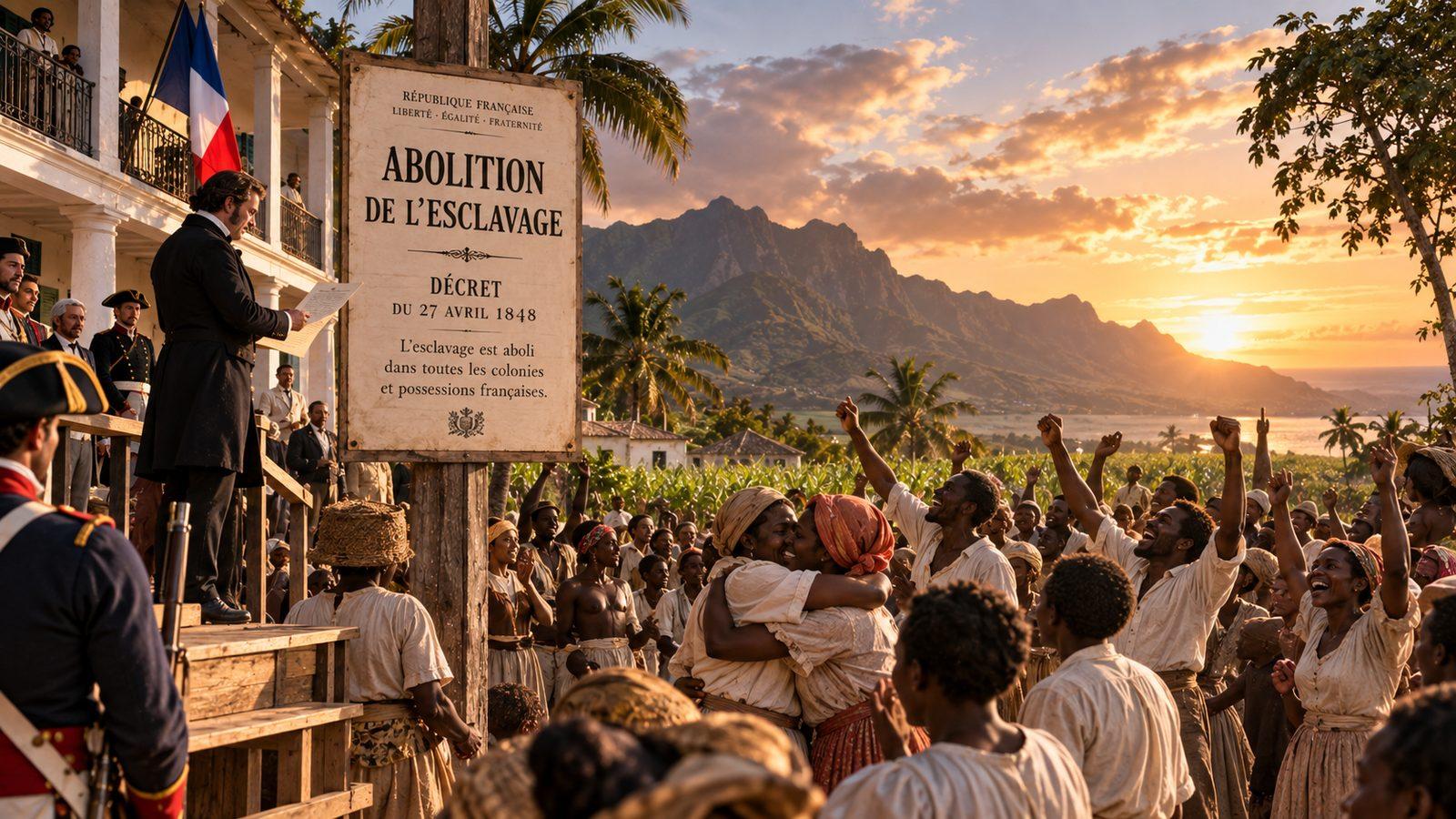
10 · 20 December 1848
1848: abolition
On 20 December 1848, Sarda Garriga, the Republic's commissioner general sent by the provisional government, proclaimed the abolition of slavery on Bourbon, more than eight months after the decree…
Read the chapter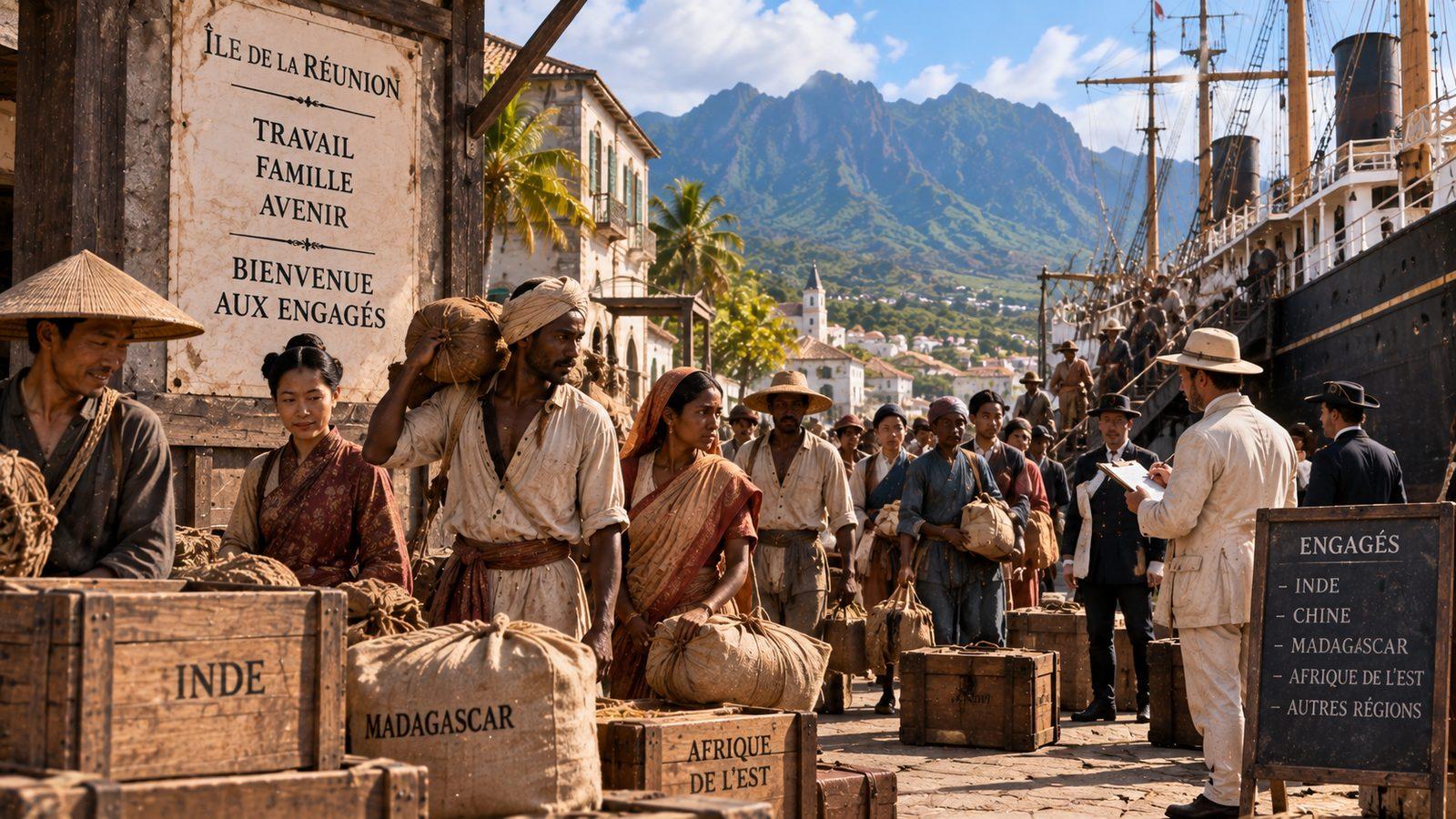
11 · 19th – 20th century
Indenture (engagisme)
After abolition in 1848, many freed people left the plantations. To keep growing sugar cane, landowners brought in contract workers, known as engagés (indentured labourers), mainly from India but…
Read the chapter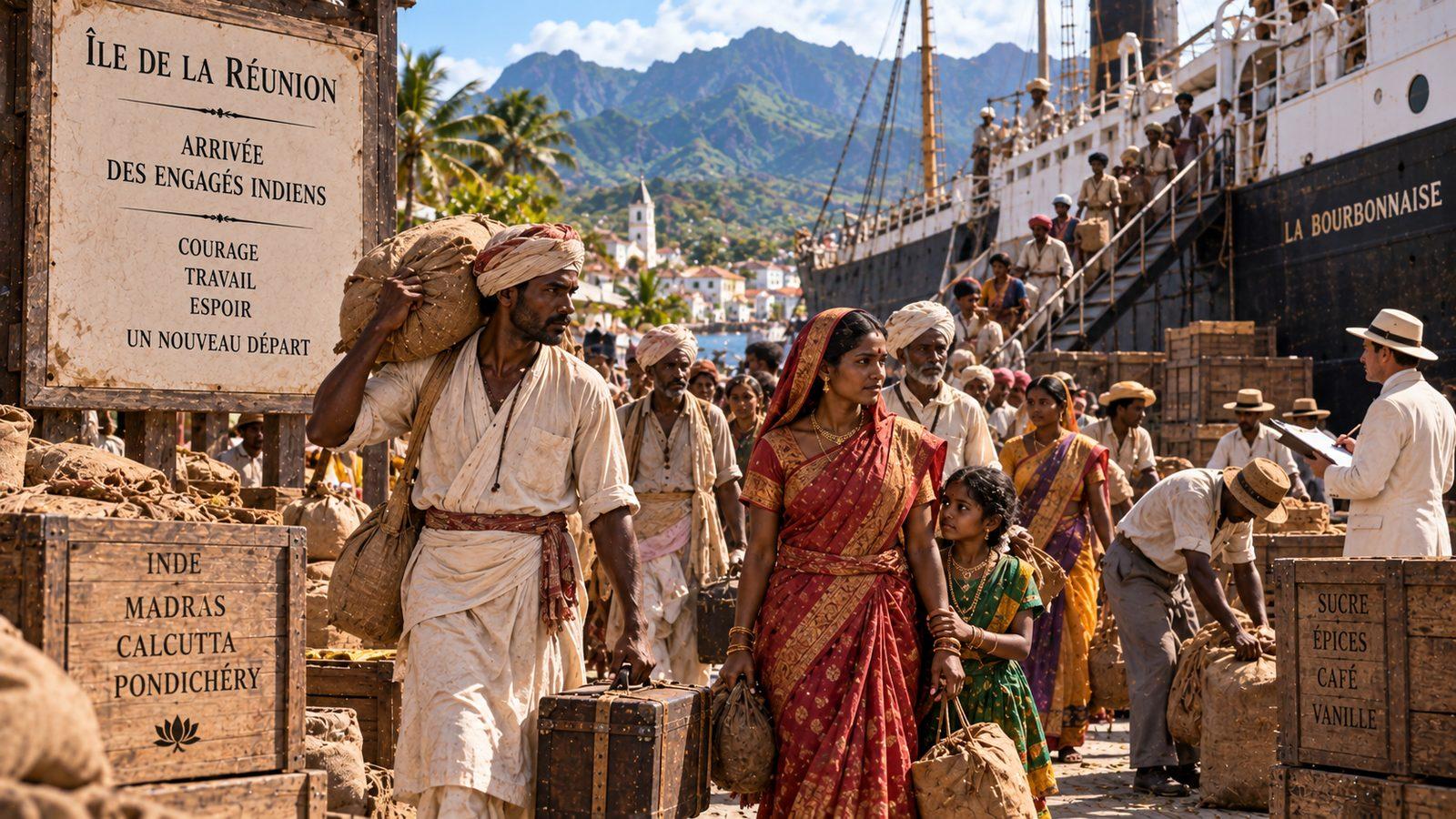
12 · 1848 – 1930
Indian migrations
After abolition, tens of thousands of contract workers left India, mostly the Tamil south, to work on Réunion's sugar cane plantations. This immigration laid the foundations of the Malbar community…
Read the chapter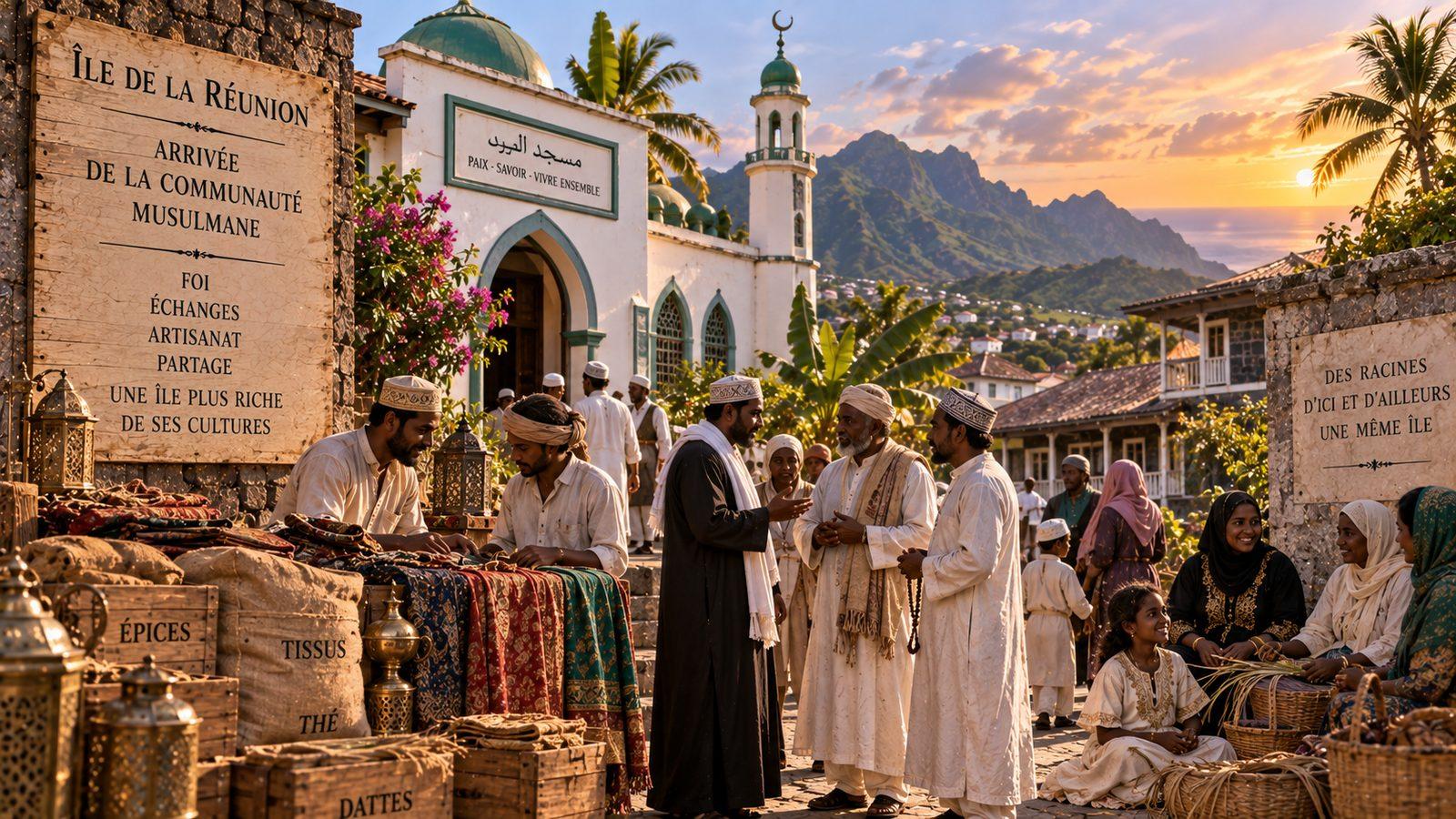
13 · 19th century – today
The Muslim community
From the late 19th century, Muslim merchants from Gujarat (India) settled on Bourbon, followed later by families from the Comoros. They founded mosques that are today among the oldest in France.
Read the chapter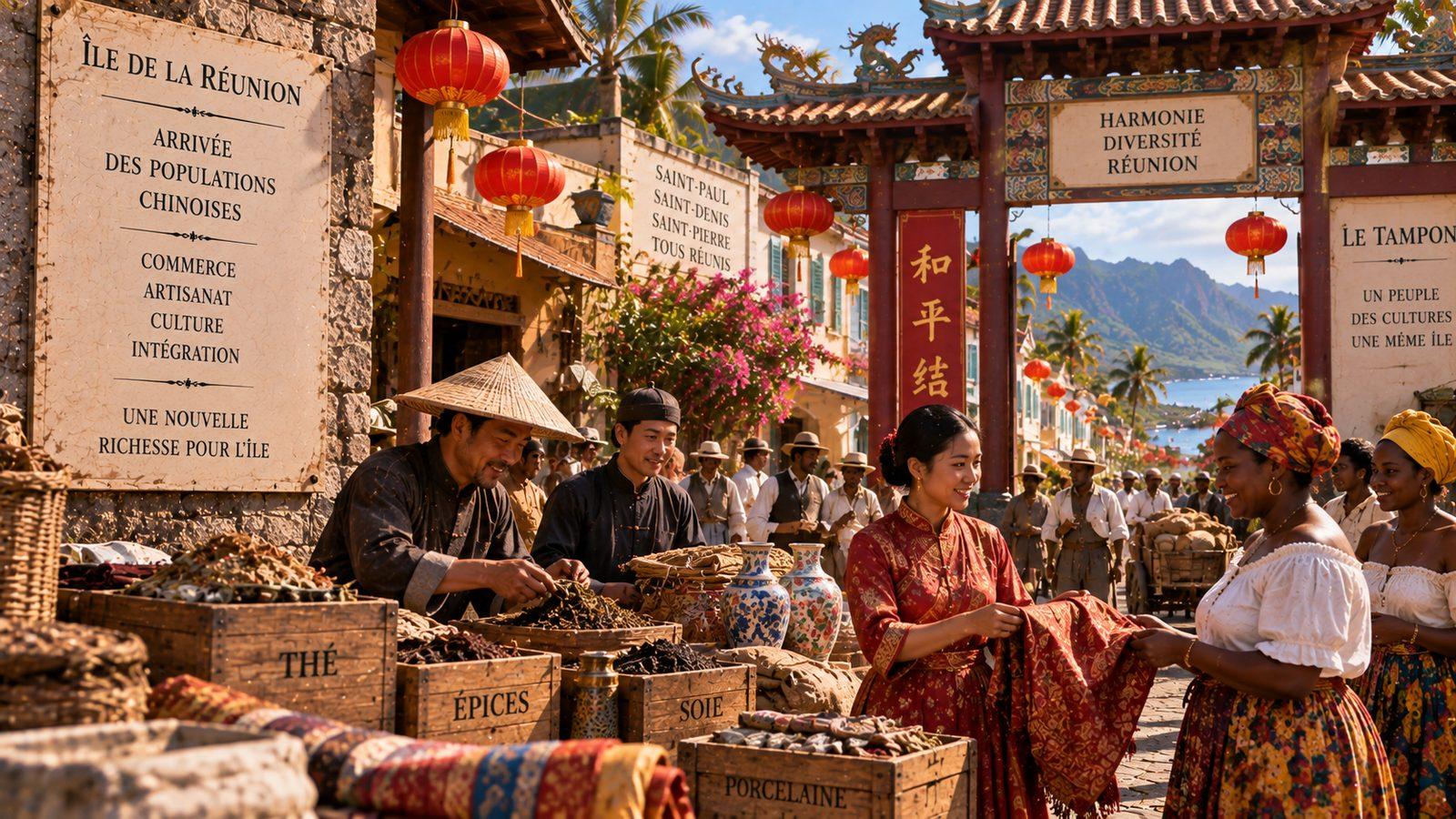
14 · Late 19th – 20th century
Chinese migrations
From the late 19th century, Chinese merchants, largely from the Canton region, settled in Réunion. They first specialised in retail trade before becoming part of every sphere of Réunionese society.
Read the chapter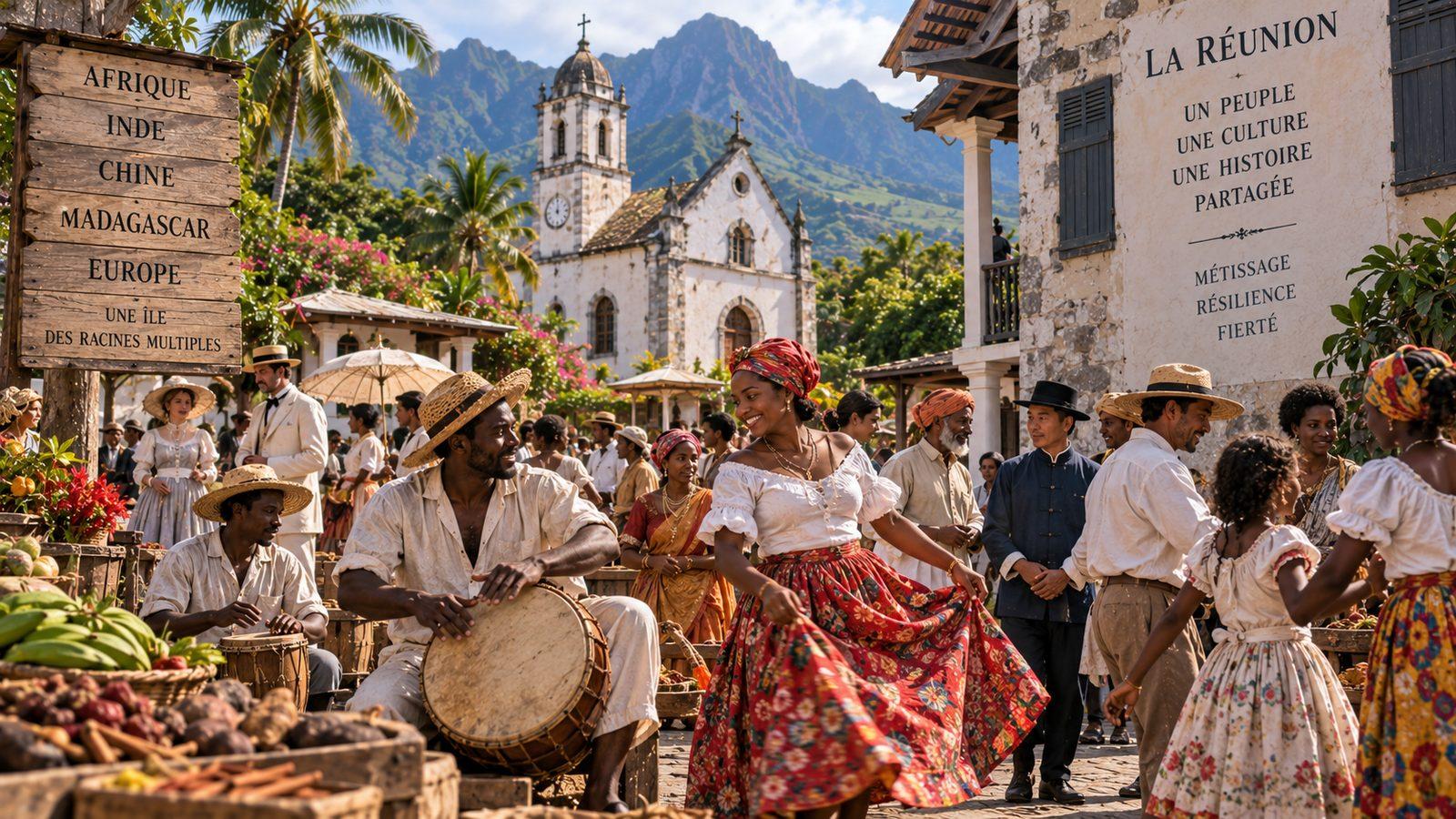
15 · 18th – 20th century
The birth of a Réunionese society
Through successive waves of settlement (European settlers, enslaved Malagasy and Africans, Indian indentured labourers, Chinese merchants and Muslims from Gujarat), Réunionese society was built…
Read the chapter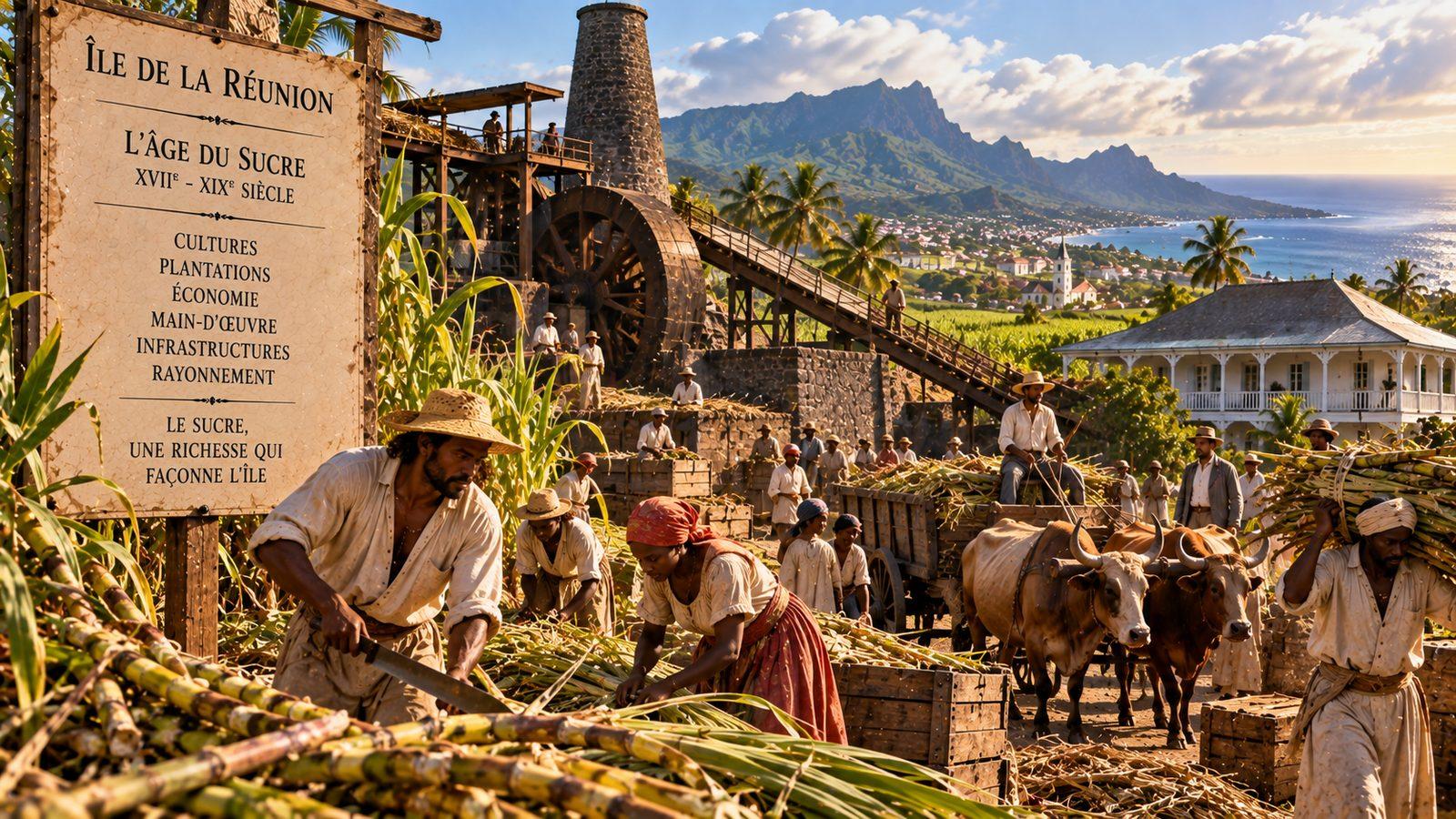
16 · 1815 – 1900
The age of sugar
The return of the island to France in 1815, after the British occupation, cut Bourbon off from Mauritius, which had until then supplied its sugar. The planters, led by the Desbassayns family, turned…
Read the chapter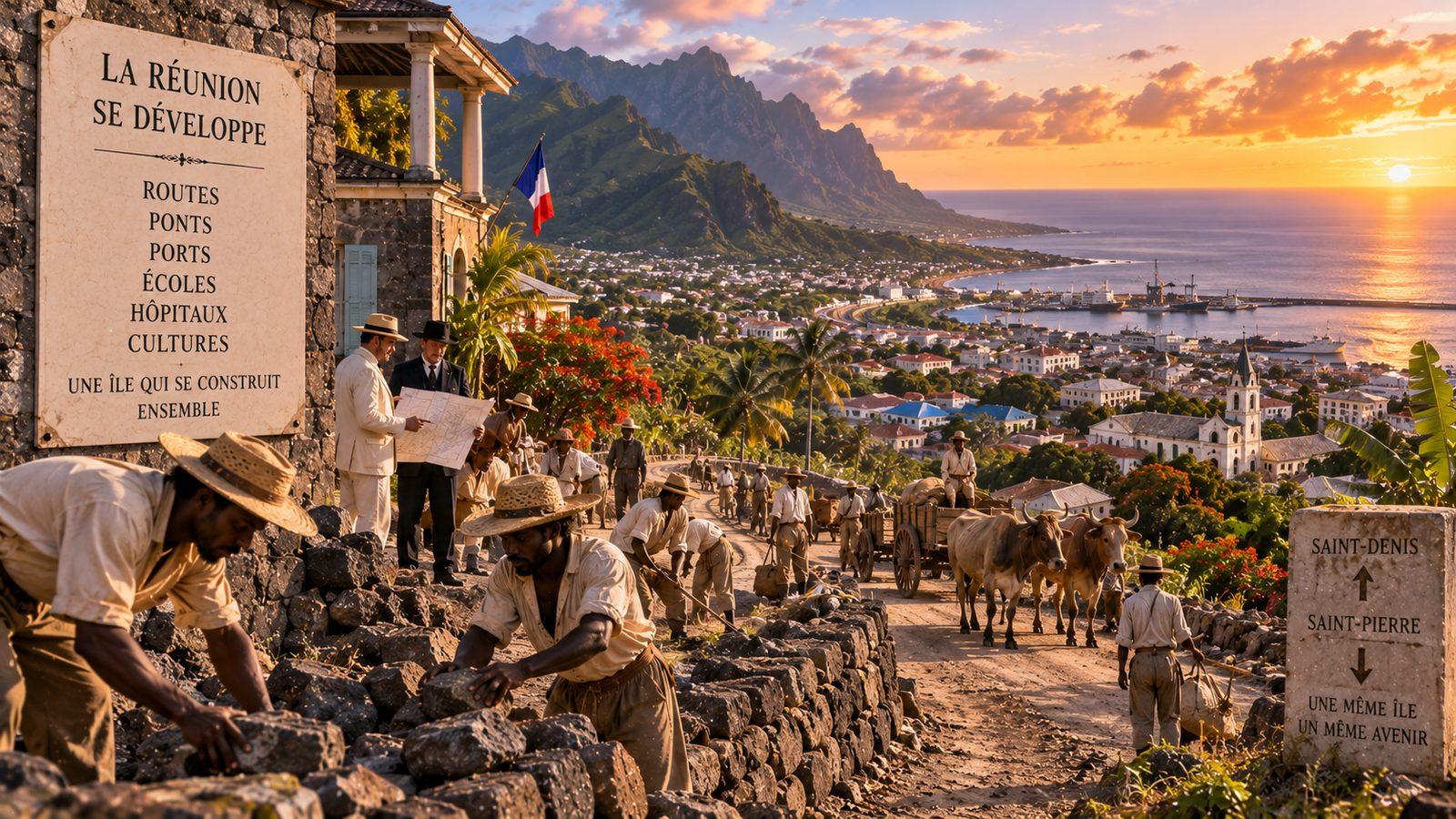
17 · 17th – 19th century
Towns and villages take shape
From simple colonial districts, the island's first settlements gradually grew into real towns, each organised around its parish. Saint-Paul, the first capital, gave way to Saint-Denis as early as…
Read the chapter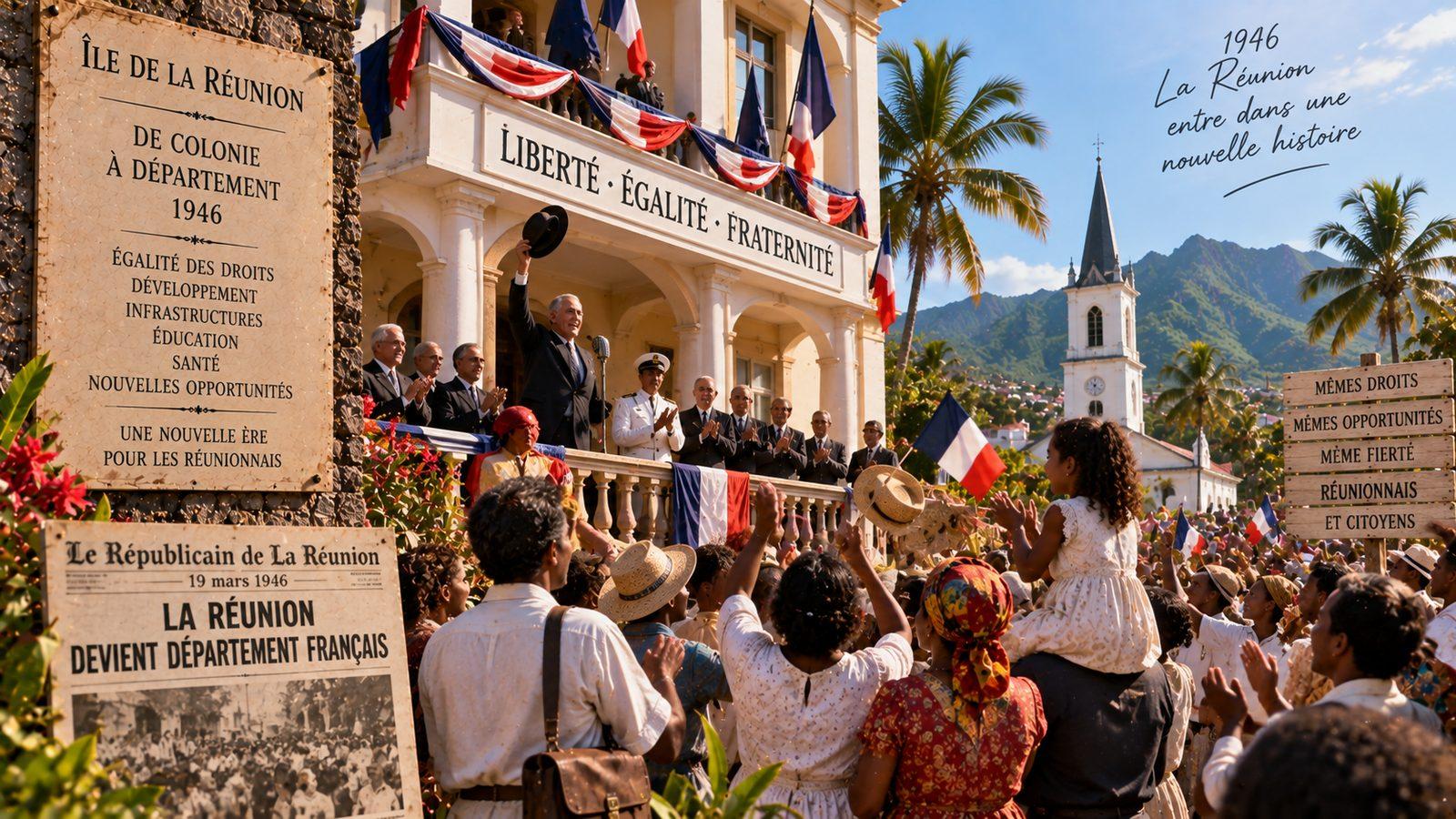
18 · 1946
From colony to department
Since abolition in 1848, the idea of full equality of rights with mainland France had run through the island. It came to fruition on 19 March 1946: Réunion, Guadeloupe, Martinique and French Guiana…
Read the chapter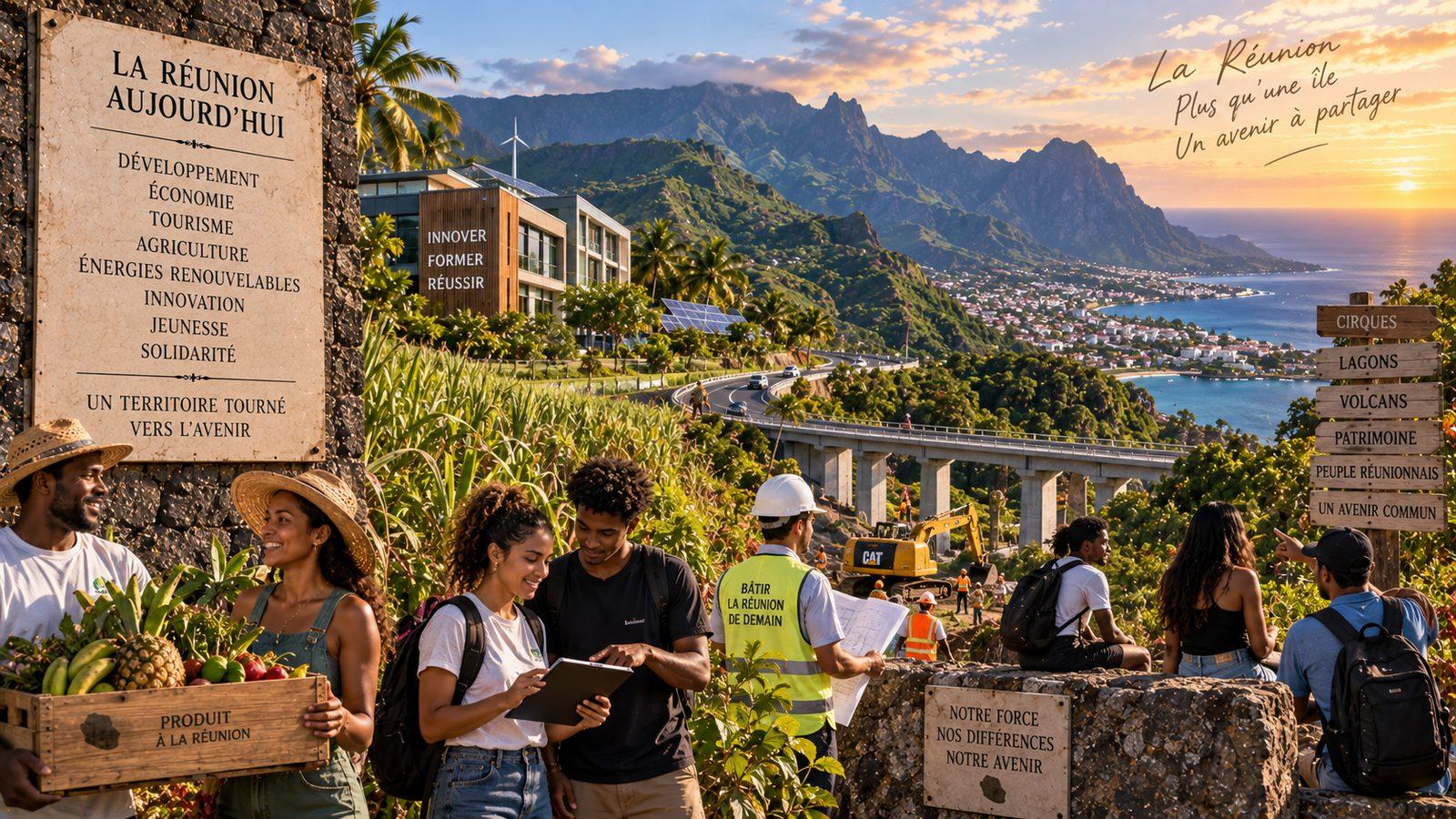
19 · 1946 – today
Modern Réunion
Since departmentalisation in 1946, the island has undergone a profound transformation of its infrastructure, economy and way of life, while keeping the mixed identity forged by three centuries of…
Read the chapter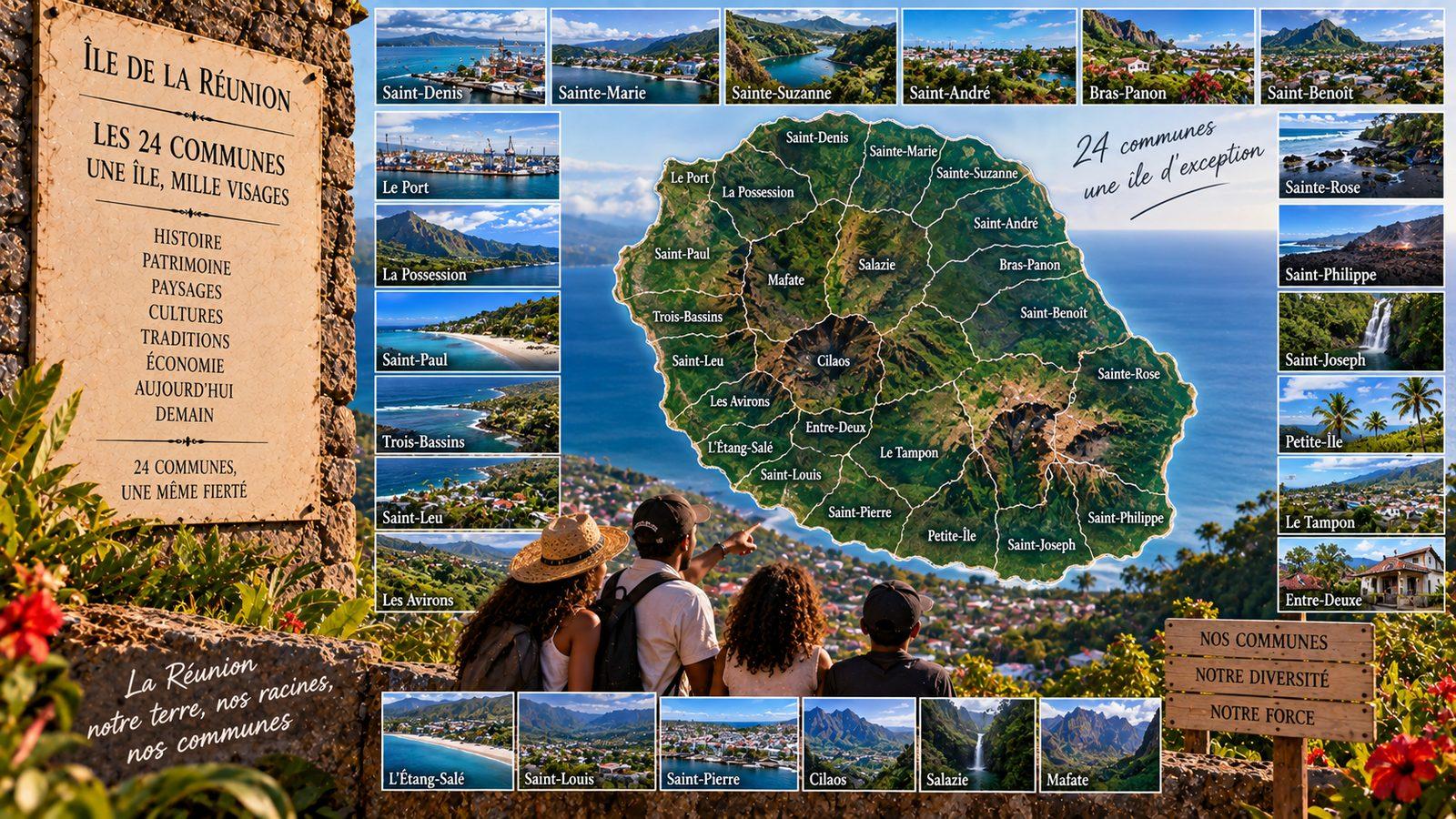
20 · 17th century – today
The 24 communes and their history
The colonial administration gradually divided the island into parishes, each placed under the patronage of a saint, a mark still visible on the map today. Away from the coast, the names become more…
Read the chapter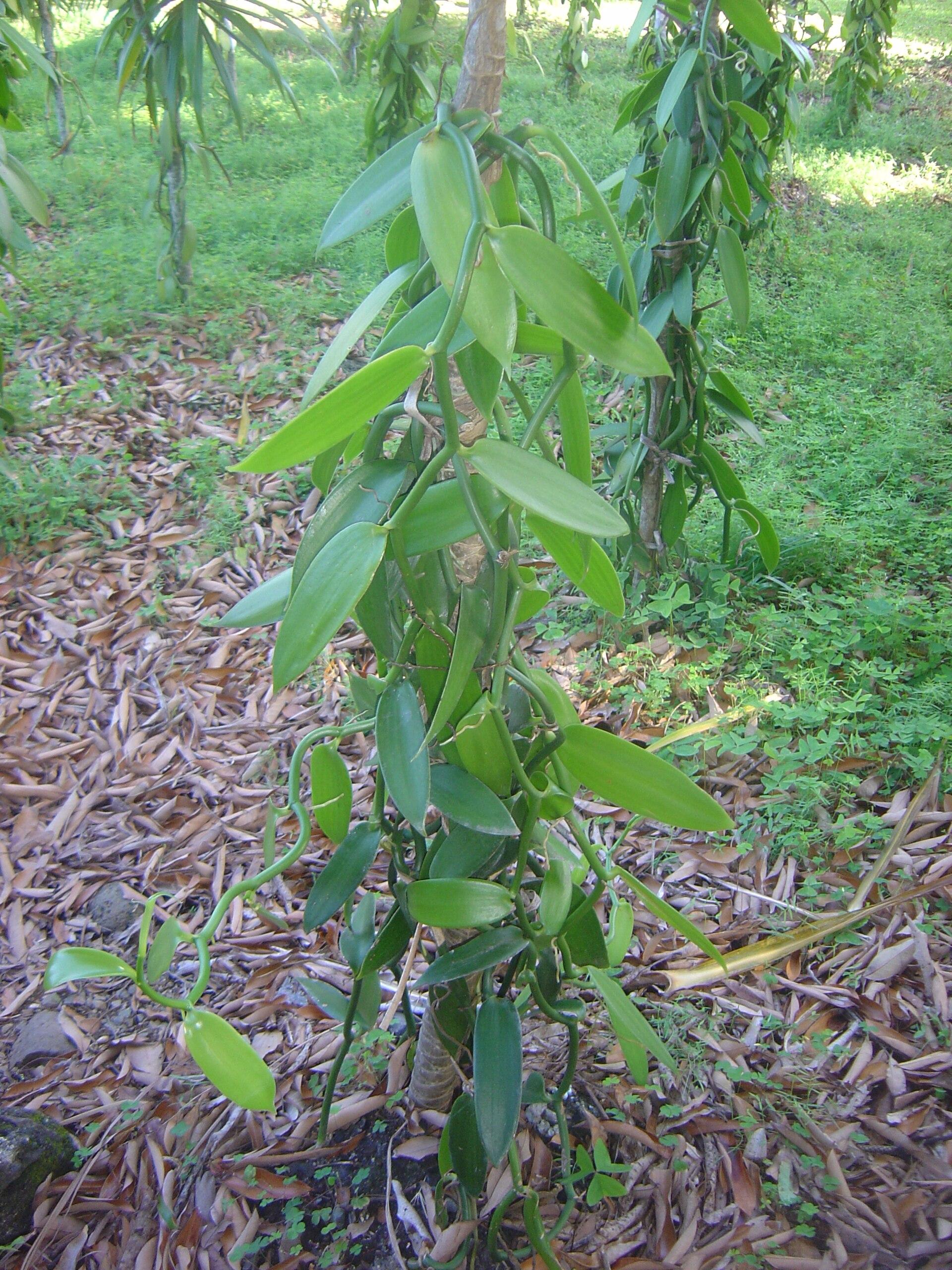
21 · 1841
Réunion vanilla
In 1841, in Sainte-Suzanne, a twelve-year-old enslaved boy named Edmond Albius discovered the gesture that would revolutionise world vanilla production: hand-pollinating the vanilla flower. This…
Read the chapter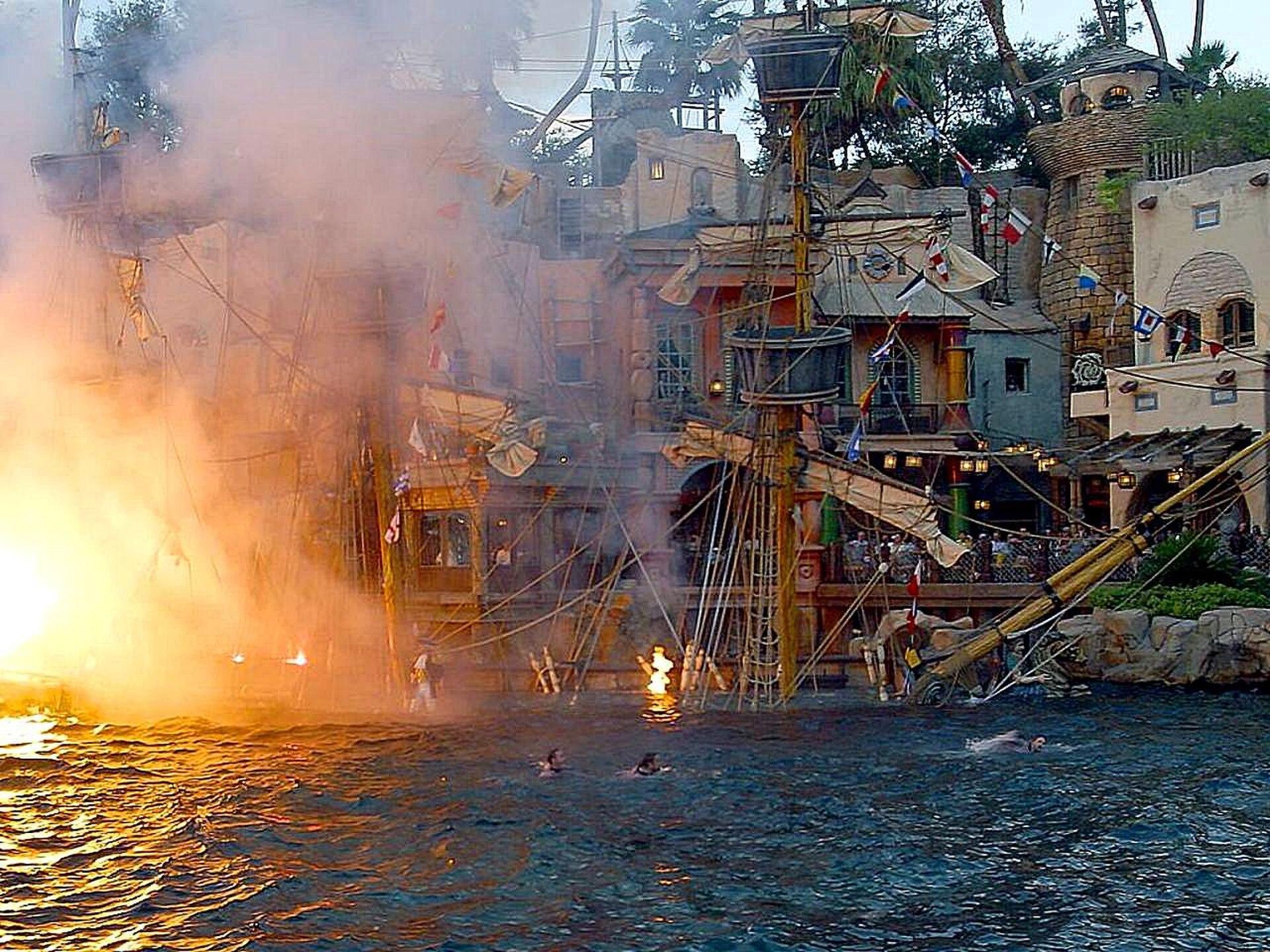
22 · 17th – 18th century
Pirates and buccaneers in the Indian Ocean
In the late 17th and early 18th centuries, the Indian Ocean became a hunting ground for pirates, mainly from Europe and North America, drawn by the trade between India, Arabia and the Far East. Île…
Read the chapter
The official app
All of Nout Péi, in your pocket
The website opens the doors. The app comes with you out in the field: map, guides, routes, and Quiz Péi, available only in the app.
- Quiz PéiDaily challenge, duels and leaderboard
- Scan PéiIdentify what you discover
- Interactive mapEvery place in your pocket
- In-depth guidesHistory, trails, local favourites