Skip to content

Suggestions

    Illustration: “Figures of Réunion”

    Understand

    Culture & food

    An island of mixed heritage: its music, its festivals, its religions, its language, and a cuisine that tells the story of all its origins.

    Music

    The instruments of maloya

    Roulèr, kayamb, pikèr, bobre

    The instruments of maloya

    Maloya (Réunion's traditional music, born among the enslaved) is played with a handful of percussion instruments inherited from the musical practices of enslaved people and indentured labourers (engagés), each with a precise role in the rhythm section.

    • The roulèr

      A large drum made from an ox hide stretched over a barrel, which the musician sits astride to shape its sound: the rhythmic backbone of maloya.

    • The kayamb

      A flat rattle made of tamarind or filao (casuarina) wood, filled with sugar cane flower stems and dried seeds, shaken from side to side to produce maloya's characteristic rustling sound.

    • The pikèr and the sati

      Small percussion instruments made of bamboo (pikèr) or sheet metal (sati), of Tamil origin, often given to children when they are first introduced to maloya.

    • The bobre

      A rare musical bow with a gourd resonator, of Malagasy origin; few musicians still master it today, making it a marker of tradition.

    Did you know? The pikèr is often the first instrument Réunionese children learn, even before the kayamb: a genuine musical rite of passage handed down from generation to generation.

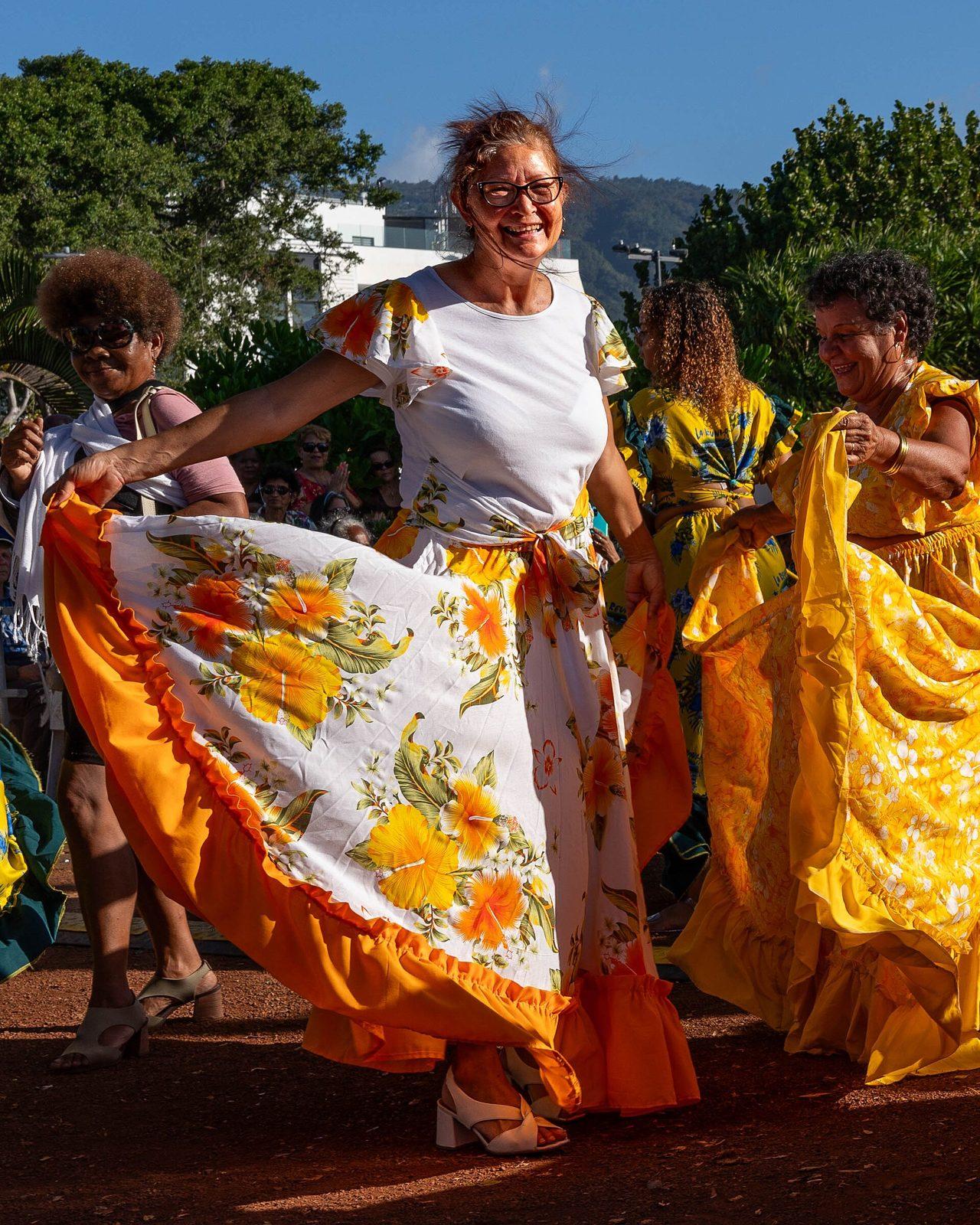
    Photo: David Monniaux · Wikimedia Commons · CC BY-SA 3.0

    The kabar

    The gathering where maloya lives

    The kabar

    A kabar is a musical, festive gathering where maloya is played and danced. It is the direct heir of the “servis kabaré”, a ceremony honouring the ancestors that was practised in secret on the plantations in the days of slavery.

    • An evening that follows a ritual

      A kabar often begins at sunset in a kour (family yard), opens with an invocation called the lékèr, then moves on to maloya and séga until dawn.

    • The servis kabaré

      This ceremony honouring the ancestors, the origin of the word “kabar”, is still practised today in some Réunionese families.

    • Everyone takes part

      Unlike a concert, a kabar has no audience: everyone sings, dances or plays, in a spirit of sharing rather than performance.

    Did you know? It was precisely this spiritual, communal side of the kabar, seen as subversive, that led to maloya being banned from stages and the airwaves until the early 1980s.

    Photo: Reneza · Wikimedia Commons · CC BY-SA 4.0

    Séga

    The music of special occasions

    Séga

    More rhythmic and festive than maloya, séga is the island's other great traditional music, shared with the other Indian Ocean islands (Mauritius, the Seychelles). It is often played in the second half of the evening at kabars (traditional maloya gatherings), after the maloya.

    • Party music

      Séga traditionally accompanies special occasions and popular dances, with a livelier tempo than maloya.

    • A shared Indian Ocean heritage

      Séga is found in similar forms in Mauritius, the Seychelles and Rodrigues: a musical heritage shared between the islands.

    • Séga piqué

      A variant driven by the pikèr, which brings Réunionese séga closer to the sound of maloya.

    Did you know? Maloya and séga were both born from the music brought by enslaved Africans and Malagasy people, then by Indian indentured labourers (engagés): two branches of the same heritage.

    Photo: Tchaosy · Wikimedia Commons · CC BY-SA 4.0

    Religions and beliefs

    Religious coexistence

    Churches, temples, mosques and pagodas side by side

    Religious coexistence

    Catholicism, Hinduism, Islam, Chinese worship and Malagasy traditions have lived side by side on the island for generations. It is not unusual to come across a century-old church, a colourful Hindu temple and a mosque just a few streets apart, and to see each community's festivals celebrated far beyond its own circle.

    • A rich religious heritage

      Thirteen mosques, numerous Tamil temples and kovils, historic churches and Chinese places of worship shape the island's religious landscape.

    • Festivals shared by all

      Dipavali, Cavadee, Creole Christmas and Chinese New Year bring people together well beyond their community of origin, in a proudly shared spirit of living together.

    • No dominant tradition

      Unlike some other post-colonial societies, no religion holds an officially dominant place in public life in Réunion.

    Did you know? In Saint-Pierre, a 20-metre mural by the artist Méo symbolises this peaceful coexistence between the island's different cultures and religions.

    Photo: Olaf2 · Wikimedia Commons · CC BY-SA 4.0

    Cavadee

    December – January

    Cavadee

    A Tamil ceremony in honour of the god Murugan (Mourouga), Cavadee brings the Malbar community (Réunion islanders of Tamil descent) together every December and January for processions and purification rites.

    • Fire-walking

      One of the most impressive rituals in the Réunion calendar, performed in honour of the goddess Pandialé; it is distinct from Cavadee but often celebrated around the same time.

    • A colourful procession

      The faithful carry the cavadee, a decorated structure, as an offering, often after fasting and preparatory rites.

    • The Temple du Colosse

      In Saint-André, the island's largest Tamil temple is one of the main places where Cavadee is celebrated.

    Did you know? Fire-walking and Cavadee are often confused, but they are two distinct celebrations in Réunion's Hindu calendar.

    Photo: Guallendra · Wikimedia Commons · CC0

    Dipavali

    Around April

    Dipavali

    The Hindu festival of light, celebrated every year around April by the island's Indian community, mainly in the north-east: illuminations, processions and parades bring the streets to life for the occasion.

    • The festival of light

      Dipavali symbolically celebrates the victory of light over darkness, with illuminations and decorations in the streets and temples.

    • Popular parades

      Brass bands, shows and dances set the rhythm of the celebrations, which are widely open to everyone on the island.

    • Centred on the north-east

      Saint-André and the neighbouring towns, where the Tamil community is particularly present, host the biggest celebrations.

    Did you know? The date of Dipavali changes every year according to the Hindu lunisolar calendar, but in Réunion it most often falls in April.

    Photo: Olaf2 · Wikimedia Commons · CC BY-SA 4.0

    Eid al-Fitr

    The great Muslim festivals

    Eid al-Fitr

    Eid al-Fitr marks the end of Ramadan, the Islamic month of fasting. In Réunion, this festival brings together the island's Muslim community, made up of families of Gujarati, Malagasy Shia and Comorian origin, in a celebration that is both spiritual and convivial.

    • The month of Ramadan

      For a month, Réunion's Muslims fast from sunrise to sunset. The iftars (fast-breaking meals) bring families and communities together.

    • The Eid prayer

      On the morning of the first day, a large communal prayer is held in mosques and in some open spaces. It is followed by family visits and festive meals.

    • A community of many origins

      The “Zarabes” (Sunnis of Gujarati origin), the “Karanes” (Shias who came from Madagascar) and the Comorian community, now the largest, celebrate Eid al-Fitr together.

    Did you know? All 13 of the island's mosques host the Eid al-Fitr prayer. Some neighbourhoods of Saint-Denis, Saint-Pierre and Saint-Benoît see particularly large gatherings.

    Photo: mwanasimba from La Réunion · Wikimedia Commons · CC BY-SA 2.0

    Creole Christmas and Christian festivals

    December

    Creole Christmas and Christian festivals

    A legacy of the island's Catholic colonisation, Christmas in Réunion is celebrated in a resolutely tropical atmosphere, between French traditions and Creole adaptations, in the middle of the southern summer.

    • Christmas in the tropics

      Decorations, festive meals and letters to Father Christmas go hand in hand with the December heat, far from the traditional wintry image.

    • Creolised dishes

      The Réunionese Christmas meal often combines traditional French dishes with Creole specialities, with letchis (lychees) and gâteaux lontan (old-style cakes) for dessert.

    • Historic churches

      Saint-Denis cathedral and the Sainte-Anne church in Saint-Benoît are among the busiest places of celebration on the island.

    Did you know? Unlike mainland France, Christmas in Réunion falls in the middle of the southern summer: heat and festive meals go perfectly well together.

    Photo: B.navez · Wikimedia Commons · CC BY-SA 3.0

    Eid al-Adha (Aïd el-Kébir)

    The festival of sacrifice

    Eid al-Adha (Aïd el-Kébir)

    Eid al-Adha, called Aïd el-Kébir (the “great festival”) in North Africa and in Réunion, commemorates the sacrifice of Abraham. Celebrated about seventy days after Eid al-Fitr, it is the biggest festival in the Islamic calendar.

    • Commemorating the sacrifice of Abraham

      According to Qur'anic tradition, God asks Abraham to sacrifice his son; at the last moment, a sheep is put in his place. This story underpins the ritual of animal sacrifice and the spiritual meaning of the festival.

    • The shared meal

      The sacrificed animal is shared: one part for the family, one for relatives and friends, and one for those most in need. Sharing and generosity are at the heart of the festival.

    • In communion with the pilgrims of Mecca

      Eid al-Adha coincides with the Hajj, the pilgrimage to Mecca. Réunion's Muslims who do not make the journey celebrate the festival in spiritual communion with pilgrims from all over the world.

    Did you know? In Réunion, Eid al-Adha is often called Aïd el-Kébir (the great festival). The two names reflect the diverse origins of Réunion's Muslim community.

    Photo: mwanasimba from La Réunion · Wikimedia Commons · CC BY-SA 2.0

    Traditions

    Creole houses

    Varangues, lambrequins and guétalis

    Creole houses

    Traditional Réunionese housing blends Western and Eastern influences: a rectangular layout, a hipped roof and, above all, the varangue, the outdoor veranda that remains the heart of Creole family life.

    • The varangue

      A true outdoor living room, it shelters from sun and rain while staying open to the garden: the place where people welcome guests, chat and relax.

    • Lambrequins

      These friezes of cut-out wood decorating roofs and varangues are the work of the tinsmith, the craftsman who turned the Creole house into a true decorative language.

    • The guétali

      This small wooden kiosk, set in a corner of the garden, let residents watch the street and greet passers-by without ever leaving home.

    Did you know? Every year, some cases lontan (old-time houses) disappear, replaced by more convenient concrete buildings; enthusiasts are now working hard to preserve this heritage.

    Photo: Rémih · Wikimedia Commons · CC BY-SA 4.0

    Cilaos embroidery

    A unique decorative craft

    Cilaos embroidery

    Introduced in the 19th century by a nun, Cilaos openwork embroidery has become a craft in its own right, handed down from generation to generation by the cirque's embroiderers.

    • A unique stitch

      The very fine, openwork Cilaos stitch sets this embroidery apart from every other textile tradition in the Indian Ocean.

    • La Maison de la Broderie

      Based in Cilaos, it gives you the chance to meet the embroiderers and discover skills passed down for generations.

    • A living craft

      Far from being a mere souvenir frozen in the past, Cilaos embroidery is still practised and taught today.

    Did you know? The cool climate and isolation of the Cirque de Cilaos, long hard to reach, encouraged the development of this painstaking craft, well suited to long days indoors.

    Photo: Véronique PAGNIER · Wikimedia Commons · Public domain

    Neighbourhood life lontan

    Banter, little secrets and the Sunday picnic

    Neighbourhood life lontan

    Beyond the big festivals, Réunionese culture shows itself in the small gestures of everyday life (lontan means “the old days”): the vanne (joke, teasing) and cachotteries (little secrets) are part and parcel of Creole etiquette, just like the Sunday family picnic.

    • The vanne, a way of life

      Teasing without hurting, sharing a laugh with complicity: Réunionese vanne is as much a way of showing affection as it is humour.

    • The Sunday picnic

      With family or friends, on the beach or in the Hauts (the uplands), the Sunday picnic remains a widely observed weekly ritual on the island.

    • Open-air markets

      Every town has its weekly market, as much a social occasion as a place to shop; Saint-Pierre's, on Saturdays, is still the biggest on the island.

    Did you know? The Réunionese Sunday picnic often extends well beyond the family circle: neighbours and friends passing by are almost always invited to join the meal.

    Photo: Gallois, Eugène (1856-1916). Auteur de la conférence. Photographe de l'oeuvre reproduite Radiguet et Massiot. Photograph · Wikimedia Commons · Public domain

    At the table

    Creole cooking

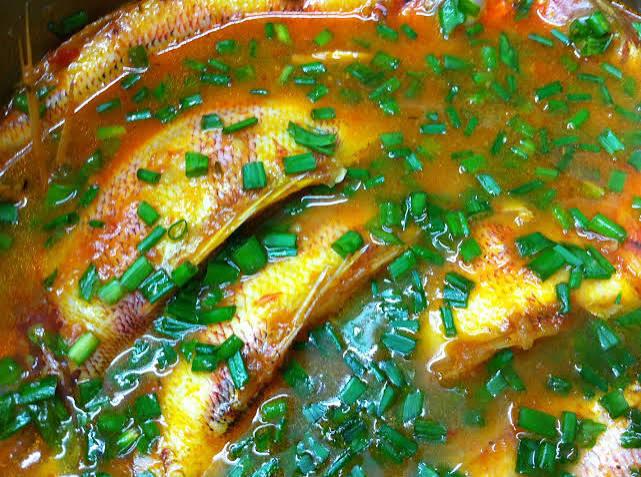
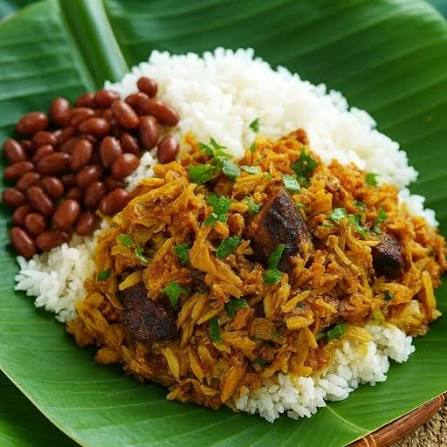
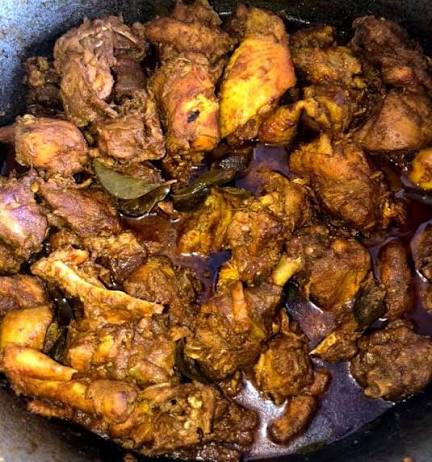
    Every dish has a story: where it comes from, when it is eaten and how it became part of Réunion life.

    Kozé kréol

    Sayings of the day

    Guess the meaning, then tap the card to turn it over. They change every day.

    • « Anou alé. »Reveal

      Let's go.

      « Anou alé dann bazar. » — Let's go to the market.

      A group invitation.

    • « Fé atansion. »Reveal

      Be careful.

      « Fé atansion dann somin. » — Be careful on the road.

      A warning or piece of advice.

    • « Kosa ? »Reveal

      What?

      « Kosa ou fé ? » — What are you doing?

      A common interrogative.

    • « Malèr »Reveal

      “Misfortune, trouble, a rough patch”

      From the French “malheur” (misfortune). Expresses a hardship or a blow of fate. Very widespread in everyday speech and in maloya songs.

    • « Mon gaté. »Reveal

      My darling / sweetheart.

      « Vyin isi, mon gaté. » — Come here, my darling.

      A term of endearment.

    • « Rényoné. »Reveal

      Réunionese.

      « Kréol rényoné. » — Réunion Creole.

      Adjective or noun.

    82 sayings and Quiz Péi are waiting for you in the app. Discover the app →

    The official app

    All of Nout Péi, in your pocket

    The website opens the doors. The app comes with you out in the field: map, guides, routes, and Quiz Péi, available only in the app.

    • Quiz PéiDaily challenge, duels and leaderboard
    • Scan PéiIdentify what you discover
    • Interactive mapEvery place in your pocket
    • In-depth guidesHistory, trails, local favourites

    Open this page in your browser

    This app’s built-in browser blocks the App Store. Tap ··· in the top right corner, then “Open in browser”, and tap the download button again.