Practical tips
Cyclones on Réunion Island: understanding the alerts and getting prepared
Cyclones on Réunion: yellow pre-alert, orange, red and purple alerts, recovery phase. The official guidance and the 2026-2027 season.
6 min read
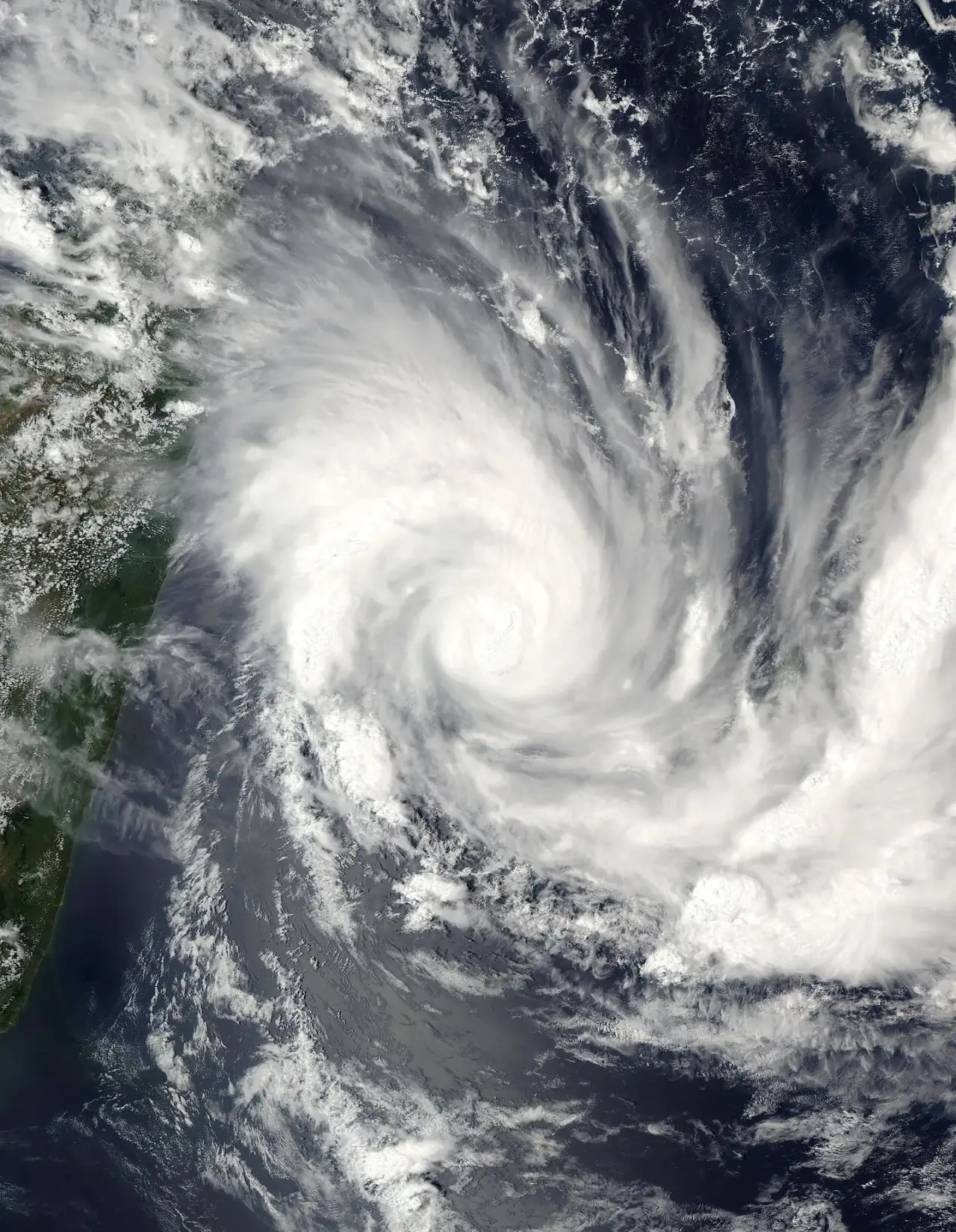
A cyclone on Réunion is not something you deal with at the last minute. From the yellow pre-alert to the purple alert, each level of the system decided by the prefect comes with precise instructions, for residents and travellers alike. Here is how these alerts work, and how to prepare for the 2026-2027 season.
When is a cyclone likely on Réunion Island?
The cyclone season covers the southern summer, roughly from November to April. This is when the warm waters of the south-west Indian Ocean encourage tropical storms and cyclones to form. They are tracked from the island by Météo-France, which acts as the regional specialised meteorological centre for the whole basin.
For 2026-2027, the forecasts are fairly reassuring, but that is no reason to let your guard down. According to the World Meteorological Organization, which on 5 November 2026 relayed the forecast from Météo-France La Réunion, activity is expected to be below normal (70% probability), with 6 to 10 named storms and 3 to 5 tropical cyclones across the basin, because of a very strong El Niño episode. The season actually started early, with tropical storm Agueda as early as October. The WMO points out that a catastrophic event can occur even in a quiet season.
On the island, the crisis-management services met on 3 November 2026 at the Cyclonex seminar, which brought together nearly 400 participants around the prefect, according to Outremers 360.
How do cyclone alerts work on Réunion?
The alert levels come under the ORSEC Cyclones plan. They are triggered by the prefect, based on Météo-France forecasts. The information below draws on the official statements from the Réunion prefecture during recent episodes (Belal in 2024, Garance in 2025).
Yellow pre-alert: “I keep informed and I plan ahead”
A weather system threatens the island in the coming days. During Belal, the pre-alert was issued about three days before the expected passage. Follow the Météo-France bulletins and the prefecture's statements, check your water and food supplies and your emergency kit, fill up your vehicle and give up long mountain hikes, ravines and radiers (low-water road crossings over riverbeds).
Orange alert: “I get ready”
Danger is possible within 24 hours. Economic life carries on, but nurseries, schools and children's group activities close. During Garance, in February 2025, port operations were suspended and the airport changed its flights. This is the time to protect your home: shutters, windows, garden items brought inside, the safest room prepared.
Red alert: “I stay indoors”
Danger is imminent. The whole population must stay sheltered in a safe place. Only the emergency services, the police and staff mobilised for crisis management may travel.
Purple alert: the highest level
This is the top level, triggered for example on 15 January 2024 for cyclone Belal. Lockdown becomes strict for everyone, including the emergency services: no movement is allowed and you can no longer count on immediate help. The prefecture warns not to be fooled by the lull in the eye of the cyclone: the wind then returns, often from the opposite direction.
Recovery phase: caution after the cyclone has passed
Once the threat has gone, the prefect lifts the alert and places the island in the recovery phase (phase de sauvegarde). You may go out, but dangers remain: blocked roads, power lines on the ground, flooded ravines, closed hiking trails. After Belal, the prefecture also pointed out that tap water may remain unfit to drink for several days: boil it for three minutes before drinking.
How to prepare before a cyclone on Réunion?
The best preparation is done at the start of the season, while things are calm. Here are the essentials:
- An emergency kit: torch, radio and spare batteries, first-aid kit, medicines, spare keys, copies of identity and insurance documents.
- Supplies: drinking water in clean food-grade jerrycans, and non-perishable food for several days.
- A house that's ready: trim nearby trees, secure or store anything that could blow away (garden furniture, metal roofing sheets, pots), check doors and windows.
- The right numbers: SAMU emergency medical service (15), fire brigade (18), police or gendarmerie (17), as well as the address of the nearest shelter, provided by your town hall.
- Vulnerable people: those with health conditions are advised to contact their carers or support associations in advance.
What to do during a cyclone on Réunion?
- Stay indoors, in the safest room, away from windows to avoid flying glass.
- Be prepared for cuts to electricity, phone and water.
- Never use a generator indoors: carbon monoxide, invisible and odourless, can be fatal.
- Never cross a submerged radier or a flooded ravine, on foot or by car.
- Keep away from the coast: during heavy swells, the prefecture bans access to certain coastal areas.
- Follow the Météo-France bulletins, local media and the prefecture's statements.
Travellers: what to do if a cyclone alert is issued during your stay?
A cyclone on Réunion can upend a holiday, but the instructions apply to everyone, residents and visitors alike.
- Before you leave, check our Réunion weather page and our tips for planning your stay. Remember your travel insurance too.
- During a pre-alert, cancel hikes in the cirques and boat trips, and get in touch with your host, who knows the local instructions. Our hiking section reminds you that trails may stay closed for several days after an episode.
- During an orange alert, check your flights with your airline: schedules may change.
- During a red or purple alert, stay inside your accommodation and follow the official instructions.
If you are travelling at the end of the year, also read our ideas for Réunion in December and our tips for the southern summer and the beaches. Official forecasts are published on the Météo-France La Réunion website.
To keep an eye on the weather and practical information during your stay, download the Nout Péi app or browse the practical pages of the site.
Frequently asked questions
What are the cyclone alert levels on Réunion?
The ORSEC Cyclones plan provides for a yellow pre-alert, an orange alert, a red alert and a purple alert, the highest. A recovery phase follows the passage of the cyclone, while things gradually return to normal.
Can you go out during a red cyclone alert?
No. During a red alert, the whole population must stay sheltered; only the emergency services, the police and crisis-management staff may move around. During a purple alert, even they stay under cover.
Should you avoid travelling to Réunion during the cyclone season?
Not necessarily: most weeks of the southern summer pass without a cyclone. You do, however, need to stay flexible, follow the Météo-France bulletins and respect the prefecture's instructions if an alert is issued.
- cyclone
- cyclone season
- safety
- weather
- prefecture