Science
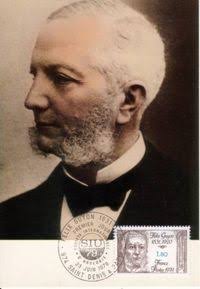
Félix Guyon
Réunionese doctor cited as the pioneer of modern urology.
Biography
Born on 9 August 1831 in Saint-Denis, Bourbon (Réunion), Jean-Casimir Félix Guyon was one of the most influential French doctors of the second half of the 19th century. Trained at the Paris Faculty of Medicine, he quickly made his name in surgery of the urinary tract, a discipline then still in its infancy. Appointed professor at the Hôpital Necker, in 1890 he created the first chair of clinical urinary tract diseases in France, establishing urology as a medical speciality in its own right.
His work became authoritative in European medicine: he described the anatomy of the ulnar tunnel at the wrist, known as “Guyon's canal”, as well as a neurological sign characteristic of lead poisoning (Guyon's sign). Author of a reference treatise on urinary tract diseases, he trained generations of French and foreign surgeons. Elected to the Académie de médecine and the Académie des sciences, he received many honours. Félix Guyon died on 11 July 1920 in Paris. His name remains in anatomy textbooks and in the world's medical memory, as well as in Réunion's.
Contribution
Founder of urology as a medical speciality in France; created the first chair of urinary tract diseases at the Hôpital Necker in 1890; described Guyon's canal (anatomy) and Guyon's sign (lead poisoning).
Legacy
His name appears in every anatomy textbook (Guyon's canal); regarded as the father of French urology; the anatomical structures named after him are studied by doctors worldwide.
Sources (2)
- https://www.academie-medecine.fr/
- https://www.reunion.fr/