Town on Réunion Island
Petite-Île
A mainly residential and agricultural municipality in the south, looking out over the Grande Anse coastline and up to the Hauts (uplands).
History
Petite-Île is one of Réunion's smallest municipalities (33.9 km²). Located on the south coast, between Saint-Pierre and Saint-Joseph, it only became a municipality in its own right in 1935. It grew up around sugar cane and the crops of the Hauts (uplands).
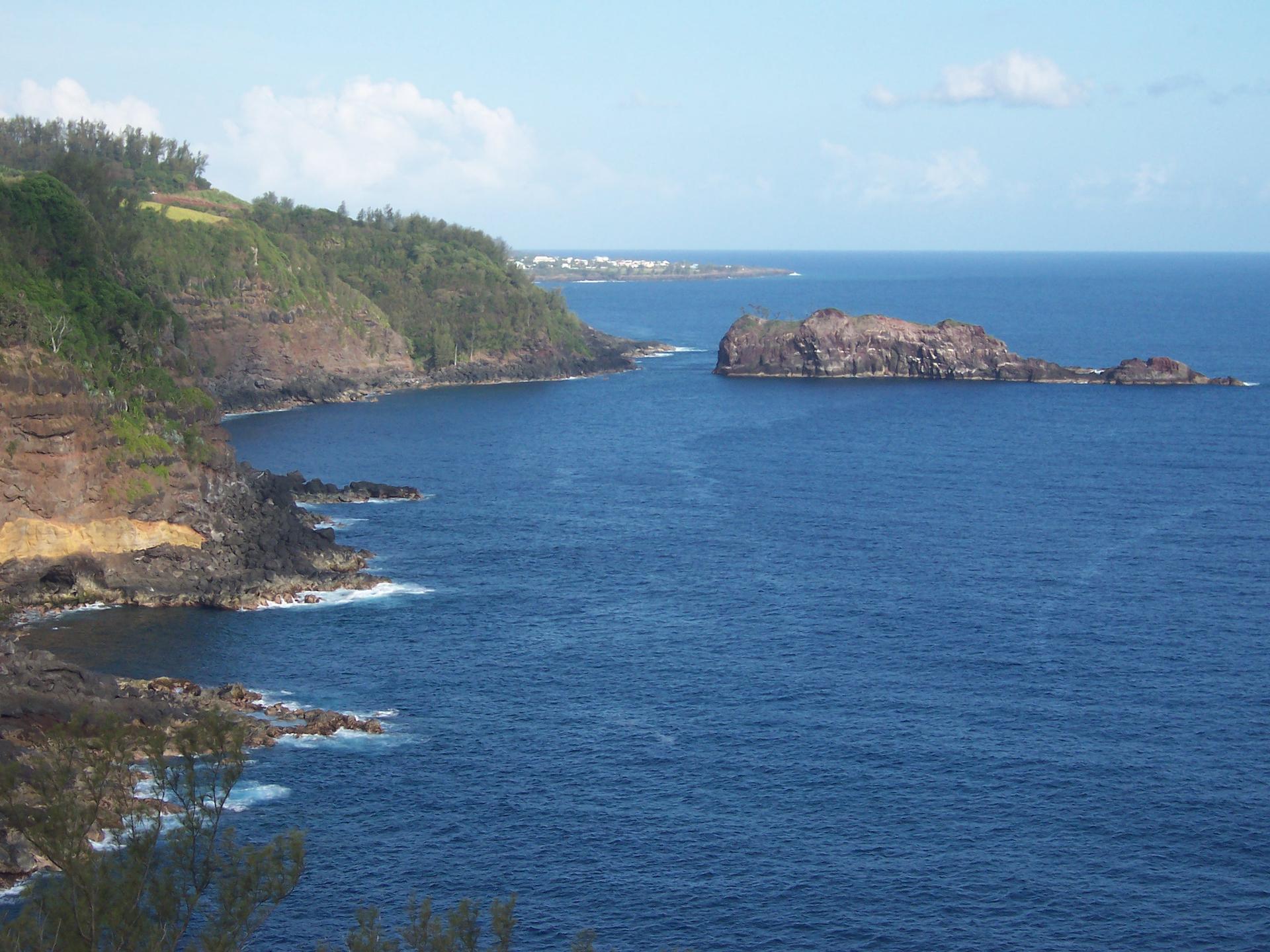
It takes its name from the rocky islet lying off its coast, the only islet around Réunion covered in vegetation. Uninhabited and protected, it is a nesting site for seabirds such as the white-tailed tropicbird (paille-en-queue) and the brown noddy.
On the coast, Grande Anse beach, overlooked by the Piton Grande Anse, is one of the few white-sand beaches in the south; a man-made pool lets you swim sheltered from the swell. The municipality's uplands remain rural, focused on farming and on welcoming visitors in gîtes and guesthouses.
Landscapes
Petite-Île slopes down through farmed hillsides from the Hauts to a coastline of basalt cliffs pounded by the swell. At Grande Anse the coast opens onto a white-sand cove overlooked by the Piton Grande Anse, facing the islet that gave the municipality its name.
Local culture
Petite-Île has kept the identity of a rural and seafaring municipality: farming in the Hauts, small-scale fishing on the coast, neighbourhood festivals. Grande Anse, with its family picnics in the shade of the filaos (casuarinas) and coconut palms, is one of the south's weekend meeting places.
Why it matters
Grande Anse beach and Piton Grande Anse: a picture-postcard bay combining coconut palms, white sand and volcanic relief in an unspoilt setting.
Photo: App photo library · Internal use
Sources (1)
- https://www.insee.fr/fr/statistiques/1405599?geo=DEP-974+COM-97405