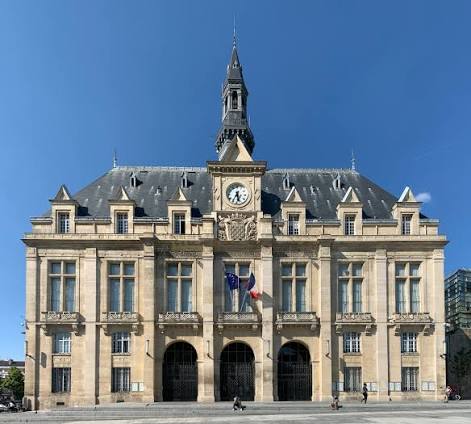
Town on Réunion Island
Saint-Denis
Réunion's capital and the island's most populous municipality. It combines a historic centre, seaside districts and the Hauts (uplands).
Where the name comes from
The capital and largest town on the island, Saint-Denis owes its name to the patron saint honoured when the first permanent settlement was founded here. Today it is Réunion's administrative and economic centre.
History
Founded in the early decades of French colonisation, Saint-Denis began as an administrative post of the French East India Company in the 1670s. The town takes its name either from a chapel dedicated to Saint Denis built by the first settlers, or from the ship Saint-Denis that anchored in the bay. It quickly replaced Saint-Paul as the seat of government of the Île Bourbon (Réunion's former name).
In the 18th century, the boom in coffee and then cane sugar accelerated the town's growth. Rue de Paris became the aristocratic thoroughfare of the colonial town, lined with Creole mansions with varangues (verandas) built by governors and wealthy landowners. The cathedral and several public buildings from this period are now listed historic monuments.
The revolution of 1848 and the abolition of slavery profoundly transformed society in Saint-Denis. Indentured labourers (engagés) from India, Madagascar and Africa, and freed slaves, reshaped the town's population. Departmentalisation in 1946 made Saint-Denis the capital of a fully fledged French department, giving the town its present-day institutions: prefecture, law courts, university.
Now the largest municipality in overseas France, with 155,000 inhabitants, Saint-Denis is the island's administrative, academic and cultural centre. The Musée Léon Dierx, the first modern art museum in France outside Paris (1911), and the Jardin de l'État, a former 18th-century royal botanical garden, illustrate the richness of this heritage.
Landscapes
Saint-Denis stretches from the north coast to the foothills of the Grand Bénare. The coastal town is framed by the Rivière des Pluies to the east and the Rivière Saint-Denis to the west, lined with black basalt cliffs. The hinterland climbs towards wooded uplands, offering a transition between built-up areas and semi-dry forest.
Local culture
Saint-Denis embodies Réunion's Creole identity in all its diversity: preserved colonial architecture, a university town and a melting pot of all the island's communities. The commemoration of 20 December (Fèt Kaf, the anniversary of the abolition of slavery) takes on a solemn character here, with official ceremonies at the Jardin de l'État and popular gatherings around the Barachois.
Why it matters
The island's administrative capital, Réunion in miniature. Rue de Paris, the Jardin de l'État, the Barachois and the Noor-e-Islam Mosque bear witness to a unique, plural identity.
Photo: App photo library · Internal use
Sources (1)
- https://www.insee.fr/fr/statistiques/1405599?geo=DEP-974+COM-97411