Nature
The Manapany day gecko: an endangered treasure of Réunion Island
The Manapany day gecko: where this lizard endemic to Réunion lives, how to recognise it, why it is endangered and how to help protect it.
5 min read
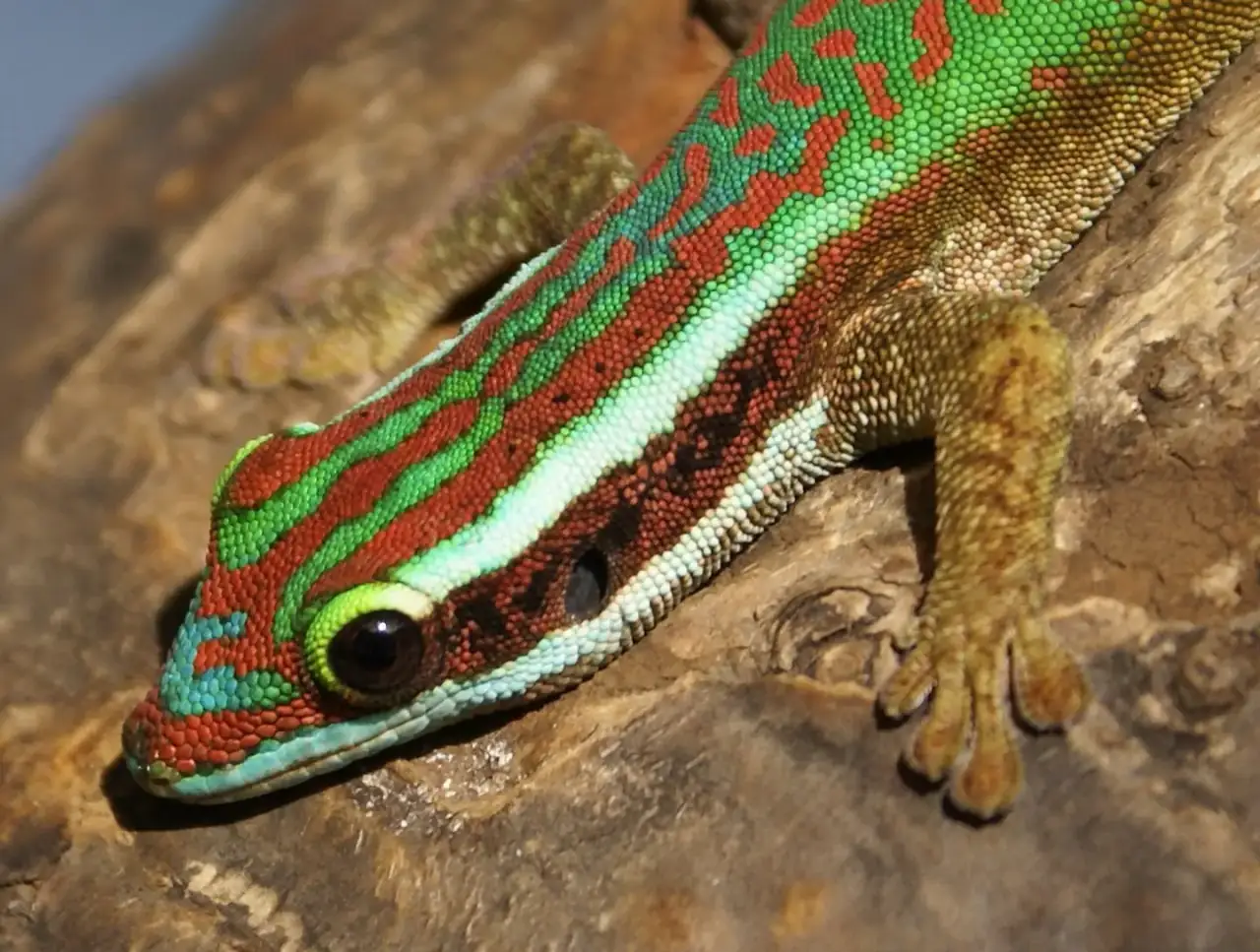
The Manapany day gecko (gecko vert de Manapany) is one of the island's rarest reptiles: this small, bright green lizard, endemic to Réunion, lives along just a few kilometres of coast in the south of the island. Listed as critically endangered, it is the subject of a national action plan. Here is how to recognise it, where it lives, what threatens it and how everyone can help protect it.
What is the Manapany day gecko?
This gecko, which Réunion islanders also call the lézard vert de Manapany (Manapany green lizard), has the scientific name Phelsuma inexpectata. According to Wikipedia, it was described by the naturalist Robert Mertens in 1966, at first as a subspecies of a Mauritian gecko, before being recognised as a species in its own right in 1995.
It is a diurnal, tree-dwelling gecko: unlike the margouillats (house geckos) found in homes, it lives by day, in the vegetation. It measures 10 to 13 cm, tail included, and weighs less than 10 grams. It shares the island with another endemic green gecko, the Bourbon day gecko (gecko vert de Bourbon), which lives mainly in the forests of the Hauts, the island's uplands.
How do you recognise the Manapany day gecko?
Its colouring is among the most vivid on the island:
- a bright green body dotted with small red spots;
- a pale stripe, beige or bluish, on each side of the head;
- a green or bluish patch on the snout;
- a pale ring around the eye.
Females are slightly smaller than males. Beware of confusion: several green geckos introduced from Madagascar also live on the island, especially in the west. If in doubt, a photo sent to a naturalist association will help identify it.
Where does the Manapany day gecko live on Réunion?
Its range is tiny. According to Wikipedia, it lives only on the south coast, between Grande Anse beach, in Petite-Île, and the mouth of the Langevin river, in Saint-Joseph, around the neighbourhood of Manapany-les-Bains. A prefecture document puts this range at only about 1 km².
The species rarely ventures more than a kilometre from the shore and does not live above 450 metres. It is particularly fond of the vacoa (screw pine, Pandanus utilis), whose spiralling leaves give it shelter and a place to lay its eggs.
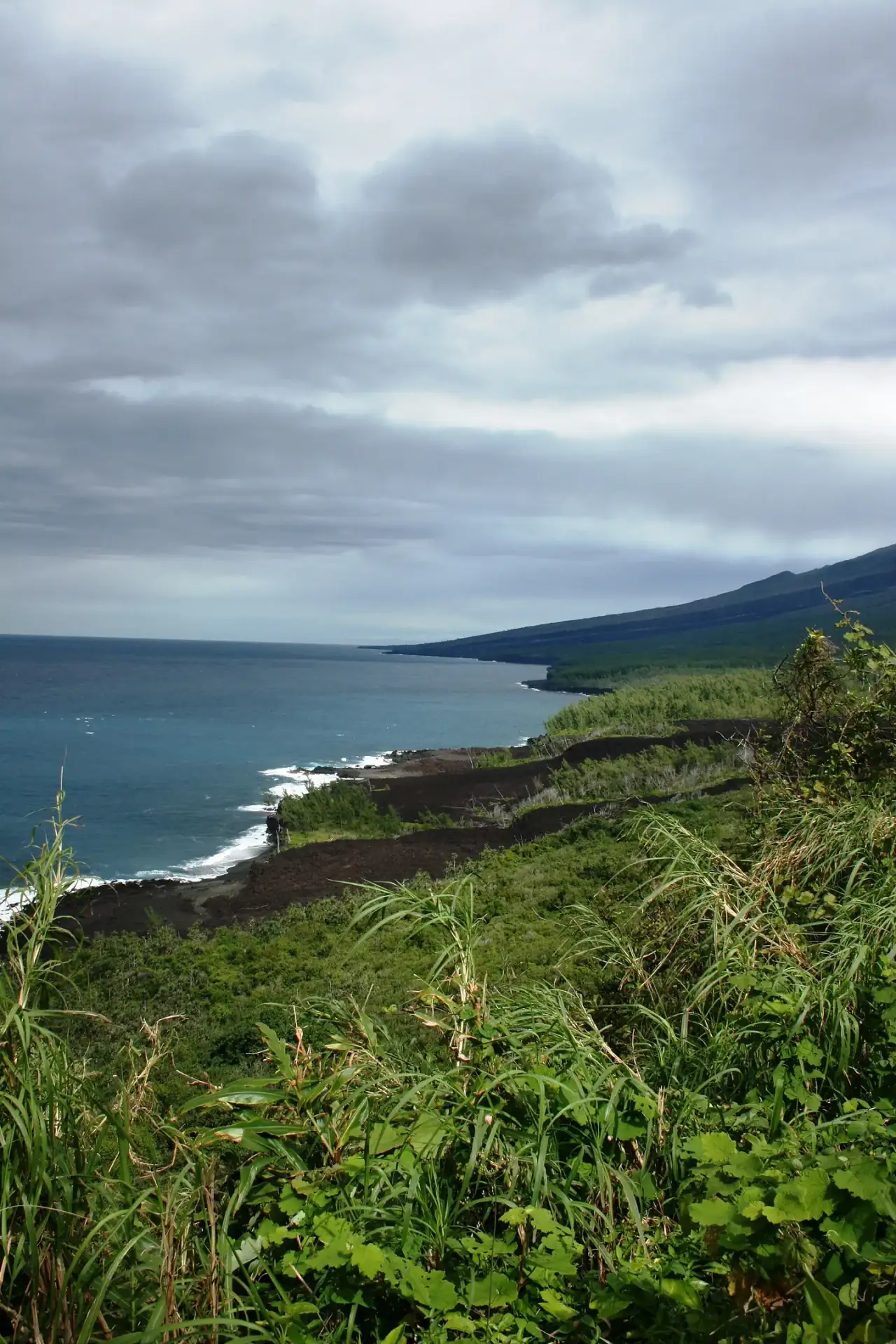
This area is easy to explore from Grande Anse beach or by following the coast towards Saint-Joseph, on the threshold of the Sud Sauvage (the wild south) described in our article on the Route des Laves.
What does it eat and how does it breed?
According to Wikipedia, its diet is varied:
- insects, which it hunts on trunks and leaves;
- nectar, which it licks from papaya or banana flowers;
- ripe fruit, such as vacoa fruit or mango.
The female lays two eggs at a time, often stuck to the base of leaves or branches. Incubation lasts 6 to 10 weeks. At hatching, the young are very vulnerable: many predators, including other lizards, feed on them.
Why is the Manapany day gecko endangered?
The species is listed as critically endangered on the IUCN Red List (2019 assessment, cited by Wikipedia), the highest threat level before extinction in the wild. Its populations are fragmented and declining.
The main threats are:
- Habitat loss: urban development and farming are eating into the coastal strip and wiping out the vacoas.
- Invasive alien species: according to the French State services, green geckos from Madagascar, including Phelsuma laticauda, which appeared in Saint-Gilles in 1975, compete with the species and may attack its young.
- Isolation: with such a small range, a single disaster, such as a fire, a cyclone or a pollution incident, could affect a large part of the population.
How is this endangered species protected?
It is a protected species: capturing, keeping, selling, buying or breeding it is forbidden, except under special permit. It is also listed in Appendix II of CITES, which regulates international trade.
A first national action plan was set up for 2012-2016, and a new plan devoted to Réunion's green geckos covers 2020-2029, according to the DEAL (the regional environment directorate). It coordinates habitat restoration, population monitoring and the control of invasive geckos, authorised by prefectural order. The association Nature Océan Indien also runs a conservation breeding programme to safeguard the species.
To discover the island's other unique species, browse our nature of Réunion section and our article on Réunion National Park.
How can you help protect the day gecko?
Everyone, resident or visitor, can do their bit:
- Look but don't touch: never catch or move a gecko, even for a photo.
- Plant native species, such as the vacoa or the latanier (Réunion palm), in gardens in the south.
- Cut down on pesticides, which deprive geckos of the insects they feed on.
- Don't carry exotic geckos from one part of the island to another, for example hidden in potted plants.
- Report sightings to naturalist associations or the French State services.
To discover endemic species and natural sites in the south, download the Nout Péi app or explore the site.
Frequently asked questions
Where can you see the Manapany day gecko?
It lives only on the south coast of Réunion, between Grande Anse and the mouth of the Langevin river, around Manapany-les-Bains. You may spot it on vacoas, watching from a distance and never touching it.
Is the Manapany day gecko dangerous?
No, this small lizard of 10 to 13 cm is completely harmless to humans. On the contrary, it is the one in danger: the species is listed as critically endangered.
Can you keep a Manapany day gecko at home?
No, it is a protected species: capturing, keeping, selling or breeding it is forbidden, except under special permit. Only authorised programmes, such as Nature Océan Indien's conservation breeding programme, may keep them.
- day gecko
- Phelsuma inexpectata
- endemic species
- biodiversity
- Saint-Joseph