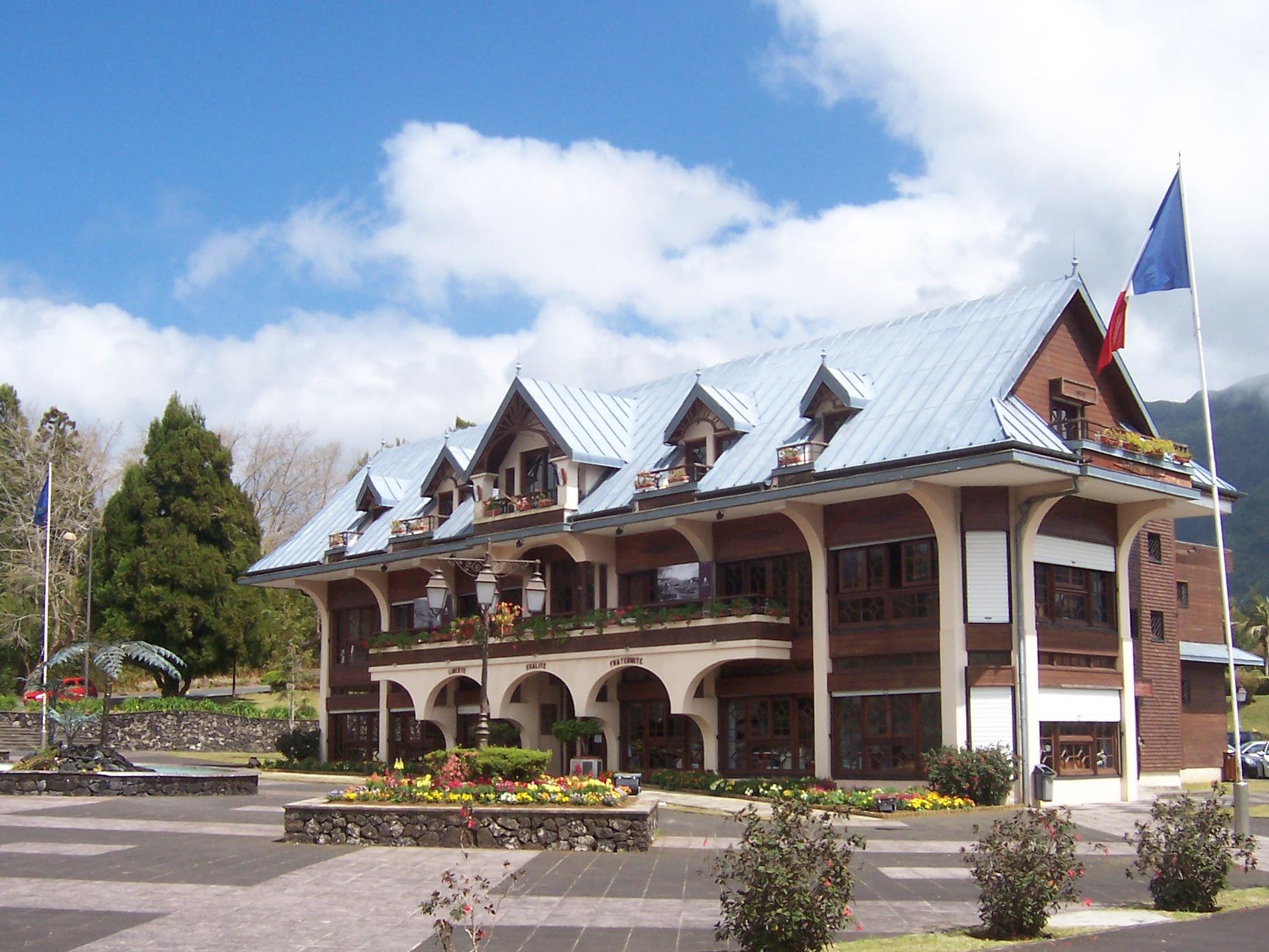
Town on Réunion Island
La Plaine-des-Palmistes
An upland municipality in the eastern interior, set on a humid plateau between the Piton des Neiges and Piton de la Fournaise massifs.
Where the name comes from
A village born of religious foundations, it became a municipality in 1899. Its name comes from the palmistes, palm trees whose edible heart (“chou de palmiste”, heart of palm) was harvested so heavily that only a few remain in the municipality today. It is one of the few municipalities on the island with no coastline.
History
La Plaine-des-Palmistes is an upland plateau at around 1,000 m, ringed by the Piton des Neiges and Piton de la Fournaise massifs. Its name recalls the upland palms (Mascarene palms) that grew here before colonisation. The municipality was gradually founded in the 19th century by families looking for cool land for livestock and upland market gardening.
The Bébour-Bélouve forest, which stretches between La Plaine-des-Palmistes and Saint-Benoît, is one of the most remarkable on the island: a cloud forest of tamarins des Hauts (endemic upland acacias), tree ferns and endemic orchids. It lies within the core area of Réunion National Park and has been a UNESCO World Heritage Site since 2010 as part of the “Pitons, cirques and remparts of Reunion Island”.
La Plaine-des-Palmistes is a popular tourist municipality, appreciated for its relative coolness and its rolling upland scenery. Growing potatoes, strawberries and mountain vegetables makes it an unusual farming area in the island's tropical setting. The cross-island main road linking Saint-Benoît to Le Tampon runs through it, making it a strategic crossing point between the east and the south of the island.
Landscapes
La Plaine-des-Palmistes is a high plateau at 1,000 m, with gently rolling hills covered in meadows, vegetable plots and tamarin forests. The Bébour-Bélouve forest covers much of the municipality, offering cloud-forest scenery of austere and spectacular beauty.
Local culture
La Plaine-des-Palmistes has forged an identity as a cool mountain municipality focused on agritourism and ecotourism. Local producers of strawberries, vegetables and cheeses are at the heart of the local economy. It is a favourite weekend destination for islanders from the coastal towns looking to escape the heat and enjoy the cool air of the Hauts (uplands).
Why it matters
The Bébour-Bélouve forests and the landscapes of the Hauts: La Plaine-des-Palmistes preserves some of the island's most remarkable humid tropical mountain forests.
Photo: App photo library · Internal use
Sources (1)
- https://www.insee.fr/fr/statistiques/1405599?geo=COM-97406