History
Bourbon vanilla: Edmond Albius and the hand gesture of 1841 on Réunion
Bourbon vanilla: in 1841, on Réunion Island, Edmond Albius, a 12-year-old enslaved boy, invented the hand pollination of vanilla. His story and his legacy.
5 min read
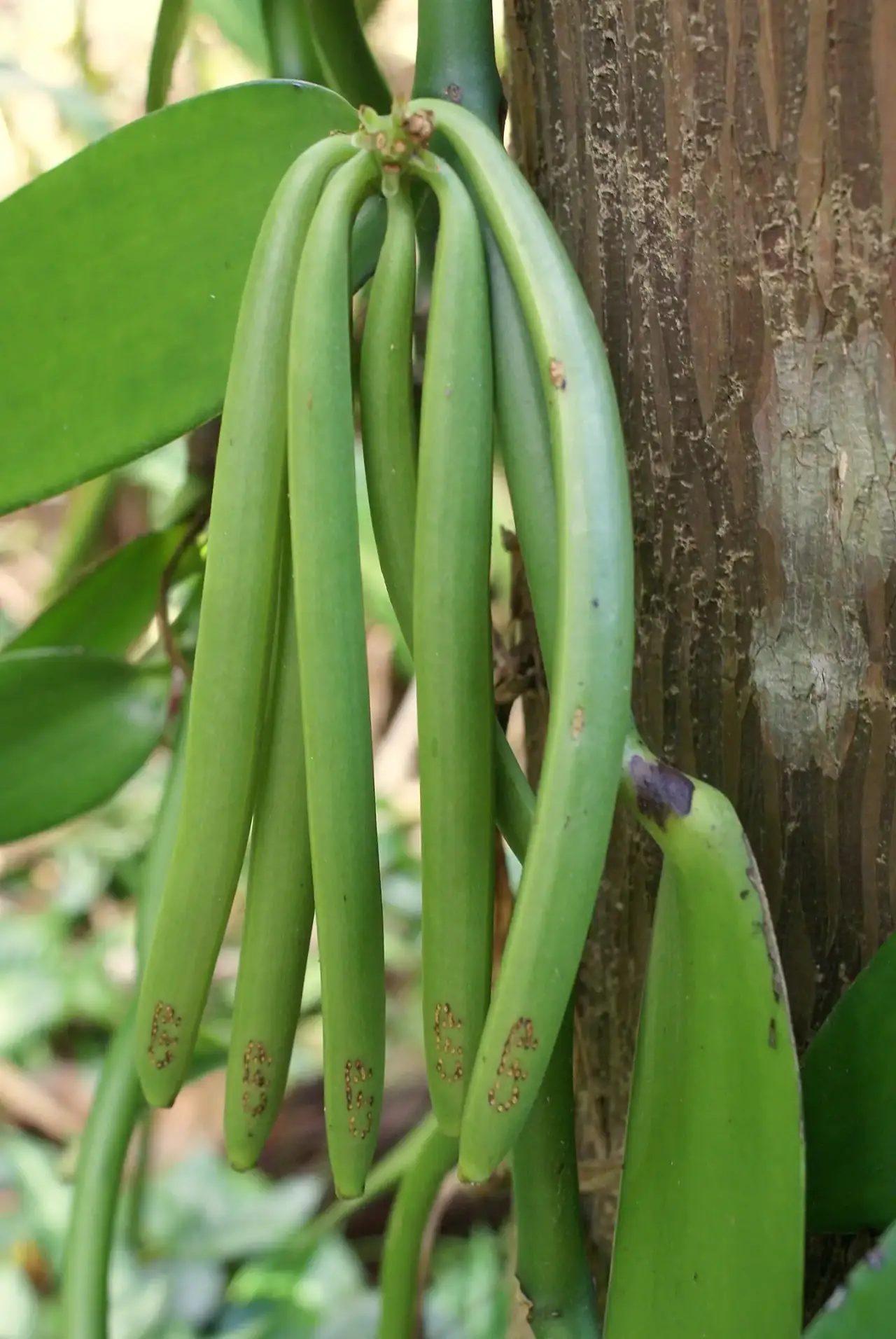
Without a 12-year-old Réunionese boy, Bourbon vanilla would probably not exist. In 1841, in Sainte-Suzanne, Edmond Albius, then enslaved, devised a simple gesture to pollinate the vanilla flower by hand. That gesture made the fortune of Réunion, and then of the whole Indian Ocean, without ever making its inventor rich.
Where does vanilla come from, and why did it bear no fruit?
Vanilla is a climbing orchid native to Mexico, Vanilla planifolia. Its fragrant pod was already prized by the Aztecs before Europeans discovered it. Introduced to Bourbon Island, the former name of Réunion, at the start of the 19th century, the plant grew there without difficulty. But it almost never produced pods.
The reason lies in the flower itself: a thin membrane, the rostellum, separates the male organ from the female organ and prevents self-pollination. In its native range, insects take care of fertilisation; on Bourbon, they were absent. Planters were therefore left with fine vines, but no harvest.
Who was Edmond Albius?
Edmond was born on 9 August 1829 in Sainte-Suzanne, in the north-east of the island, to enslaved parents. He grew up on the estate of Ferréol Bellier-Beaumont, a planter with a passion for botany who taught him horticulture. The child watched, learned quickly and followed his master around the garden. Read his full portrait on our Edmond Albius page.
1841: the gesture that created Bourbon vanilla
In 1841, at around 12 years old, Edmond devised a method for pollinating vanilla by hand. Using a small stick, he lifted the membrane separating the flower's organs, then, pressing with his thumb, brought the pollen into contact with the stigma. The gesture is quick, reliable and can be repeated flower after flower.
A Belgian botanist, Charles Morren, had achieved artificial fertilisation of vanilla as early as 1836, using a different process. But it was Edmond's simple, effective method that spread through the island's plantations and then across the Indian Ocean. It is still used today: every vanilla flower, which opens for only a few hours, is pollinated by hand.
His authorship was nonetheless disputed. The botanist Jean-Michel-Claude Richard claimed to have taught him the technique; Ferréol Bellier-Beaumont and other notables defended the young man and gave him the credit.
How Bourbon vanilla conquered the world
The results came fast. According to the figures recorded in the history of Réunion vanilla, the island exported its first kilos a few years after the discovery, then 267 kg in 1853, more than 3 tonnes in 1858 and around 200 tonnes in 1898. The island's vanilla won grand prizes at the Universal Exhibitions of 1867 and 1900.
Cultivation then spread to Madagascar, the Comoros, Mayotte and Mauritius. In 1964, the “Bourbon vanilla” designation was created for the Vanilla planifolia of the Indian Ocean, to distinguish it from vanilla grown in Mexico, Tahiti or Indonesia. The name recalls the former name of Réunion, the cradle of this know-how. Our page on the history of vanilla on Réunion tells the full story.
What became of Edmond Albius after his discovery?
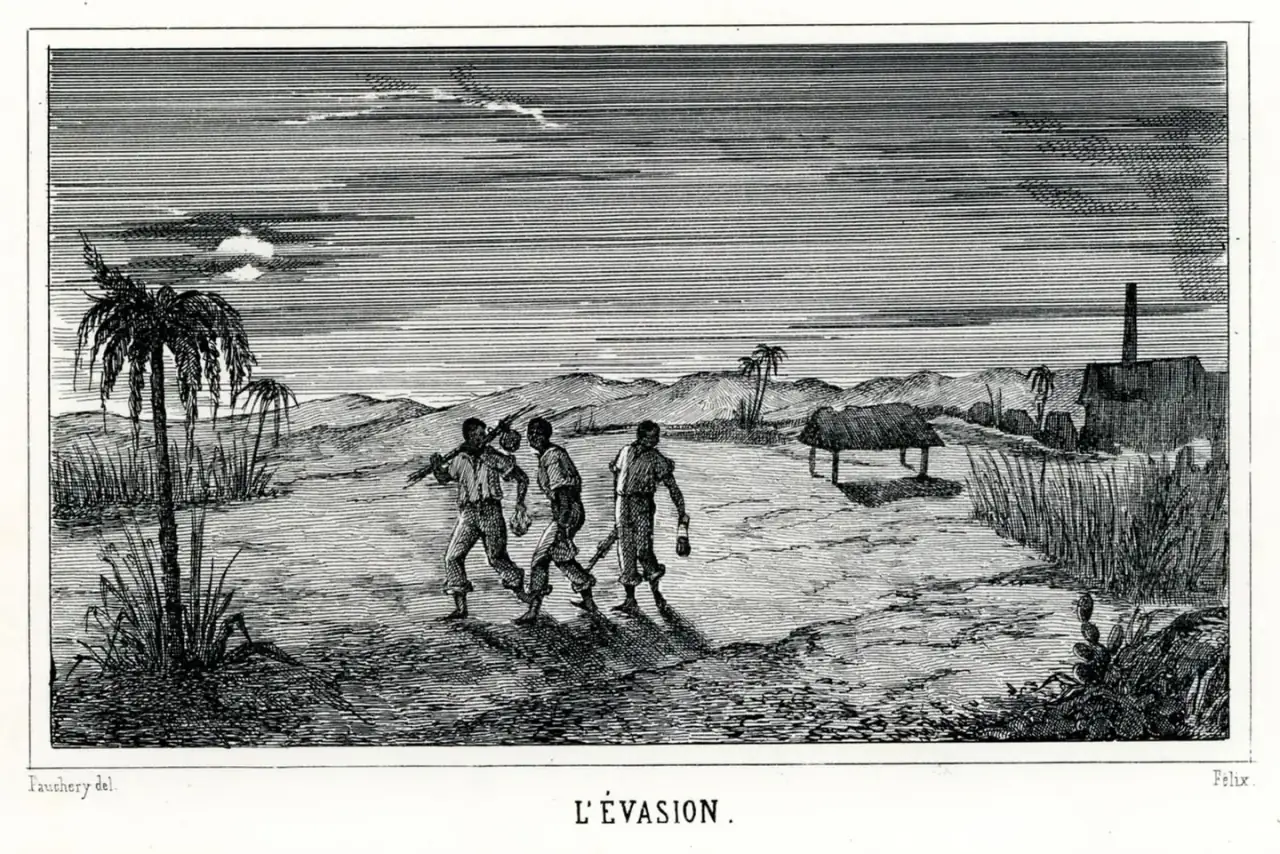
Edmond's story is also one of injustice. When slavery was abolished in 1848, he was given the surname Albius, from the Latin albus, “white”, a mocking name like many of those given to freed slaves. To understand that moment, read our article on Sarda Garriga and the 1848 abolition, and our abolition of slavery page.
In 1851, he was accused of theft and sentenced to hard labour; he was released before the end of his sentence. He married in 1871 and became a smallholder, but drew almost no profit from an invention that had made the planters rich. He died in poverty on 9 August 1880 in Sainte-Suzanne.
The gesture of an enslaved child made Réunion the land of vanilla, without its inventor ever benefiting from it.
His memory is honoured today. Statues pay tribute to him in Sainte-Suzanne and Bras-Panon, and a bronze bust was unveiled in the Jardin de l'État, in Saint-Denis, on 4 October 2024. Books, an animated film and a novel have also told his life story.
Where can you discover Bourbon vanilla on Réunion today?
Réunion vanilla is grown mainly in the east and south-east, on humid volcanic slopes. Since 27 August 2021, it has been protected by the PGI (protected geographical indication) “Vanille de l'île de La Réunion”, registered by the European Commission. According to INAO (the French body for quality and origin labels), the sector had around 170 growers and 6 curers in 2019.
Straight after harvest, the green pod has no fragrance at all. It goes through several stages of curing: scalding in hot water, sweating, drying in the sun then in the shade, and maturing for several months. It is this patient work that brings out the aromas of Bourbon vanilla.
To discover it on the spot:
- Bras-Panon, the vanilla town, is home to growers and a cooperative; see our vanilla in Bras-Panon page.
- The plantations of the east often offer guided tours, from vine to cured pod.
- The local markets sell pods all year round: ask about the origin and choose the PGI label.
To follow in the footsteps of Edmond Albius and vanilla, download the Nout Péi app or explore our history and heritage pages.
Frequently asked questions
What is Bourbon vanilla?
It is the designation, created in 1964, for Vanilla planifolia vanilla produced in the Indian Ocean: Réunion, Madagascar, the Comoros, Mayotte and Mauritius. Its name comes from Bourbon Island, the former name of Réunion, where its cultivation developed.
What did Edmond Albius invent?
In 1841, at the age of 12, Edmond Albius devised a simple method for pollinating the vanilla flower by hand. This gesture, still used today, made it possible to produce vanilla outside Mexico.
Does Réunion vanilla have a quality label?
Yes. Since 27 August 2021, “Vanille de l'île de La Réunion” has been a protected geographical indication (PGI) recognised by the European Union. It guarantees Réunion origin and compliance with a set of growing and curing specifications.
- vanilla
- Edmond Albius
- history
- Sainte-Suzanne
- slavery