History
Marronage on Réunion Island: a story of freedom
Marronage on Réunion: the flight of enslaved people to the Hauts, the maroon hunters, Anchaing, Héva, Cimendef and the memory of that freedom.
5 min read
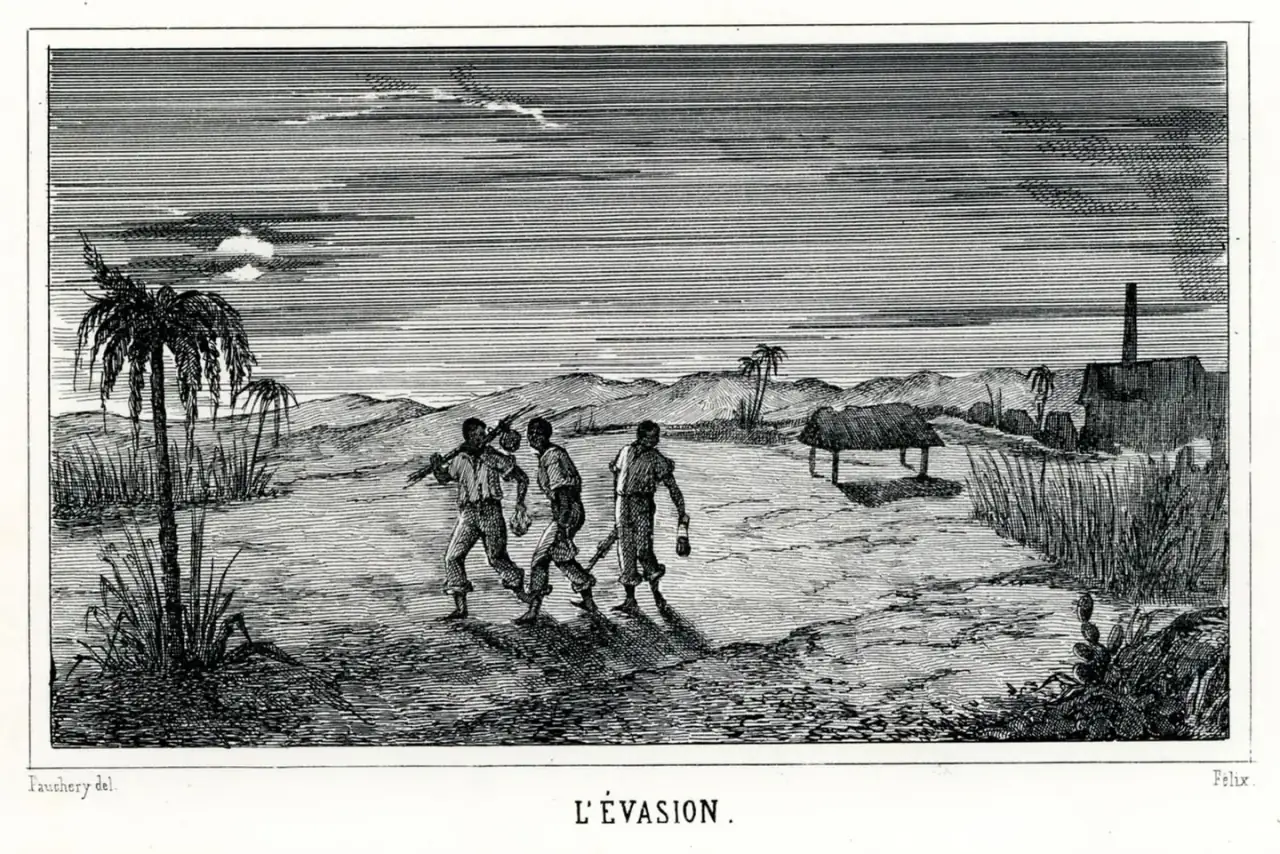
Marronage refers to the flight of enslaved people who, on Bourbon (the former name of Réunion), left the plantations to live free in the Hauts, the island's uplands. From the late 17th century to the abolition of 1848, women and men found refuge in the cirques and on the ramparts (cliff walls), at enormous risk. Their story has left its mark on place names, oral memory and Réunionese identity.
What is marronage?
The word “maroon” (marron in French) comes from the Spanish cimarrón, which referred to a domestic animal that had gone back to the wild. In the colonies, it was applied to runaway slaves. Historians often distinguish two forms:
- petit marronage (short-term flight), an absence of a few days or weeks, to escape punishment, join a loved one or catch one's breath;
- grand marronage (long-term flight), a lasting escape, sometimes for a whole lifetime, to the most inaccessible parts of the island.
On Bourbon, slavery grew with the coffee plantations of the 18th century, then with sugar cane. Enslaved people, brought from Madagascar, East Africa and India, were subject to the letters patent of December 1723, the “Code Noir” of the Mascarenes, which harshly punished escape. To understand this context, read our page on slavery on Réunion.
Why did marronage develop in the Hauts?
The interior of the island, almost uninhabited in the 18th century, offered natural refuges: deep-sided cirques, dense forests, îlets (hamlets) perched on the ramparts. Maroons lived there by hunting, gathering, fishing in the ravines and small-scale farming. Sources from the period describe genuine camps set up on îlets, protected by stakes, ditches and dogs.
According to the Portail de l'esclavage à La Réunion (Réunion's slavery history portal), these communities were organised around a king and a queen, with villages led by captains: people spoke of a “Kingdom of the Interior”. Groups of maroons are thought to have remained active until abolition. Our feature on marronage on Bourbon describes this organisation in detail.
How did the colonists hunt down the maroons?
Lacking enough soldiers, the colonial administration relied on detachments of maroon hunters made up of armed colonists. Around 1740, the Conseil supérieur (the colony's governing council) offered a reward for every fugitive captured, dead or alive, which encouraged expeditions.
The best known of these hunters is François Mussard, a militia officer. His reports, kept in the archives, describe camps of dozens of people and wooden huts discovered in the Hauts. In 1752, his detachment killed Laverdure and Sarlave, presented as the king and queen of the maroons, in the uplands of the Bras de la Plaine. In 1758, King Manzac was killed in turn, a few weeks after the capture of his wife, Queen Fouche, and their daughter.
These accounts come almost entirely from the hunters themselves. Historians, including Prosper Eve at the University of Réunion, point out that they pass over much of the violence committed and should be read with caution.
Who are the great names of Réunionese marronage?
The memory of marronage lives on in figures that lie between history and legend:
- [Anchaing and Héva](/personnalites/anchaing): according to oral tradition, this couple of Malagasy origin took refuge on a peak in Salazie that now bears the name of Anchaing. Héva is often regarded as Réunion's first heroine.
- [Cimendef](/personnalites/cimendef): a maroon chief whose name was given to a summit between Mafate and Salazie.
- Dimitile, Laverdure and Sarlave: a memorial stone honours them at the Dimitile camp, in the uplands above Entre-Deux, reached via the Dimitile hike.
- Mafate: according to tradition, the cirque is named after a maroon chief. Our guide to Mafate tells the story of this cirque with no road.
Women played a role in marronage that was long forgotten. Recent research, such as that of the historian Marie-Ange Payet, has shed light on their lives.
Where can you find the memory of marronage today?
Marronage shaped the map of the island. Research carried out since 2005 on place names has found Malagasy words in the toponymy of the Hauts: Bélouve, for instance, is said to mean “with many traps”. The Anchaing and Cimendef peaks, the Dimitile and Mafate all preserve the trace of the fugitives.
Literature has taken up the theme too. As early as 1844, the Réunionese writer Louis Timagène Houat published Les Marrons, a novel portraying runaway slaves and their quest for freedom. In the 19th century, the poet Auguste Lacaussade evoked the legend of Anchaing.
Today, marronage is a central reference point in Réunionese identity. It is celebrated every 20 December, the Fête de la Liberté (Freedom Day) that commemorates the abolition of slavery in 1848: discover its traditions in our article on Fèt Kaf. Hikers walking in the cirques often follow, without knowing it, old maroon trails.
To discover the island's places of remembrance on the ground, download the Nout Péi app or browse our history and notable figures pages.
Frequently asked questions
What does the word marron (maroon) mean on Réunion?
A “marron” is an enslaved person who fled the plantation to live free, usually in the Hauts of the island. The word comes from the Spanish cimarrón, which referred to an animal that had gone wild again. Marronage is the sum of these escapes, lasting anything from a few days to a whole lifetime.
Where did the maroons live?
Maroons took refuge in the interior of the island, then almost uninhabited: the cirques of Mafate, Salazie and Cilaos, forests and îlets perched on the ramparts. They set up protected camps there and lived by hunting, gathering and small-scale farming. Many place names in the Hauts still bear witness to their presence.
How is marronage commemorated today?
Marronage is remembered on 20 December, Freedom Day, which celebrates the abolition of slavery on Réunion in 1848. Places such as the Dimitile camp, the Piton d'Anchaing and the Domaine de Villèle keep this memory alive. Maroons also feature strongly in literature, music and place names.
- marronage
- slavery
- history
- memory
- Hauts