Nature
Réunion’s waterfalls: the most beautiful, how to get there and staying safe
Trou de Fer, Niagara, Voile de la Mariée: the most beautiful waterfalls in Réunion, how to reach them and the safety rules to know before swimming.
6 min read
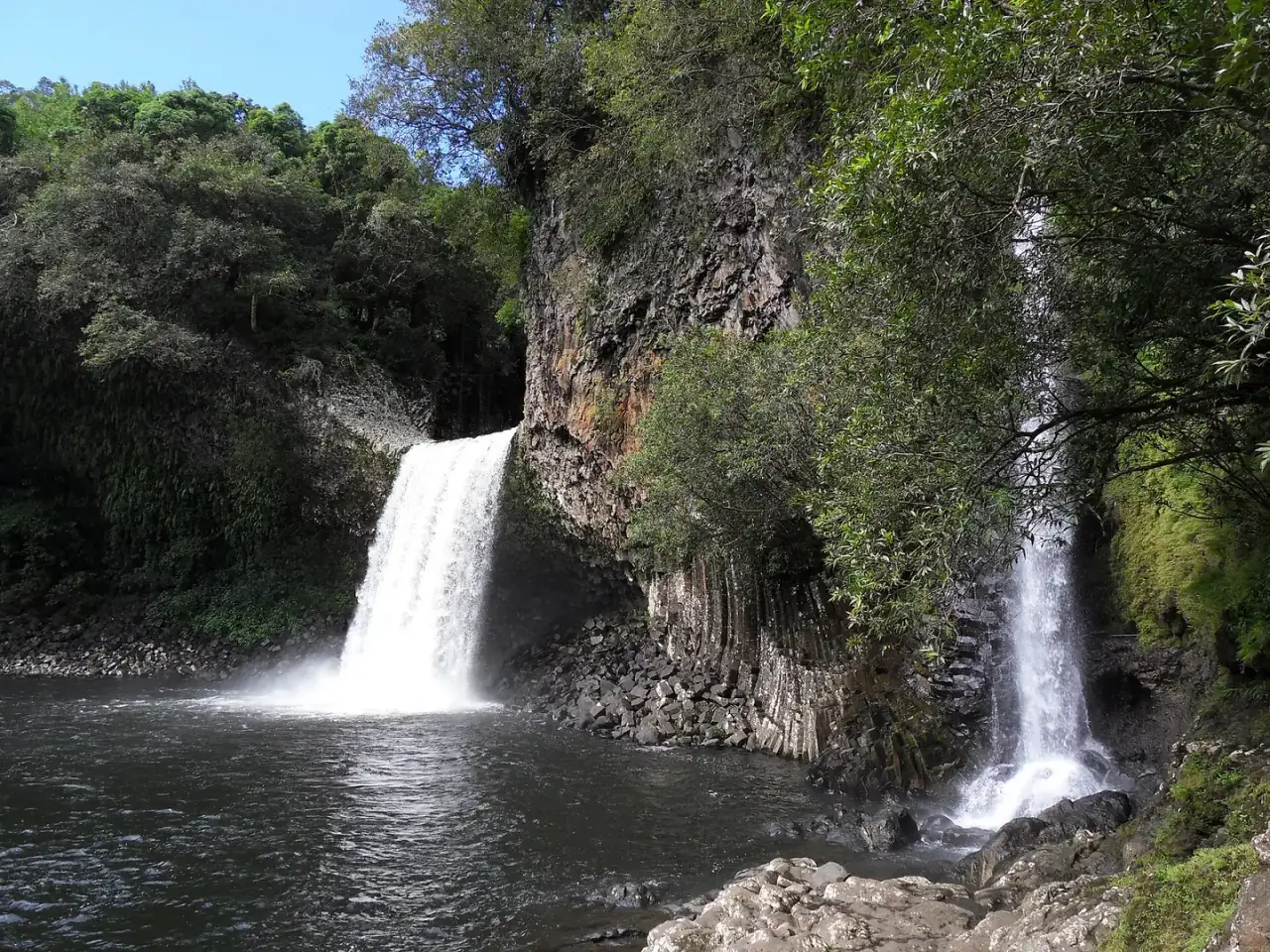
Réunion’s waterfalls number in the hundreds, from a thread of water sliding down a rampart (cliff wall) to the dizzying falls of the Trou de Fer. Here is our selection of the island’s most beautiful waterfalls, with access details, the level of effort and the safety rules to know before setting off for each one.
On a young volcanic island drenched by some of the heaviest rainfall in the world, water tumbles down the slopes in every season. The wetter east and the cirques (natural amphitheatres) are home to the most spectacular falls, while the west mostly offers natural pools.
Which are the most beautiful waterfalls in Réunion?
There is no official ranking, but a few sites are unanimous favourites with Réunion islanders and visitors alike.
- Trou de Fer (between Salazie and Bras-Panon): the most impressive site, seen from a viewpoint or by helicopter.
- Niagara waterfall (Sainte-Suzanne): a wide curtain of water in the middle of the sugar cane fields, a stone’s throw from the road.
- Voile de la Mariée (Salazie): several threads of water stretching down the rampart, on the road to Hell-Bourg.
- Grand Galet waterfall (Saint-Joseph): the emblematic fall on the Langevin river, in the wild south.
- Bassin La Paix (Bras-Panon): a waterfall plunging into a green pool on the Rivière des Roches.
- Anse des Cascades (Sainte-Rose): threads of water falling from the cliff beneath the vacoas (screw pines), next to a small fishing harbour.
Trou de Fer, the island’s most spectacular waterfall
The Trou de Fer is a huge chasm carved into the Piton des Neiges massif, north of the Bélouve forest. The Bras de Caverne and the Mazerin ravine plunge into it in a series of falls: according to Wikipedia, the total drop reaches around 725 metres, making it one of the highest waterfalls on French territory, and the chasm is nearly 300 metres deep.
You can see it on foot from a viewpoint, at the end of a forest trail starting from the Bélouve area. Allow several hours for the return walk on an often muddy path: our hike to the Trou de Fer viewpoint page details the route. Set off early, as mist very often hides the chasm from late morning. The other, more expensive option is a helicopter flight, which lets you see the falls in their entirety.
Where to see waterfalls in Réunion without a long walk
Several of Réunion’s beautiful waterfalls can be seen from the road or after a few minutes’ walk, which makes them easy to visit with a family.
In the east and north-east
Niagara waterfall in Sainte-Suzanne can be reached by car on a road through the cane fields. The pool at its foot draws picnickers at weekends. A little further on, at Quartier Français, the small Cascade des Délices falls into a pool at the end of a well-maintained trail of about five minutes.
In Bras-Panon, Bassin La Paix and its waterfall are a few minutes from the car park, on the Rivière des Roches. A trail then leads upstream to Bassin La Mer. In Sainte-Rose, the Anse des Cascades is perfect for a stroll and a picnic in the shade, but the sea there is rough and rocky: no swimming.
In the cirques and the south
In the Cirque de Salazie, the Voile de la Mariée can be seen from the road up to Hell-Bourg, just outside the village of Salazie. After heavy rain, dozens of waterfalls stream down the cirque’s ramparts. In the south, the Grand Galet waterfall, on the Langevin river in Saint-Joseph, is visible from the road: an easy stop on a loop through the wild south.
When to see Réunion’s waterfalls
The flow depends directly on the rain. During the southern summer, from December to April, the waterfalls are at their fullest, but it is also the season of heavy rain, floods and cyclones. In the southern winter, from May to November, the weather is drier and more settled: some falls weaken, but the trails are safer.
The best compromise is often to go a few days after a spell of rain, when the water is still flowing strongly and the weather has settled. Morning remains the best time: the light is beautiful and clouds usually rise over the uplands in the afternoon. Before every outing, take a look at the island’s weather forecast.
Swimming under a waterfall in Réunion: safety rules
Waterfalls and pools are neither supervised nor equipped like beaches. A few simple rules prevent most accidents.
- Never go during heavy rain or a weather alert. A flash flood can arrive within minutes, even if the weather is fine where you are: all it takes is rain higher up the ravine. If the water turns cloudy, rises or carries branches, get out immediately.
- Keep your distance from the foot of the falls. Stones can come loose from the walls at any moment. It was this risk that led to the closure of the trail to the Cascade Biberon, in Plaine-des-Palmistes, after a fatal accident in 2014.
- Respect the bans. Swimming is prohibited in some places by official order, and closed trails are closed for a reason. Check with the town hall or the ONF (French National Forests Office) before you go.
- Do not jump into an unfamiliar pool. Depth is deceptive and rocks lurk beneath the surface.
- Think about leptospirosis. This disease is transmitted through contaminated fresh water and mud. ARS La Réunion (the regional health agency) recommends covering wounds with a waterproof dressing and postponing a swim when the water is cloudy, especially during the southern summer.
Also bring good shoes, water and something to carry your rubbish home in.
Going further: canyoning and river trekking
To experience the waterfalls from the inside, canyoning lets you descend the ravines by abseiling, jumping or sliding into the rock pools. This activity is only done with a qualified professional who knows the day’s conditions and the water level. The Cilaos and Salazie areas and the Rivière des Marsouins at Takamaka are the best known.
If you would rather stay dry, many pools in the west offer calmer swimming: find them in our article on Réunion’s natural pools. And for the sea, our guide to swimming safely in Réunion sets out the authorised areas.
All these waterfalls are geolocated in the Nout Péi app: download it to plan your outings and access the detailed guides offline.
Frequently asked questions
What is the highest waterfall in Réunion?
The Trou de Fer, in the Piton des Neiges massif, has the island’s highest falls. According to Wikipedia, their total drop is around 725 metres. You can see them from a viewpoint reached on foot from Bélouve, or on a helicopter flight.
Can you swim in Réunion’s waterfalls?
Swimming is possible in many pools, but at your own risk: no site is supervised. Avoid it in rainy weather, when the water is cloudy or the flow is strong, and always respect the bans on display.
Which waterfall is easy to see with a family?
Niagara waterfall in Sainte-Suzanne, the Voile de la Mariée in Salazie and the Grand Galet waterfall in Saint-Joseph can be seen from the road, or very nearly. The Cascade des Délices, at Quartier Français, only takes five minutes’ walk on a well-maintained trail.
- waterfalls
- natural pools
- Salazie
- East of the island
- safety