Culture
Réunionese Creole expressions: 15 phrases worth knowing
15 Réunionese Creole expressions translated, to greet people, ask questions and talk like a local on Réunion, with everyday words and proverbs.
5 min read
Réunionese Creole expressions are the best way into island life: you hear them at the market, at the snack bar, in songs and between neighbours. Here are 15 useful expressions, with their translation and the right context, to understand Réunion islanders and reply with a smile. No need to be fluent: a few words are enough to break the ice.
Réunionese Creole in a nutshell
On Réunion, French is the official language, but Creole is the everyday language for much of the population. It took shape as the island was settled, blending French with Malagasy, African, Indian and Indo-Portuguese influences. The word kari (carri, the Creole curry) is thus said to come from Tamil, bazar (the market) from Indo-Portuguese and bib (spider) from Malagasy. To understand this mixing, read our page on how the Réunionese people came to be.
One point before we start: Réunionese Creole has no official spelling. Several writing systems coexist (Lékritir 77, the so-called KWZ spelling, Tangol…), and you will see the same word written in different ways. For these Réunionese Creole expressions, we use the spellings most common in travel guides.
Which Réunionese Creole expressions to use for greetings and small talk?
These are the first ones you will hear, and the most useful.
- Koman i lé?: “How are you?”. The ritual question, asked of everyone.
- Léla: “I'm fine”, literally “it's there”. The most natural answer to Koman i lé?.
- Lé mol: “Not great”, “I'm tired”. Mol means soft, lacking energy.
- Santé vié moun: “Getting by”. A humorous answer meaning things are fine, nice and steady.
- Kwélafé?: “What's going on?” or “What's new?”. Ideal for starting a conversation.
- Lé bon: “OK”, “that's fine”. You will hear it used to wrap up just about anything.
- Sa mèm: “That's it”, “exactly”. To agree with what the other person is saying.
How do you ask questions in Creole?
A few question words will come in very handy, especially when asking the way.
- Ousa?: “Where?”. For example, to ask where the beach or the market is.
- Kosasa?: “What's that?”. Essential in front of a stall of unfamiliar fruit or a dish you are trying for the first time.
- Akoz? or Pokoué?: “Why?”.
- Siouplé: “Please”. Politeness opens every door, in Creole as in French.
Other question words follow the same pattern: Kisa? (who?), Kansa? (when?) or Ziskakan? (until when?).
Everyday and heartfelt Réunionese Creole expressions
- Allons bouger!: “Let's go!”. To get an outing or a picnic under way.
- Bat karé: “To wander about”, to go for a stroll with no particular aim. On Sundays, people go bat karé along the seafront or at the market.
- Gayar: “Great”, “brilliant”. Derived from the French gaillard (hearty, vigorous), it describes anything people like: a landscape, a meal, a party.
- Mi aime a ou: “I love you”. A declaration found in many séga and maloya songs.
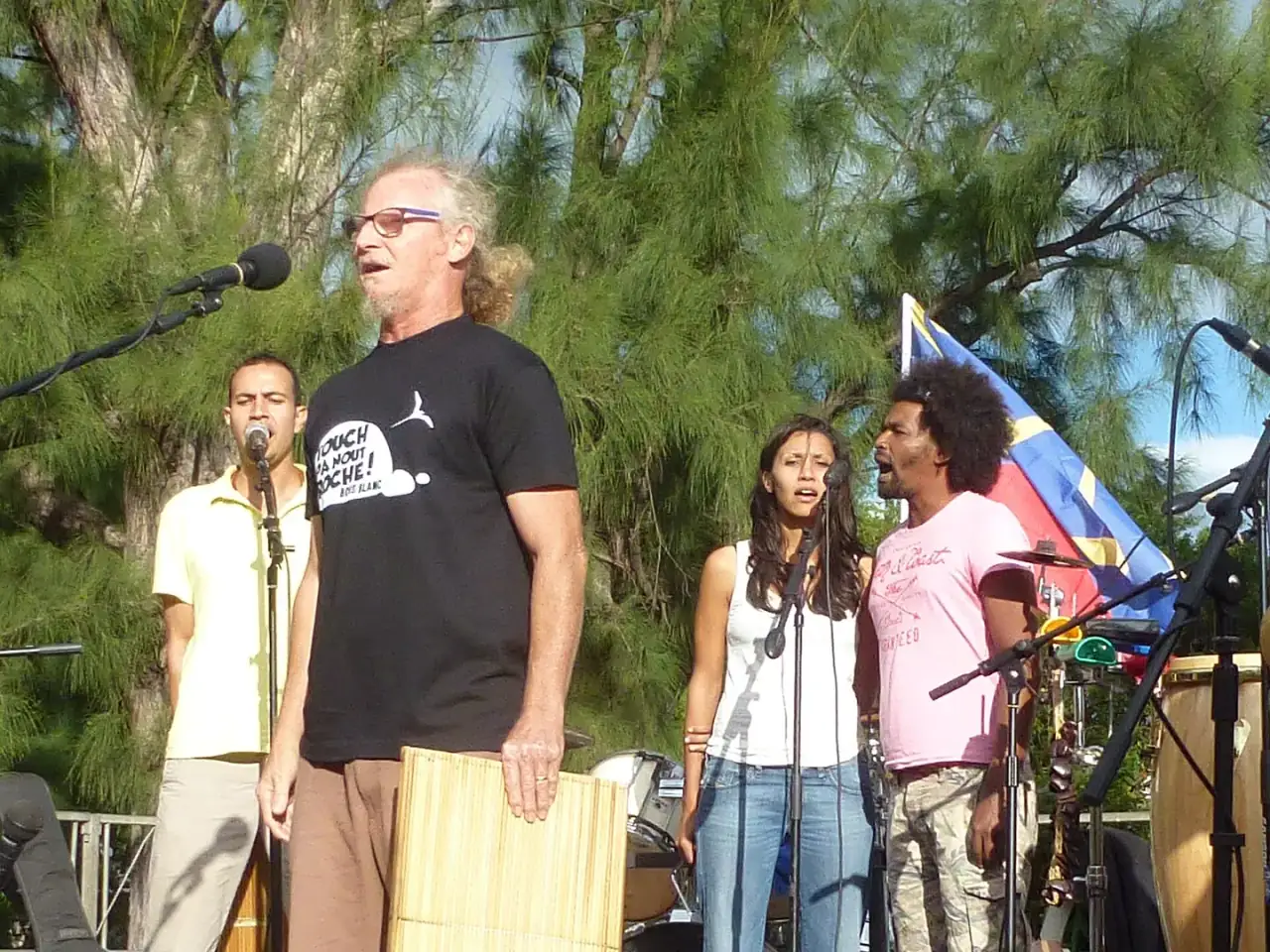
Speaking of music, Creole is the language of the island's great musical genres: our article on maloya, UNESCO heritage explains how these songs carried the language for generations.
Which Creole words should you know?
Beyond Réunionese Creole expressions, a few words come up again and again in conversation:
- zorey: a person from mainland France. The word is not necessarily pejorative, and if you come from mainland France you will probably be called one!
- marmaille: children;
- gramoune: an elderly person, said with respect;
- bordmer: the seaside, the beach;
- loto: the car;
- larack: rum;
- bonbon: a savoury or sweet snack, such as the bonbon piment (spicy split-pea fritter) or the bonbon banane (banana fritter).
The Nout Péi site borrows one for itself: the Ou té koné? section (“did you know?”) gathers anecdotes about the island. And to test your knowledge, play the Quiz Péi.
Which Réunionese Creole proverbs should you remember?
Popular wisdom also comes through proverbs, often full of imagery. Three of the most telling examples:
- La lang na pwin le zo: “The tongue has no bone”, in other words, words cost very little.
- Fé pa la bou avan la pli: “Don't make mud before the rain”, the equivalent of “don't put the cart before the horse”.
- Ti ash i koup gro bwa: “A small axe cuts a big log”: with patience, you can achieve anything.
Every 28 October, International Creole Languages and Cultures Day is the occasion for plenty of events on the island. To discover more traditions, explore our Réunionese culture section and our article on séga, music and dance.
To learn while having fun, download the Nout Péi app and test your knowledge of the island, or browse the site to plan your stay.
Frequently asked questions
How do you say hello in Réunionese Creole?
People often say “bonzour”, close to the French, then readily follow it with Koman i lé?, “How are you?”. The usual answer is Léla, “I'm fine”. This little exchange is enough to make the other person smile.
Do all Réunion islanders speak Creole?
Creole is very widely spoken on Réunion, alongside French, the official language, used at school and in public administration. Most Réunion islanders switch naturally from one language to the other depending on the situation. A French-speaking visitor will therefore always be understood in French.
What does zorey mean on Réunion?
A “zorey” is a person from mainland France. The term is in everyday use and is not necessarily pejorative; it all depends on the tone. A visitor from mainland France is almost certain to hear it during their stay.
- Creole
- language
- expressions
- Réunionese culture