Culture
Exploring Saint-Denis on foot: Réunion's capital and its heritage
Exploring Saint-Denis on foot: the Barachois, Rue de Paris, the Léon-Dierx museum, the cathedral and the Jardin de l'État, a heritage walk through Réunion's capital.
6 min read
Exploring Saint-Denis on foot means travelling back through three centuries of history in just a few kilometres, from the Barachois seafront to the Jardin de l'État. Réunion's capital is easy to discover without a car: its main monuments line Rue de Paris and the neighbouring streets. Here is a heritage walk, with verified historical landmarks for each stop.
Why explore Saint-Denis on foot?
Many travellers only pass through the island's capital on arrival at Roland-Garros airport. That is a shame: the historic centre of Saint-Denis packs in a rare density of old buildings, Creole houses (cases créoles), places of worship of every religion and gardens. Distances are short and the ground stays fairly flat in the lower town, which makes walking more pleasant than driving, especially with the traffic and parking in the centre.
The route suggested here links the seafront to the Jardin de l'État, following the town's north-south axis. Allow half a day if you take time to go into the museums, a little more if you like to linger. Set off early in the morning: on Réunion the sun gets hot quickly, even in the North.
The Barachois, a starting point facing the ocean
The Barachois district is the birthplace of the town. Its name refers to a small lagoon separated from the ocean by a sandbar; the bay once served as an anchorage for merchant ships. Today it is a seafront promenade where you will find:
- the battery of cannons pointing out to sea, at the Pointe des Jardins;
- the statue of Roland Garros, the Réunion-born aviator, leaning on a propeller;
- the Square Mahé de La Bourdonnais, with the statue of the former governor.
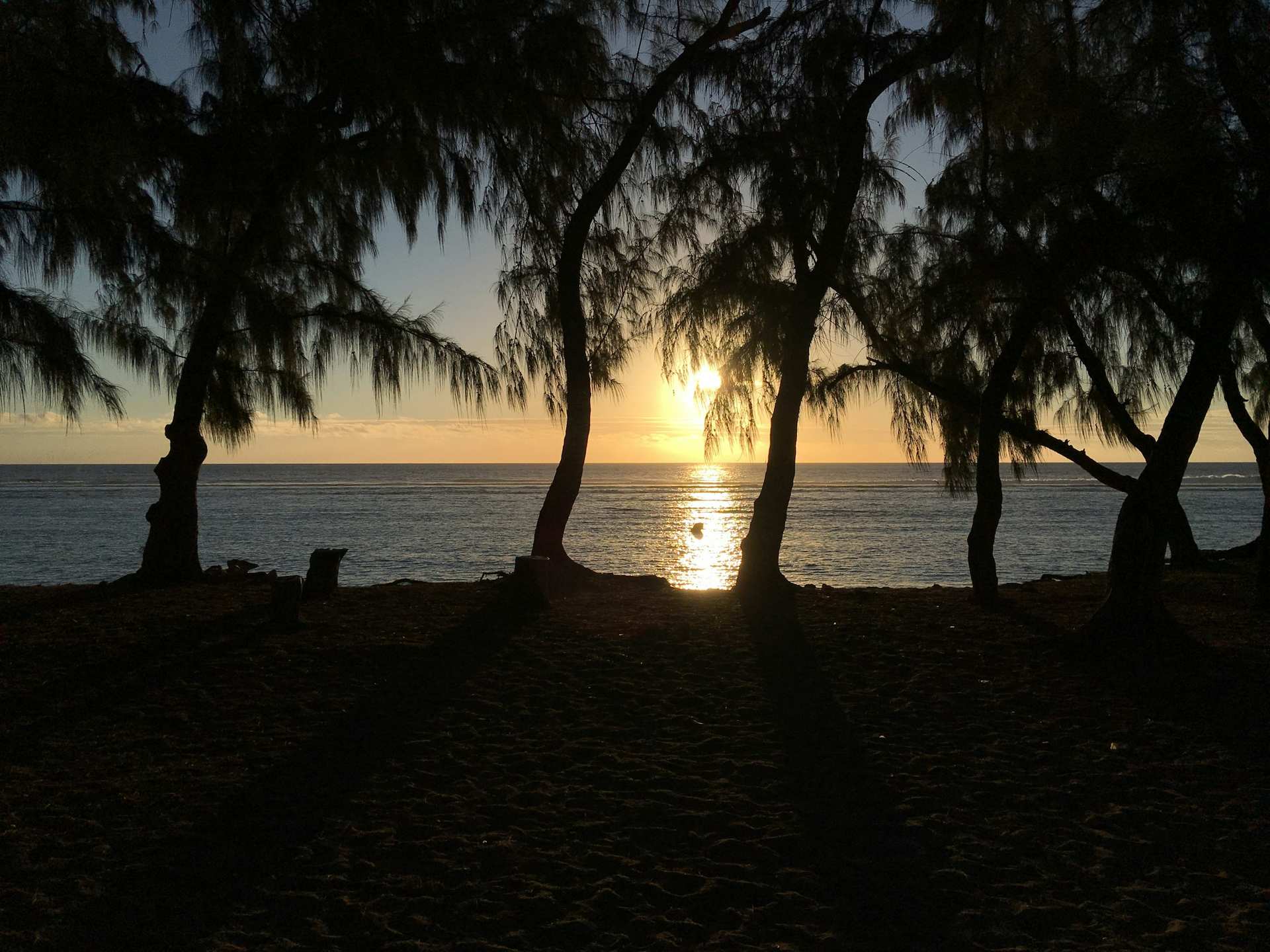
Right next door stands the Hôtel de la Préfecture. This 18th-century building first housed the French East India Company before becoming the governor's residence in 1770. In 1970 it became the first building on the island to be listed as a historic monument. The Barachois is also the ideal place to come back to at the end of the day: the sunset over the ocean draws Dionysiens (Saint-Denis residents) and visitors alike.
What to see on Rue de Paris, Saint-Denis's historic street?
Rue de Paris is the backbone of the town's heritage. It starts in the north at the Colonne de la Victoire and ends in the south at the Jardin de l'État. In between stand plantation owners' houses and Creole villas, with their varangues (verandas), lambrequins (cut-out roof friezes) and railings.
The former town hall
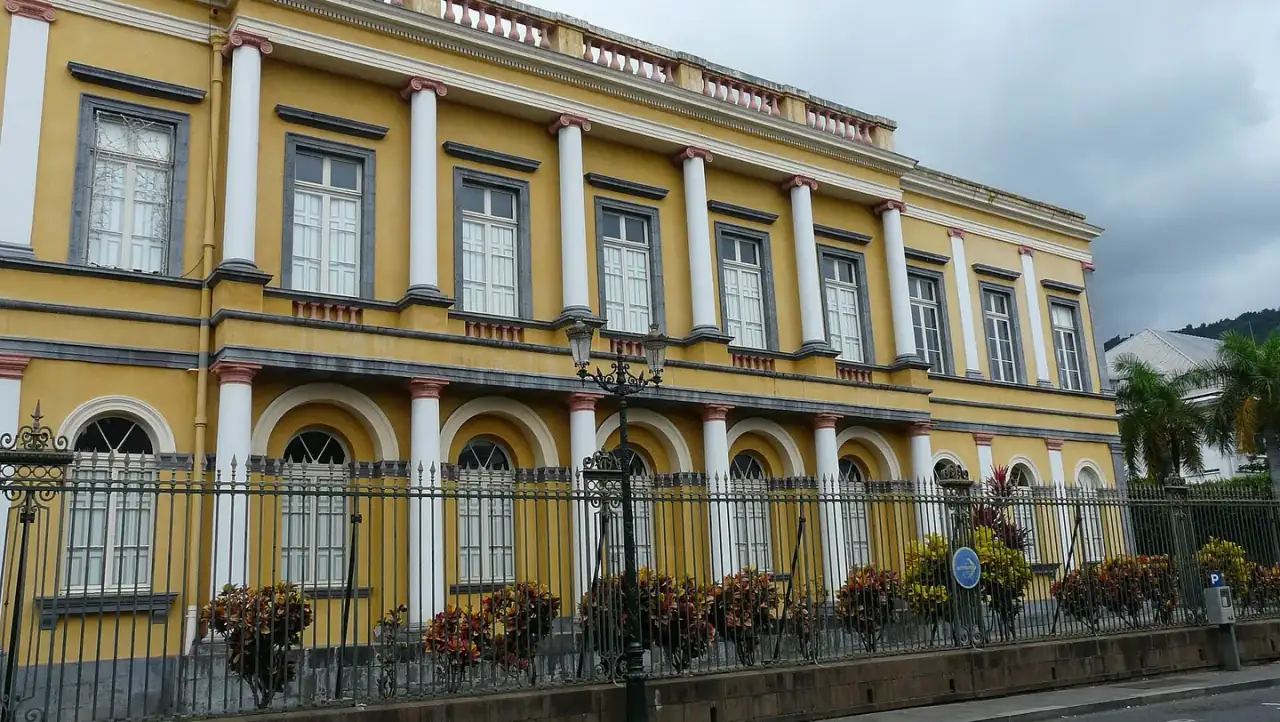
At number 2, the large yellow building of the former Saint-Denis town hall is one of the most photographed façades on the island. Begun in 1846, it was completed on 21 April 1860 and has been fully listed as a historic monument since 1975.
Maison Carrère and Villa Déramond-Barre
At number 14, the restored Maison Carrère houses the tourist office and an exhibition: it is a good stop to see the inside of a Creole residence and pick up information. Almost opposite, at number 15, the Villa Déramond-Barre is the birthplace of former Prime Minister Raymond Barre. These fine residences are good examples of the architecture described in our article on Réunion's Creole houses.
The Léon-Dierx museum
At number 28, the Léon-Dierx museum is the town's art museum. Opened on 12 November 1912 in the former bishops' residence, it is named after the Réunion-born poet Léon Dierx. Its collections include works from the Vollard family, notably by Cézanne, Gauguin and Renoir, as well as a bronze mask by Picasso. The current building dates from its reconstruction in the 1960s.
Places of worship: Réunion's diversity in a few streets
Visiting Saint-Denis is also a chance to see the coexistence of religions that is the island's pride. Within a few minutes' walk you pass from one place of worship to another.
- Saint-Denis cathedral, built between 1829 and 1832, took on its final appearance in 1863 with its monumental porch. Its shady square is a good place for a break.
- The Noor-e-Islam mosque, founded in 1905, is recognisable by its white minaret on the corner of Rue du Maréchal-Leclerc. Long presented as the oldest mosque in France, it was rebuilt after a fire in the 20th century.
- The town centre also has Tamil temples and a Chinese pagoda, testimony to the different migrations that built Réunion's population.
In places of worship, dress modestly, stay discreet during services and ask on site about visits.
The Jardin de l'État, the capital's green lung
At the end of Rue de Paris, the Jardin de l'État is one of the oldest botanical gardens in the Indian Ocean. It was laid out between 1767 and 1773, when the intendant Pierre Poivre was bringing trees and spices from other continents. In the 19th century, its director Jean-Michel-Claude Richard recorded more than 2,000 species there. Listed as a historic monument in 1978, it reopened in 2009 after renovation.
At the far end of the garden, the Natural History Museum, opened in 1855, presents the wildlife of Réunion and the Indian Ocean. The benches in the shade of the great trees make this garden the ideal place to end the loop.
How to explore Saint-Denis on foot with peace of mind?
A few tips to make the most of the capital:
- Start early, near the Barachois, and finish at the Jardin de l'État to end in the shade.
- Bring water, a hat and sun cream: the heat can be intense from November to April.
- Check the museums' opening days and times before you set off, as they change through the year.
- On Sundays the centre is quieter: pleasant for photos, but some shops are closed.
- Extend the day with a hike on the Chemin des Anglais, an old cobbled path that starts in the heights of Saint-Denis.
To taste local produce, the markets of Saint-Denis are also a lovely way to discover the town: our guide to street markets day by day tells you where and when to go.
To find all these monuments on a map and plan your walk, download the Nout Péi app or explore the site's heritage pages.
Frequently asked questions
How long does it take to explore Saint-Denis on foot?
Half a day is enough to walk from the Barachois to the Jardin de l'État, taking in the main façades. If you go into the Léon-Dierx museum and the Natural History Museum, allow a full day at a relaxed pace.
What are the must-see monuments in Saint-Denis?
The essential stops are the Barachois and the Préfecture, the former town hall on Rue de Paris, the Léon-Dierx museum, the cathedral, the Noor-e-Islam mosque and the Jardin de l'État. Together they sum up Réunion's colonial, architectural and religious history.
When to visit Saint-Denis to avoid the heat?
The most pleasant times to walk are early in the morning or late in the afternoon, whatever the season. The southern winter, from May to October, offers milder temperatures for a long stroll around town.
- Saint-Denis
- heritage
- Rue de Paris
- walking tour
- North