Chapter 8 · 1663 – 1848
Slavery on Bourbon
The development of coffee and then sugar cane growing relied on the mass importation of enslaved people, first from Madagascar and then from East Africa.
1679, the first written record
The first mention of a sale of enslaved people appears in the island's archives.
Marronage
From the very beginning of colonisation, enslaved people fled to the Hauts (uplands) and the mountains to escape the slave system.
20 December 1848
Slavery was abolished on Bourbon, a date still commemorated today.
The story
Slavery on Bourbon expanded sharply with the plantation economy from the 18th century onwards. Enslaved people were brought mainly from Madagascar and the east coast of Africa. In 1815, figures from the Villèle museum record 49,369 enslaved people for 18,940 free people on the island. In 1845, 295 enslaved people worked on the Panon-Desbassayns estate alone. The Code Noir was registered at Saint-Paul on 18 September 1724 and set out the legal framework of servile status. The international ban on the slave trade in 1815 did not put an end to clandestine imports.
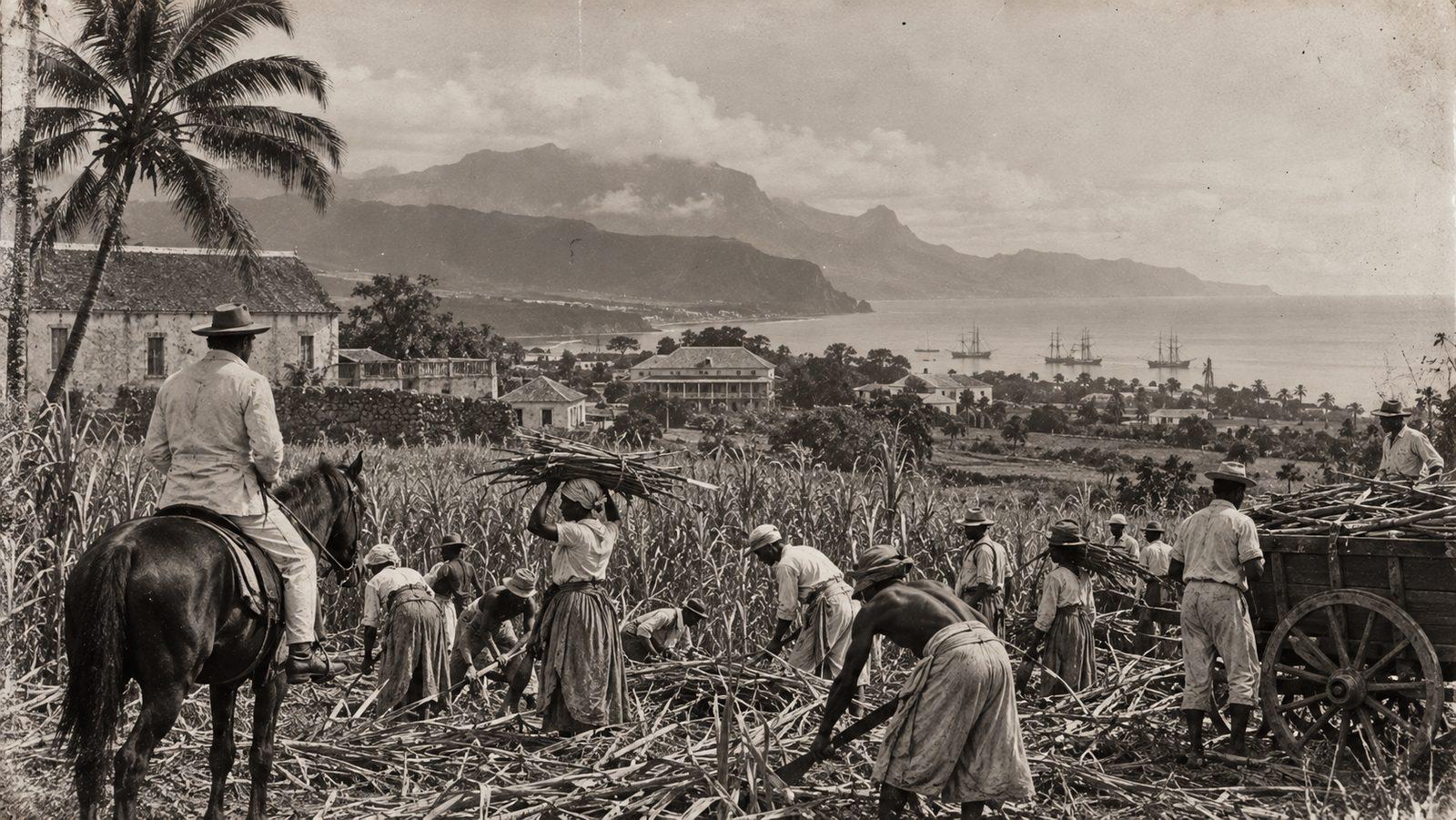
Photo: Illustration created for the app · Illustration, not an authentic period photograph
Sources (2)
- https://www.portail-esclavage-reunion.fr/dossiers-documentaires/exposition-lesclavage-a-bourbon/
- https://www.musee-villele.re/fr/esclavage-et-engagisme