Chapter 2 · Before the 17th century
An uninhabited island
For millennia after its volcanic formation, the island remained entirely free of any human presence: neither the great Austronesian migrations that settled Madagascar nor Arab or African navigators made their home here. This human silence shaped a unique biodiversity, cut off from the rest of the world.
Total isolation
Unlike nearby Madagascar, the island had no human settlement at all before the arrival of Europeans, and then the French.
Nature evolving on its own
This isolation allowed species found nowhere else to emerge, as the dodo did on Mauritius; Réunion had its own extinct bird, the Réunion solitaire (solitaire de Bourbon).
The story
Before permanent French settlement, the island was known to Indian Ocean navigators and occasionally served as a stopover. Its lasting human history began late. The temporary occupations of the 17th century preceded the settlement that took root at Saint-Paul. This feature is fundamental: unlike Madagascar, the island had no known indigenous population at the time of European colonisation. Réunionese society was therefore built from successive waves of migration.
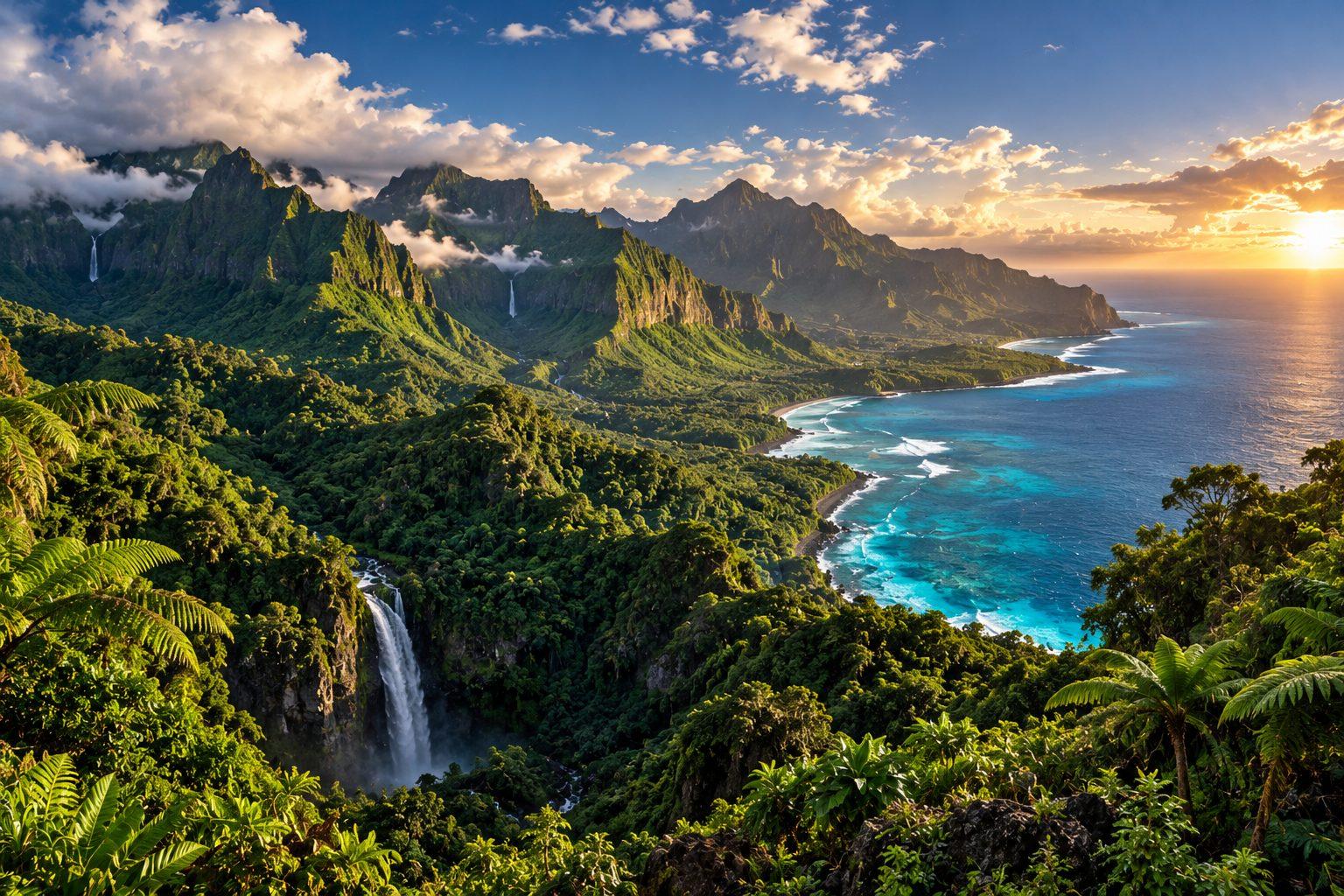
Photo: Illustration created for the app · Illustration, not an authentic period photograph
Sources (3)
- Georges Azéma, Histoire de l'île Bourbon, 1862
- Y. Combeau, P. Ève, S. Fuma et al., Histoire de la Réunion, Nathan 2002
- Île de La Réunion Tourisme, dossiers historiques sur Saint-Paul