Chapter 7 · 1715 – 1810
Coffee, spices and plantations
From 1715, the French East India Company imposed coffee growing on Île Bourbon, turning a subsistence economy into a plantation society and laying the foundations of the slave system that would shape the island for more than a century.
Two plants out of sixty
In September 1715, of 60 coffee plants shipped from Mocha (Yemen), only two survived the crossing; they gave rise to the entire production of Bourbon coffee.
Meteoric growth
From 2 plants in 1715, the crop grew to more than 143,000 coffee trees by 1723.
Coffee, Bourbon's slave crop
Unlike the Caribbean (sugar cane) or North America (tobacco, cotton), here it was coffee that shaped the plantation economy and the exploitation of enslaved labour.
The story
At the beginning of the 18th century, Bourbon's economy changed scale with the development of coffee, driven by the East India Company. Plantations required a large workforce. The regional slave trade then intensified from Madagascar and the east coast of Africa, along with other places of origin. The island's economic growth and the building of colonial fortunes are inseparable from forced labour and the slave system.
The system cannot be reduced to an abstract opposition between masters and enslaved people. Historians study legal statuses, trades, family, mortality, resistance, manumissions, free people of colour, internal hierarchies and everyday violence.
The many origins of the enslaved people contributed to the cultural diversity of Réunionese society. In the 18th century, Madagascar and the east coast of Africa played a major role in arrivals. In the 19th century, although the slave trade was banned, clandestine networks persisted.
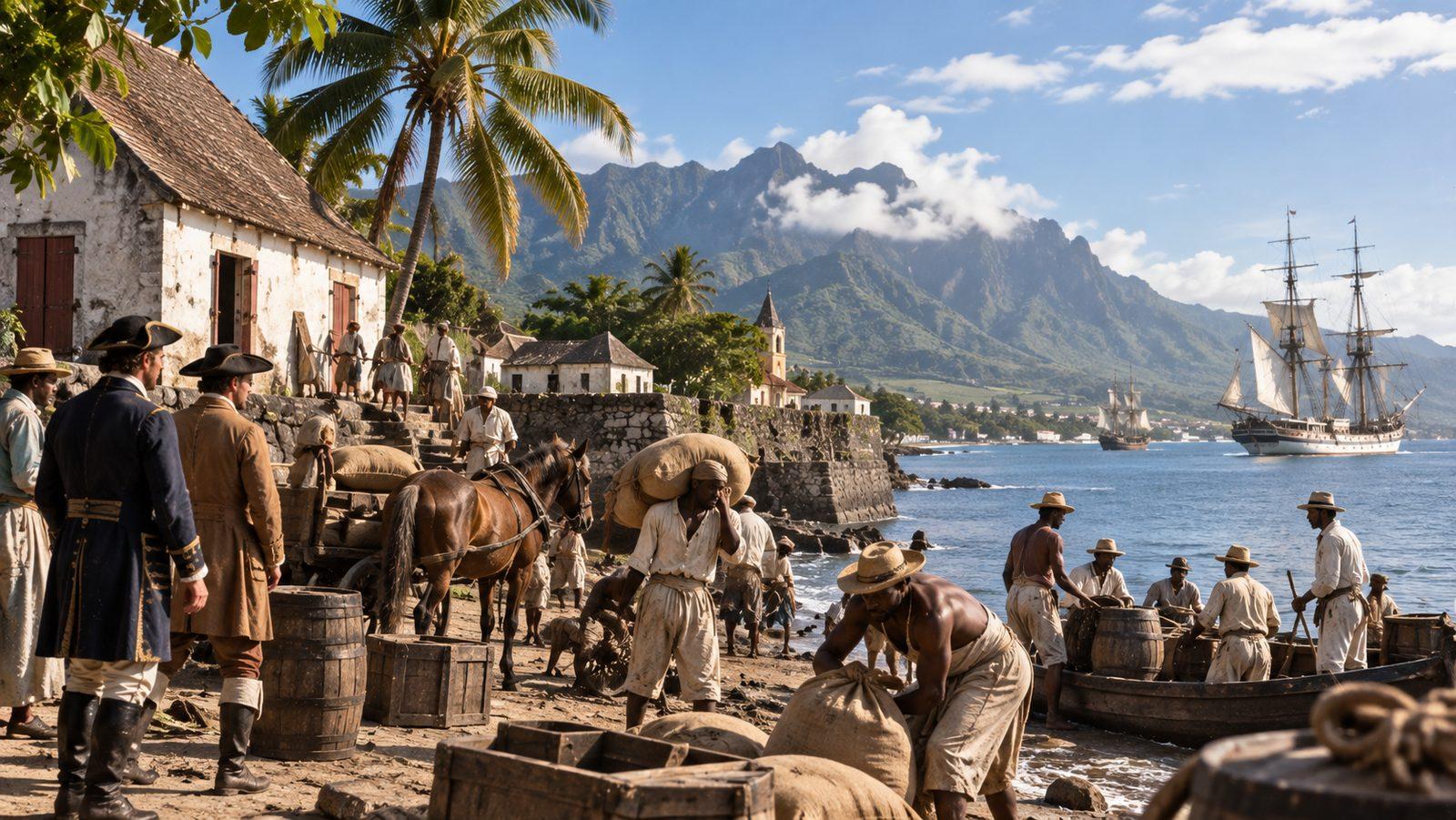
Photo: Illustration created for the app · Illustration, not an authentic period photograph
Sources (4)
- Sudel Fuma, L'esclavagisme à la Réunion 1794-1848, 1992
- Prosper Ève, Le bruit du silence, Océan Éditions 2010
- Portail Esclavage Réunion, dossiers sur la traite et l'origine des esclaves de Bourbon
- Prosper Ève, Naître et mourir à l'île Bourbon à l'époque de l'esclavage, 1999