Chapter 12 · 1848 – 1930
Indian migrations
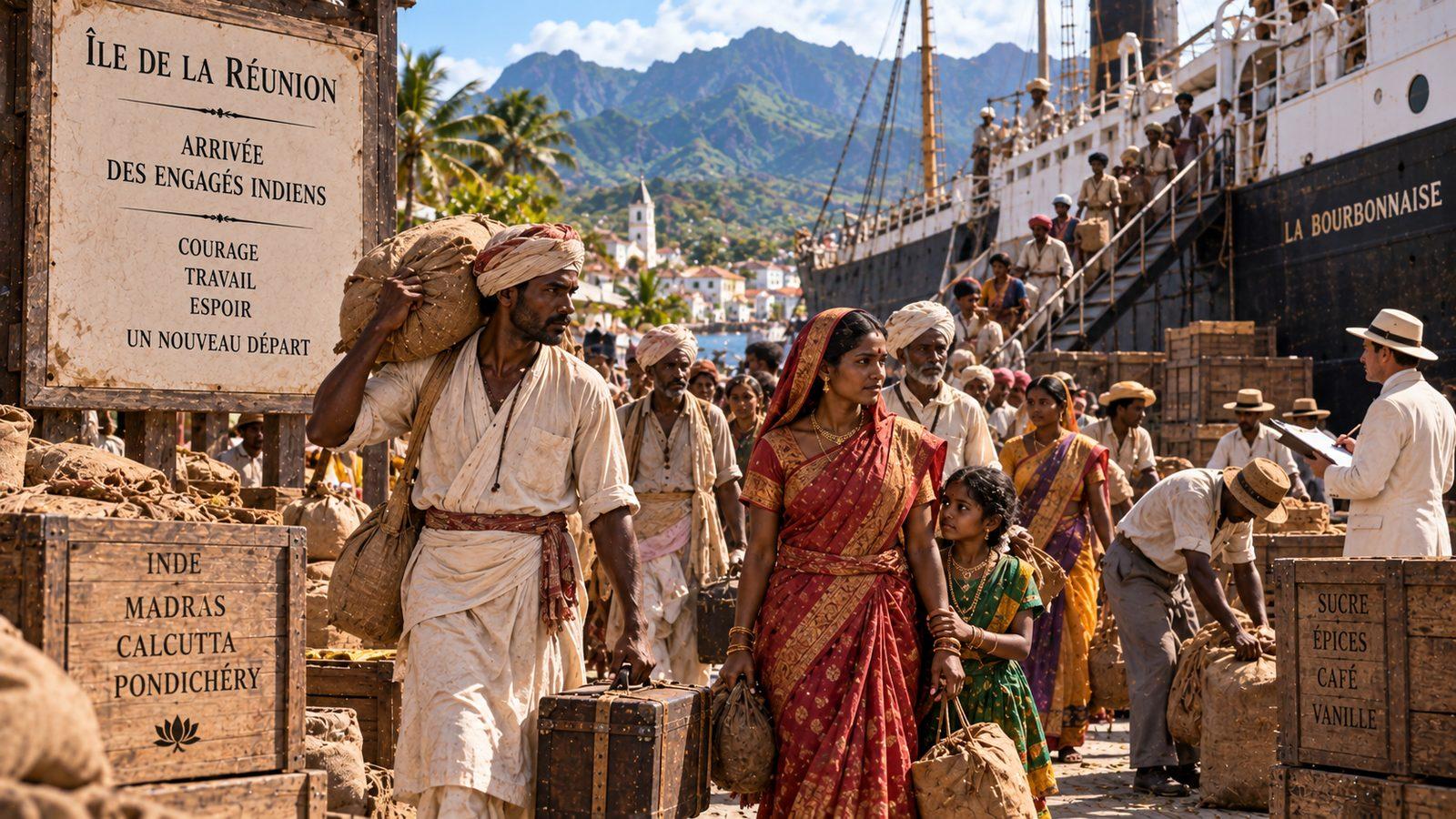
After abolition, tens of thousands of contract workers left India, mostly the Tamil south, to work on Réunion's sugar cane plantations. This immigration laid the foundations of the Malbar community (Réunion islanders of Tamil descent), today one of the most visible on the island.
From southern India
Most engagés (indentured labourers) came from the Pondicherry region and the Tamil country, on work contracts lasting several years.
Temples as landmarks
The Temple du Colosse in Saint-André, the island's largest Tamil temple, and many other kovils (Tamil temples) bear witness to this community's lasting roots.
A culinary and cultural imprint
Spices, festivals such as Cavadee, religious practices: this immigration left a lasting mark on Réunionese culture as a whole.
Photo: Illustration created for the app · Illustration, not an authentic period photograph
Sources (2)
- Portail de l'esclavage à La Réunion
- Recherches sur les temples tamouls de La Réunion