Chapter 11 · 19th – 20th century
Indenture (engagisme)
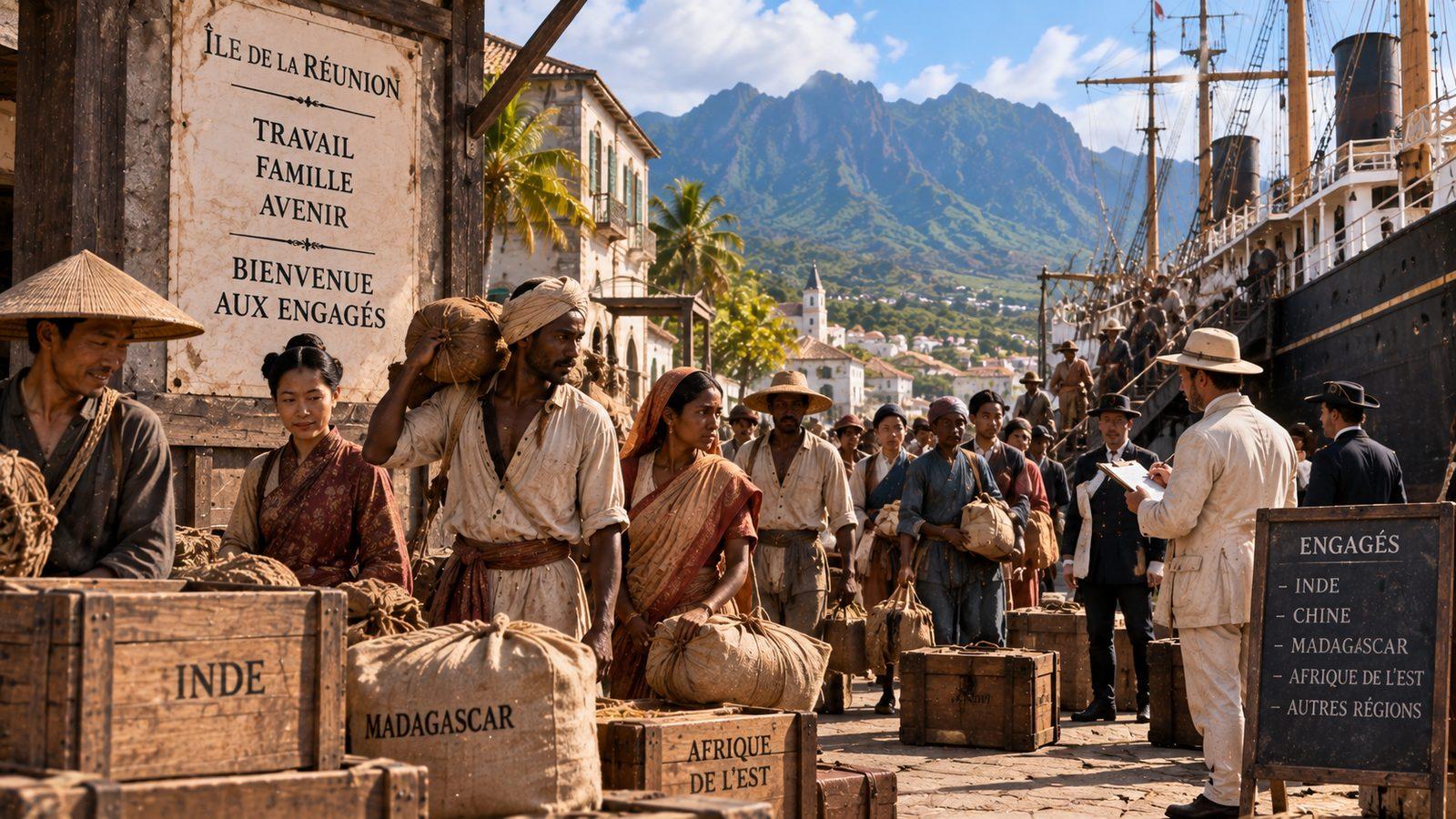
After abolition in 1848, many freed people left the plantations. To keep growing sugar cane, landowners brought in contract workers, known as engagés (indentured labourers), mainly from India but also from China, East Africa and Madagascar.
From India
Most engagés came from southern India, laying the foundations of the island's Malbar (Tamil-descended) community.
1860–1930, a contract system
The engagés signed work contracts lasting several years, often in very harsh conditions.
A lasting legacy
This immigration has had a lasting influence on Réunion's cuisine, religions and traditions today.
The story
Engagisme refers to the recruitment of contract workers from other territories for the plantations. In Réunion it began in 1828, while slavery still existed, and became widespread after abolition in 1848. Estimates put the number of engagés who arrived up to the 1930s at between 160,000 and 200,000; around two in three came from India, the others from East Africa, Madagascar, the Comoros, China, Vietnam or Rodrigues.
In principle the contract guaranteed a wage, freedom of worship and repatriation. In practice, an engagé could not leave the estate without a “pass” from his employer, and wage deductions, abuse and mortality were denounced as early as the 19th century. On arrival, many went through quarantine at the lazarets (quarantine stations) of La Grande Chaloupe.
Memory today
The legacy of the engagés can be seen in the island's temples, festivals and family names. Every 11 November, a tribute to the indentured workers is held at the Lazaret de la Grande Chaloupe, first initiated by the Tamil Federation of Réunion and now organised together with the Department.
Photo: Illustration created for the app · Illustration, not an authentic period photograph
Sources (5)
- Michèle Marimoutou-Oberlé, « L'engagisme à La Réunion », Portail Esclavage Réunion — https://www.portail-esclavage-reunion.fr/documentaires/abolition-de-l-esclavage/apres-l-abolition/engagisme/
- Musée Stella Matutina, dossier de presse de l'exposition « Les engagés du sucre » (2025) — https://museesreunion.fr/wp-content/uploads/DP-engages-2025.pdf
- Ministère de la Culture, notice Mérimée PA97400026 « Lazarets de la Grande Chaloupe » — https://pop.culture.gouv.fr/notice/merimee/PA97400026
- J. Andoche, L. Hoarau, J.-F. Rebeyrotte, E. Souffrin, « La Réunion », Hommes & migrations n° 1278, 2009 — https://journals.openedition.org/hommesmigrations/261
- Musée de Villèle, « Esclavage et engagisme » — https://www.musee-villele.re/fr/esclavage-et-engagisme